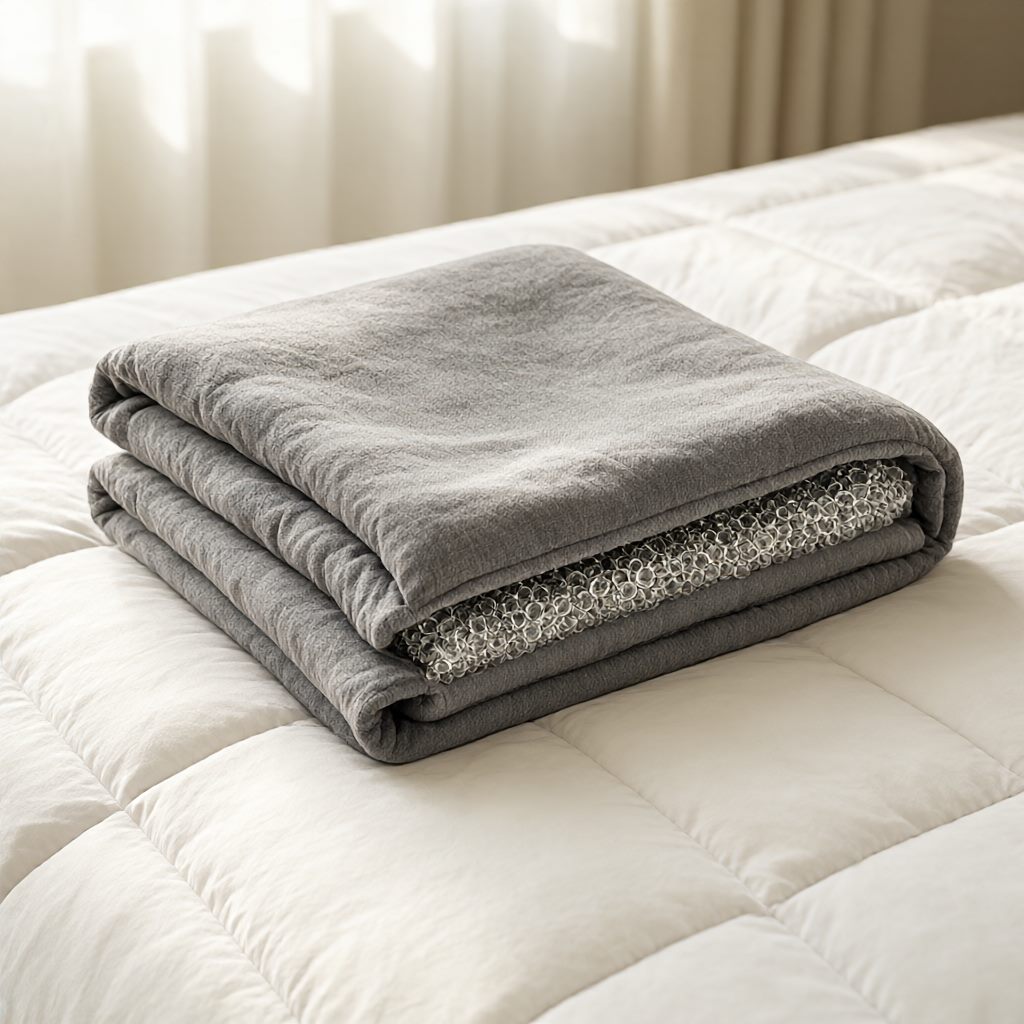
Selecting a plus size weighted blanket involves matching specific weight ratios, dimensions, and thermal properties to the sleeper. The general guideline assigns a blanket weight of roughly 10 percent of body weight, with a comfortable range spanning 5 to 12 percent. For a 250 lb sleeper, a 25 lb blanket serves as the baseline, functioning acceptably for individuals between 200 and 300 lbs. Sleepers who run hot or experience restricted mobility under heavy layers often favor the lower end of the percentage range. Construction quality determines whether the fill remains evenly distributed to apply uniform deep pressure stimulation across the entire body without clumping.
Weight Ratio Calculation and Safety Limits
The target blanket weight is calculated by multiplying body weight by 0.10 to find the baseline, then assessing the 5 to 12 percent range for adjustments. A 300 lb sleeper yields a 30 lb baseline, with an acceptable range of 15 to 36 lbs. Sleepers who prefer a lighter touch or who experience night sweats typically select weights closer to the 5 percent mark. The 10 percent rule does not accommodate all body types or comfort preferences, often requiring a practical weight trial when possible. The blanket weight should allow easy repositioning without causing physical restriction or discomfort beneath the fill.
Safety constraints override weight preferences. Weighted blankets are unsafe for infants and young children due to suffocation risks. Adults with respiratory conditions, obstructive sleep apnea, poor circulation, or cardiovascular problems face increased risks from weighted blankets and often consult clinicians prior to use. Individuals who feel claustrophobic under pressure may not adapt to heavier weights and often remain at the lowest end of the weight spectrum or forgo weighted blanket use entirely. Adequate blanket weight allows the user to reposition independently without strain.
Size Coverage and Pressure Distribution
Plus size blankets cover the sleeper from neck to feet without excessive overhang on the mattress sides. Blankets that are too wide drape over the bed edges, pulling fill material away from the body and reducing the direct pressure applied to the sleeper. Conversely, blankets sized precisely to body contours concentrate weight, intensifying deep pressure stimulation. Standard mattress dimensions provide a starting point, but plus size sleepers often benefit from blankets that match their height and shoulder width rather than the bed width to maintain consistent downward force across the torso and legs.
Blanket thickness and folding alter the effective pressure. Doubling a blanket over a body section doubles the localized weight, a factor that can exceed safe or comfortable pressure thresholds. Fill distribution construction prevents shifting; channel stitching or quilted pockets lock glass beads or plastic pellets in place. Even distribution ensures the stated blanket weight translates to uniform contact pressure rather than concentrated heavy zones at the corners or center. Internal pocket dimensions are critical, as larger pockets allow fill migration, creating uneven weight distribution that reduces the therapeutic effect and creates uncomfortable pressure points.
Heat Buildup and Thermal Regulation
Weighted blankets trap heat due to the dense fill material required to achieve the target weight. Glass beads retain less ambient heat than plastic poly pellets, making them a cooler fill option for plus size blankets that contain substantial material volume. The outer cover fabric dictates the breathability of the entire system. Cotton, bamboo, and moisture-wicking lyocell allow air circulation and release trapped body heat. Fleece, minky, and sherpa covers insulate heat and raise the thermal profile beneath the blanket, a feature that suits cold sleepers but causes overheating for warm sleepers.
Heat buildup leads many sleepers to remove the blanket during the night, eliminating deep pressure stimulation benefits. Removable duvet-style covers allow seasonal adjustment; breathable cotton covers manage summer temperatures, while insulated flannel covers add winter warmth without changing the core blanket weight. Ventilation channels sewn into the blanket construction promote airflow through the fill layers. Plus size sleepers carry more body mass, which generates and retains more heat, making thermal regulation a primary selection criterion over aesthetic cover choices.
Fill Material and Construction Quality
Fill material density determines the blanket thickness required to reach the target weight. Glass beads possess a high density, resulting in a thinner, more contouring blanket that conforms closely to the body shape. Plastic poly pellets have a lower density, creating a bulkier blanket with a thicker profile that can feel cumbersome and restrict positional changes. Sand and steel shot fillings exist but pose durability risks if the inner shell tears. The inner shell fabric uses a tight weave and strong stitching to prevent bead leakage, especially at the seams where stress concentrates during repositioning.
Quilting patterns secure the fill and influence the blanket drape. Smaller quilted pockets keep weight evenly distributed but reduce the blanket flexibility, making it stiffer across the body. Larger pockets increase drape and contouring but risk fill migration over time. Plus size blankets feature reinforced stitching along all inner seams to handle the substantial weight of the fill without seam blowouts. The outer cover attachment method, whether ties, buttons, zippers, or internal loops, anchors the heavy inner blanket securely to prevent shifting inside the duvet cover, a shift that creates uneven weight zones and localized heat pockets.
Plus Size Weighted Blanket Verification Checklist
Evaluating a plus size weighted blanket involves several key checks. Calculating the exact body weight percentage of the blanket weight reveals whether it falls within the 5 to 12 percent range. Verification of the blanket's effect on the range of motion ensures it does not restrict limb movement or chest expansion. Confirmation of the absence of respiratory conditions, sleep apnea, or circulatory issues helps identify contraindications for deep pressure therapy. Measuring the blanket dimensions against body height and shoulder width ensures complete coverage without excessive mattress overhang.
Inspection of the internal construction reveals small pocket sizes and reinforced stitching that prevent fill migration. Identification of the fill material as glass beads indicates a cooler, thinner profile, while plastic pellets indicate a bulkier, warmer feel. Selection of a breathable outer cover fabric such as cotton or bamboo mitigates heat retention. Testing the cover attachment mechanism ensures the inner blanket remains anchored and evenly distributed inside the shell. Checking all seams for tight weaves and structural integrity prevents bead leakage under the stress of daily repositioning.