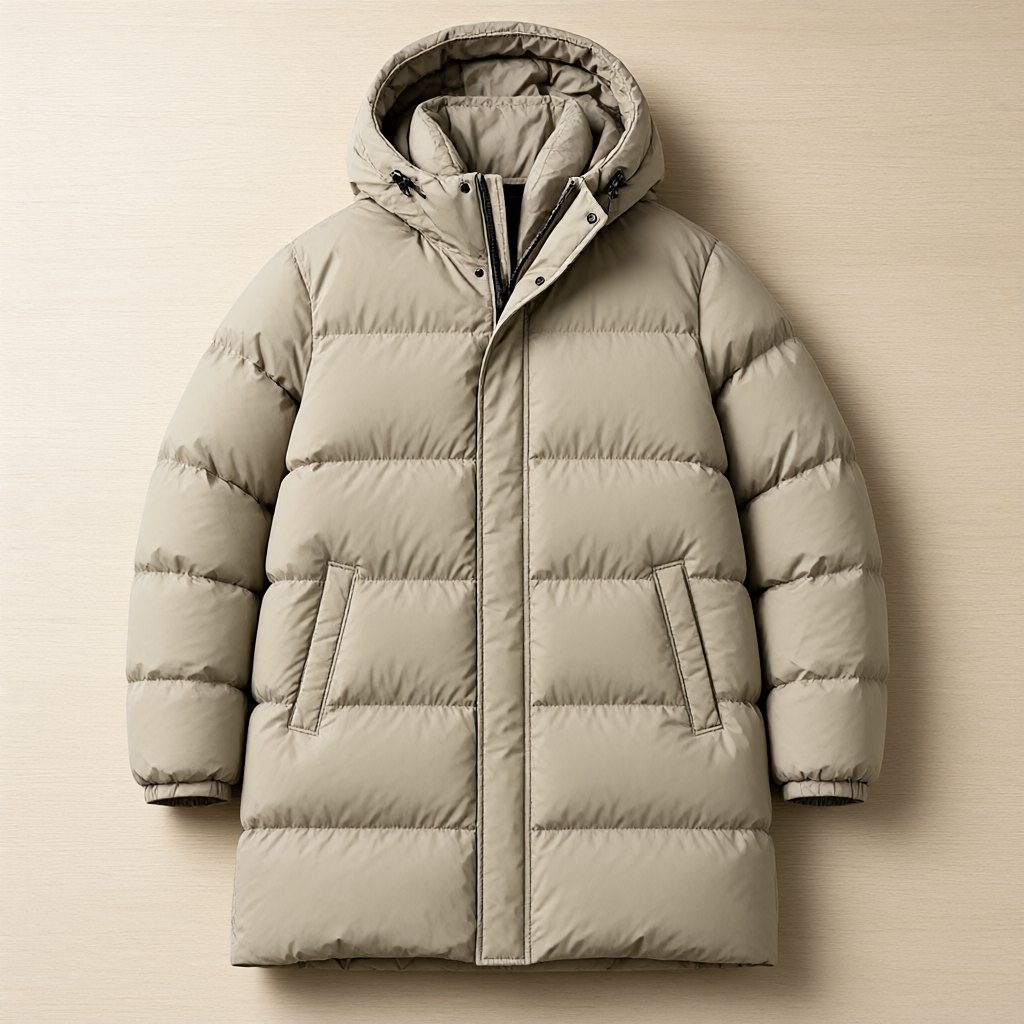
Evaluating a plus size winter parka comes down to five structural features: back length, hood adjustability, storm flap construction, two-way zipper function, and hem coverage. Each element either seals out wind and snow or maintains mobility across layered clothing. A parka that fails on even one of these metrics forces heat loss or restricts movement, negating the benefit of the insulation.
Back Length and Mobility Trade-offs
Back length determines the balance between thermal coverage and physical mobility. A hip-length parka favors arm swing and step length but leaves the lower body exposed. A mid-thigh to knee-length parka boosts coverage and warmth by sealing the rear and upper legs, which is necessary for cold-weather walking. For reference, specific models measure a 34.6 to 35.5 inch back length to achieve thigh coverage. Measure from the prominent bone at the base of the neck down the spine to the desired endpoint.
Longer parkas restrict stride length unless they incorporate specific mobility features. A drop-tail hem offers extra coverage at the back while often including a split at the rear or side seams to ease walking and sitting. When trying on a parka, perform a walking test and a sitting test. If the coat binds at the front hip crease when seated, the length lacks the necessary split or the cut is too straight for the body proportion.
Hood Adjustability and Vision Tracking
A winter parka hood must seal around the head without blocking peripheral vision. Fixed-volume hoods fail because they either compress thick hair or sit too loose, allowing wind to enter. Effective hoods adjust at both the front and rear. Rear adjusters pull the volume inward to match the skull shape, while front cinches tighten the face opening around the cheeks and forehead.
Check hood tracking by turning the head left and right while wearing the hood in the fully cinched position. The hood material must move with the head. If the hood stays stationary while the head turns, vision becomes blocked at the sides. Hoods equipped with a metal wire in the brim or a stiffened peak allow the wearer to shape the opening precisely, directing rain and snow away from the face. Detachable fur edging provides wind break at the face opening but must attach securely to avoid pulling away in high winds.
Storm Flap Construction and Wind Block
The main zipper is a primary point of air infiltration. A storm flap is a layer of fabric that covers the zipper line to block wind and rain. On plus size parkas, the storm flap must span the full length of the zipper without leaving gaps at the hem or chin. The flap requires a secure closure method. Snaps or hook-and-loop tape keep the flap flat against the body. A flap that only tacks at a few points will lift in steady wind, creating a venting channel along the torso.
Some parkas use an external buttoned placket over a two-way zipper, while others feature an internal draft tube that sits behind the zipper teeth. Evaluate the storm flap by pulling the parka on and crossing the arms across the chest. If the zipper pulls apart or the flap gaps at the bust or stomach, the closure method lacks sufficient tension for the extended sizing. The flap must lie flat and remain sealed under torsion.
Two-Way Zipper Function and Stride Comfort
A two-way zipper features two sliders on one track, allowing the hem to open from the bottom while the chest remains closed. This feature is non-negotiable on mid-thigh and longer parkas. It permits a natural walking stride by releasing the fabric tension across the hips. It also allows comfortable sitting in vehicles or on transit without unfastening the coat at the chest and losing core heat.
Test the two-way zipper by pulling the bottom slider up six to eight inches while the top slider remains at the collarbone. The hem should separate smoothly without catching on the storm flap or inner lining fabric. Zippers designed for easy repair allow the slider to be replaced without re-stitching the entire tape, extending the garment lifespan. Avoid single-slider zippers on any parka with a back length exceeding 34 inches, as the fabric tension at the hip will restrict movement and stress the teeth.
Hem Coverage, Drawcords and Ride-Up Prevention
Hem coverage traps warm air inside the parka and prevents cold air from sweeping up from below. A drawcord or toggle hem allows the wearer to cinch the bottom edge tight against the thighs, sealing the internal microclimate. Without a hem adjustment, a roomy plus size parka feels boxy indoors, allowing body heat to escape out the bottom. Internal drawcords at the waist and hem fine-tune the fit without catching on external objects.
Ride-up occurs when the parka pulls upward at the hem during arm movement or sitting. A drop-tail hem counteracts this by adding length at the back. To check for ride-up, raise the arms overhead and then perform a squat. The hem should not lift past the hip joint. If the tail lifts, the shoulder articulation restricts downward pull, or the overall length is insufficient for the torso proportion. A powder skirt, an internal elastic barrier at the waist, provides an additional seal against snow entering from below, functioning independently of the hem drawcord.
Plus Size Parka Fit Verification Checklist
Measure chest under the arms and compare with the brand size chart, ensuring sufficient room for a thick mid-layer without straining the storm flap. Verify that sleeve length accommodates layered cuffs; extended sizing blocks often increase sleeve length from 33.5 to 34.5 inches to match torso proportions. Check cuff adjustability via snap tabs or hook-and-loop closures to seal out cold air at the wrist.
Execute the mobility sequence: raise arms overhead, hug across the chest, squat, and simulate pole-planting. There should be no hem lift past the hip, no shoulder bind, and no cuff pullback exposing the wrist. If the parka passes all five structural checks—back length, hood tracking, storm flap seal, two-way zip glide, and hem security—it will maintain warmth and mobility in winter conditions.