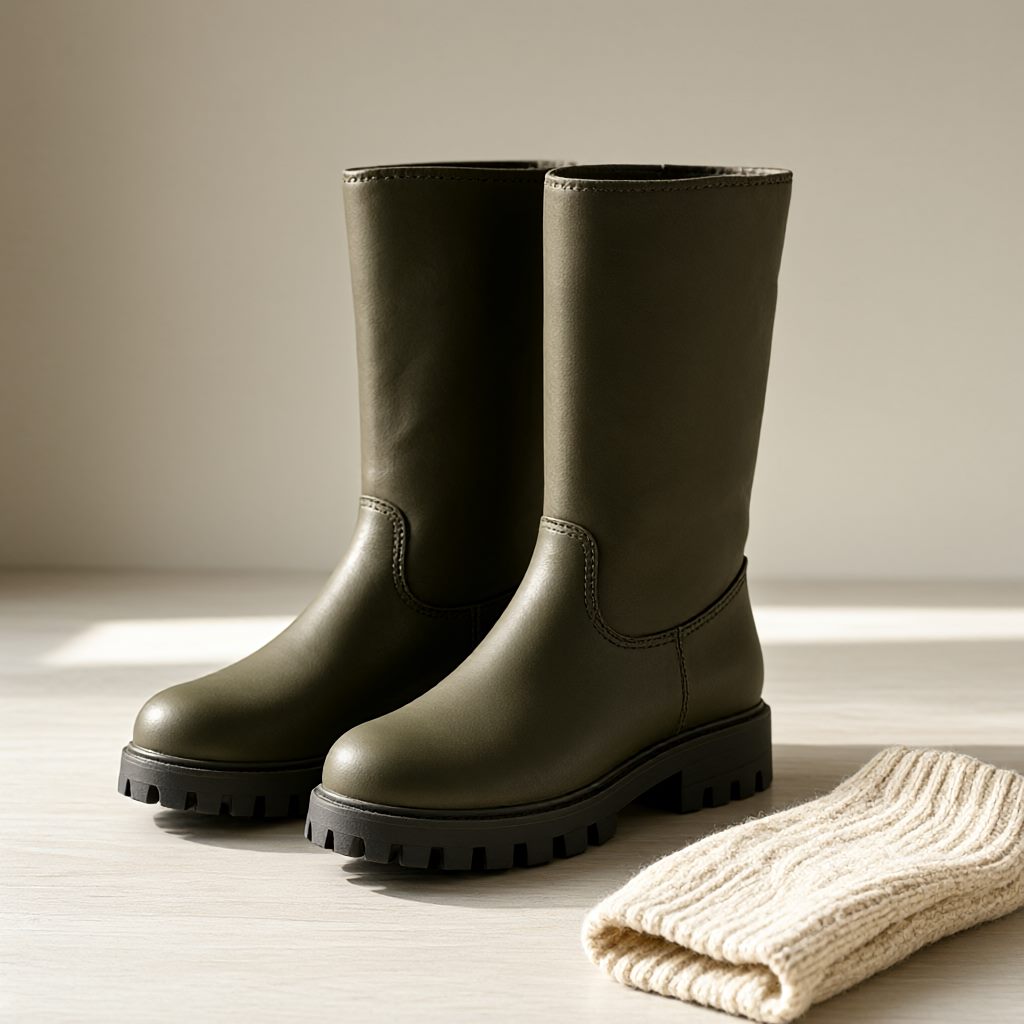
Plus size winter boot selection depends on four quantifiable parameters: calf circumference ease, shaft height coverage, outsole dynamic coefficient of friction (COF) on contaminants, and thermal insulation value. Relying on shoe size alone fails to predict shaft fit, and untested outsole compounds risk low traction on ice. A valid selection process replaces general sizing with direct calf measurement, verifies shaft dimensions, checks ASTM F2913-24 slip test data, and matches insulation ratings to ambient temperature ranges.
Calf Circumference Measurement and Ease
Measure the widest part of the calf using a soft tape measure while standing and wearing the intended winter sock thickness. Record this measurement in inches or centimeters. Compare the recorded number directly to the shaft circumference listed in the product specification rather than correlating it with foot size, as shaft widths vary independently among the same foot length.
Allocate at least one inch (approximately 2.5 centimeters) of ease beyond the measured calf circumference. This allowance prevents thick winter socks from restricting blood circulation and accommodates natural calf expansion during prolonged walking. If a product specification lacks a shaft circumference metric, the fit remains unverified for plus size requirements.
Shaft Height and Closure Mechanisms
Shaft height determines the extent of lower leg coverage and snow ingress protection. A shaft height of 10 inches or more serves as the workable starting point for mid-calf protection, keeping the gap below the knee while remaining above the snow line for most urban and light trail conditions. Measure shaft height from the floor to the top of the shaft along the outside of the boot.
Closure mechanisms must accommodate the added circumference ease. Full-length zippers paired with a storm flap allow the shaft to open fully for entry, preventing the need to force a wide foot and calf through a narrow opening. Lacing systems that extend up the shaft permit circumference adjustment at multiple vertical points, securing the fit without gap exposure. Pull-on styles without adjustable closures require exact circumference matching and lack adaptability for layering variations.
Outsole Slip Resistance and ASTM F2913-24
Outsole slip resistance requires evaluation under the ASTM F2913-24 standard, which measures the dynamic coefficient of friction between footwear and flooring under reproducible laboratory conditions. The test applies a vertical force of 500 Newtons for men's footwear and 400 Newtons for women's footwear, with horizontal sliding at 0.3 meters per second. Surface contaminants in the test include liquid water, ice, oil, and grease. The method derives from SATRA TM144 and uses the SATRA STM 603 whole-shoe tester.
Three test modes simulate real-world biomechanical slip phases: forward heel slip at a 7-degree angle, forward flat slip, and backward toe slip. The COF is read at 0.1 seconds after the initiation of the slide. Testing protocols require five to ten successive runs, averaging the final five consecutive runs, which generally vary by less than 10 percent. Higher COF values indicate greater slip resistance. Outsoles featuring composite grit or vertically oriented glass fibers yield higher COF values on dry and wet ice than conventional rubber composites.
Insulation Weight and Temperature Ratings
Boot insulation relies on material thickness, type, and the resulting thermal resistance, often expressed in grams per square meter (e.g., 200g, 400g, 600g insulation). Higher gram values correspond to greater trapping of dead air and increased cold tolerance. Manufacturers assign temperature comfort ratings based on stationary and active metabolic rates; verify the specific activity level tied to the rating, as a rating derived from high-activity walking will overestimate warmth for stationary use.
For plus size fits, interior volume increases with shaft circumference and width, which can alter the air exchange rate inside the boot. Ensure the insulation layer does not compress against the wide calf or thick sock, as compressed insulation loses its thermal trapping capacity. The shaft ease allowance of one inch maintains the loft of the insulation along the calf. Select a temperature rating that exceeds the lowest expected ambient temperature by a margin to account for wind chill and moisture penetration.
Boot Specification Verification Checklist
Calf circumference: widest point measured standing in winter socks, at least one inch of ease added, total compared with the shaft circumference in the specification. Shaft height: 10 inches or more for mid-calf coverage, measured from the floor along the outside of the boot. Slip resistance: outsole documented to ASTM F2913-24 on ice or an oil-wet surface, with the test mode and COF value stated rather than a general anti-slip claim. Insulation: gram weight and temperature rating matched to the lowest expected ambient condition, with the insulation layer left uncompressed against the calf. Closure: full-length zipper with storm flap or lacing that extends up the shaft, checked at the top of the calf rather than at the ankle.