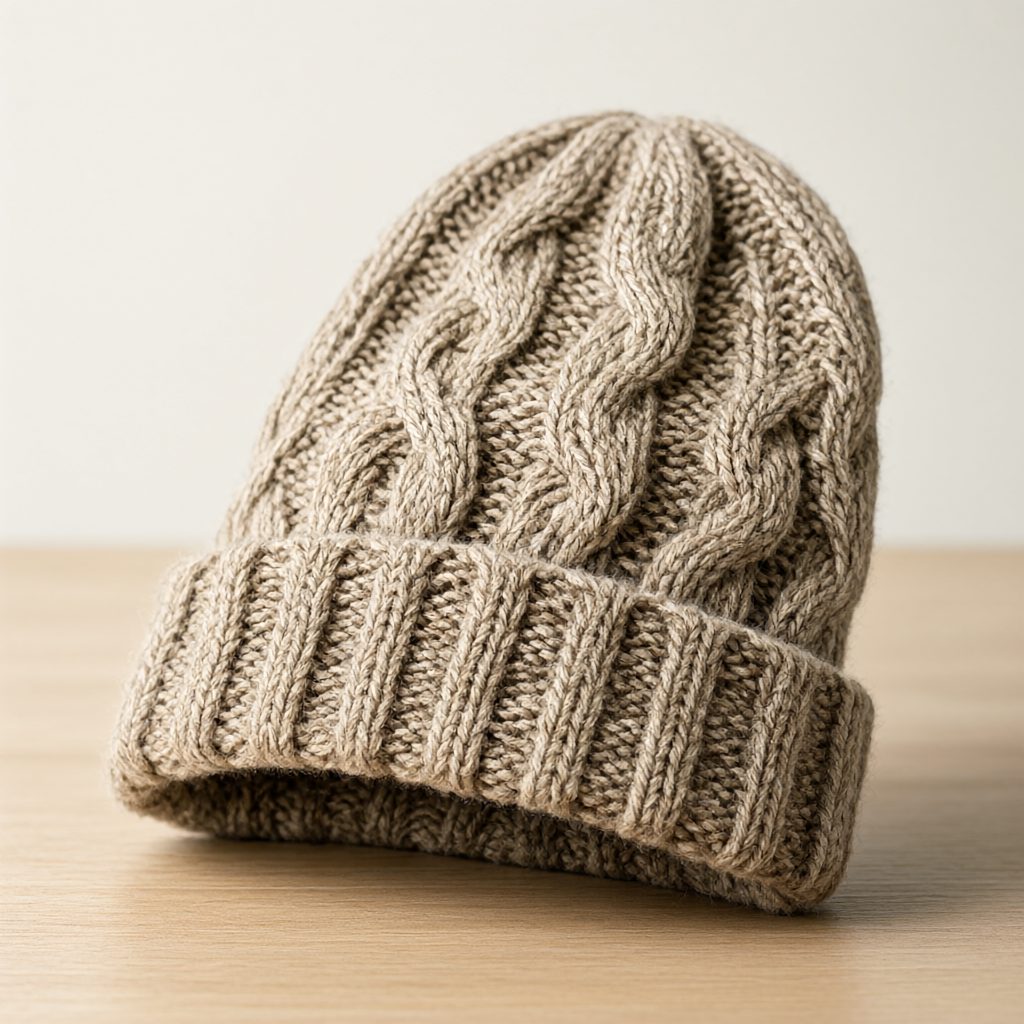
Plus size winter beanie fit requires matching the head circumference band to the hat's built-in negative ease, confirming the crown depth reaches the ear base, verifying full or halfway ear coverage, and testing that the lining and brim stretch recovery maintain grip after extended wear. A properly fitted beanie stays in place when the head tilts forward, applies even pressure without leaving red marks on the forehead after ten minutes, and covers the ears completely or at least halfway.
Head Circumference Bands and Negative Ease
Measure head circumference by wrapping a flexible tape around the widest part of the head, roughly one finger width above the eyebrows and over the upper ears. Keep the tape level and snug without pulling tight. Adult woman head circumference ranges from twenty-one to twenty-three inches, which converts to fifty-three to fifty-eight point five centimeters. Adult man head circumference ranges from twenty-two to twenty-four inches, converting to fifty-six to sixty-one centimeters. These ranges overlap by about two inches, reflecting that head size does not sort cleanly by label.
Beanie size bands categorize these measurements into small at fifty-one to fifty-four centimeters, medium fitting most adults at fifty-five to fifty-eight centimeters, large at fifty-nine to sixty-one centimeters, and extra large at sixty-two to sixty-four centimeters. Hat circumference is commonly built about ten percent smaller than the measured head circumference so the fabric stretches and grips the head. This ten percent difference is the negative ease. For example, a head measuring fifty-eight centimeters requires a beanie with a finished circumference around fifty-two point two centimeters.
When between sizes, choose the smaller size for stretchy rib knits because they relax with wear, typically after thirty to sixty minutes of wearing for acrylic rib knits. Choose the larger size for stiff or low-stretch fabrics, or for voluminous hair that adds bulk under the hat. If the beanie leaves a red mark across the forehead after ten minutes, it is too small. If it can be pulled down past the eyebrows without resistance, it is too large.
Crown Depth and Ear Coverage
Crown length is measured from the crown of the head to the base of the ear in a straight line. For a twenty-two inch head, the generic adult crown length is about eight point two five inches, or twenty-one centimeters. For a twenty-four inch head, the crown length extends to nine point two five inches, or twenty-three point five centimeters. Adult beanie finished height typically runs seven to eight inches, or eighteen to twenty centimeters, for a standard fit. Folded brims add their own depth to this measurement.
Because the crown and the band stretch differently, the band is sized to the head while the body is sized to the fabric. Crown diameter follows the circumference divided by pi. A deeper crown depth accommodates larger head volumes and ensures the beanie can be pulled down far enough to cover the ears completely. If the crown depth is insufficient, the beanie will ride up and expose the upper ears, forcing the brim to sit too high on the forehead.
Ear coverage depends on the interaction between crown depth and brim placement. A well-fitted beanie sits about one finger-width above the eyebrows and covers the ears completely or at least halfway. Full ear coverage is necessary for winter conditions to block wind. Check ear coverage by tilting the head forward; the back of the ear should remain covered without the brim shifting upward.
Lining Interaction and Brim Stretch Recovery
Winter beanies often include inner linings for insulation, such as fleece or sherpa. The lining must match the outer shell's stretch characteristics. If the lining has less stretch than the outer rib knit, the lining dictates the maximum head circumference the beanie can accommodate. Check lining fit by putting the beanie on and stretching the jaw; the lining should not feel tight against the temples or restrict forehead movement.
Brim stretch recovery determines how well the beanie maintains grip over time. Brims are usually built with roughly two inches, or five centimeters, of negative ease relative to head circumference, since the brim must grip rather than sit loose. To test stretch recovery, stretch the brim band horizontally to its maximum extent and release it. The brim should snap back to its original measurement without wavering or remaining elongated.
Acrylic rib knits relax after thirty to sixty minutes of body heat. To simulate this before purchasing, hold the brim stretched around a cylindrical object matching the head circumference for thirty minutes. Remove the beanie and measure the brim circumference. If it has expanded beyond the intended negative ease allowance of ten percent, the brim stretch recovery is insufficient for long-term wear, and the beanie will slide off the back of the head during movement.
Plus Size Beanie Fit Verification Checklist
Wrap a tape measure one finger width above the eyebrows and over the upper ears to record head circumference. Cross-reference the measurement with the fifty-one to sixty-four centimeter size bands, subtracting ten percent for negative ease. Select the smaller size for high-stretch rib knits and the larger size for low-stretch fabrics or voluminous hair. Measure the vertical distance from the crown to the ear base to confirm crown depth reaches at least eight point two five inches for a twenty-two inch head. Verify the beanie sits one finger-width above the eyebrows while covering the ears completely or halfway. Put the beanie on for ten minutes to check for red forehead marks indicating excessive pressure. Stretch the brim around an object matching head circumference for thirty minutes and measure the relaxed brim to confirm stretch recovery maintains the required grip.