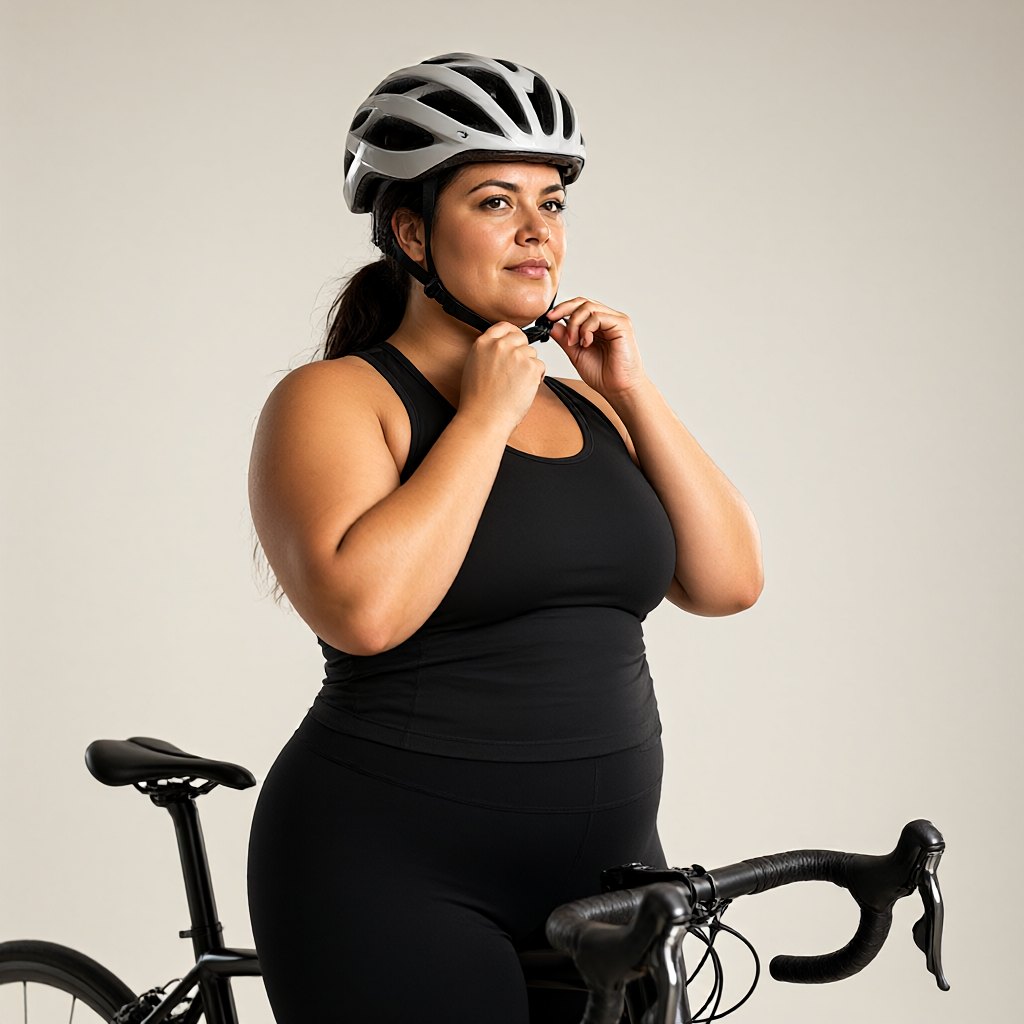
Most bicycle helmets are designed around a single head shape, leaving plus size riders with fewer options. Fit issues go beyond circumference: a larger head often means a wider skull, a more pronounced occipital bone, and a lower hairline, changing how a helmet sits and straps track. This guide covers fit checks for head circumferences over 58 cm or widths pushing against standard models' inner shells.
Head Measurement and Helmet Size Range
Take two measurements: circumference (flexible tape 2 cm above eyebrows around the occipital bump) and width (temple to temple using a caliper or rigid ruler). Width is more useful for identifying side pressure. Manufacturer circumference ranges assume an average width-to-length ratio; if width exceeds 15.5 cm while circumference is at a size range's upper end, temple discomfort will likely occur even if it fits lengthwise. Look for wide oval or round internal shapes and verify specific internal width in specs, as inner shell width is more reliable than circumference alone. For circumferences of 60 cm or more, choose a helmet extending at least 2 cm beyond your measurement. This margin allows proper rear retention function; a helmet at maximum expansion has less room to compress foam against the skull, reducing impact absorption.
Chin Strap Angle and Buckle Placement
With the helmet level, fasten the chin strap and check the strap angle. Straps should form a V shape meeting just below the ear lobe, not at the jawbone or behind the ear. A wider jaw and shorter neck often cause straps to sit too far forward or back, making the helmet slide backward (if V is behind ear) or tilt forward (if V is in front). Adjust side strap sliders to move the V point directly below the ear lobe, ensuring the strap doesn't cross ear cartilage. Riders with thicker necks may need longer straps. Additionally, a wider chin may center the buckle, causing skin irritation; move it about 2 cm from the centerline so it doesn't touch the throat or jawbone.
Rear Retention and Occipital Fit
The rear retention cradle must sit against the occipital bone. On plus size heads, this bump is often more prominent and lower; if the cradle sits above it, the helmet rocks forward, pressing on the forehead. Adjust the cradle's vertical position or choose a deeper one. Turn the dial until the cradle touches without hard pressure: the helmet shouldn't move when shaking side to side, but a finger should slide between cradle and skull. Wider heads may need the retention opened wider; laterally expanding cradles are preferable. Also check the gap between the helmet's rear edge and neck—a thicker trapezius or higher hairline can cause contact during head turns. A shorter or curved rear profile reduces this; if it contacts the neck, the fit is too low or the rear edge too long.
Ventilation and Hair Volume
Thicker hair can fill ventilation channels, reducing airflow and comfort. Check channel depth and width: channels at least 15 mm deep and 20 mm wide maintain airflow with dense hair, while shallow channels under 10 mm get blocked quickly. A cycling cap adds about 2 mm to circumference; a snug helmet will become too tight with a cap, causing the dial to be fully loose and the helmet to sit too high. Test fit with your intended headwear. For ponytails or buns, check the rear vent or cradle opening; a large opening allows hair through without pushing the helmet forward. Trapped hair prevents a level sit.
Strap Length and Side Clearance
Chin strap length must reach under the chin without cutting into the jaw. Plus size jaws often require longer straps; if a strap is at maximum length and still presses, the model is unsuitable. Side clearance is the space between the inner shell and temples—there should be no contact. If the shell touches the temples, the helmet is too narrow, common for widths over 15 cm. Seek round or wide oval shapes and avoid narrow/intermediate ovals. Also check forehead clearance: the front edge should sit about 2 cm above eyebrows. Sitting lower presses on the brow ridge (often more pronounced on wider faces) and restricts upward vision in upright positions; adjust front pad thickness or choose a higher front edge.
Pre-Ride Fit Checklist
Before every ride, run through these checks: 1) Confirm size range includes circumference and width with a 2 cm margin. 2) Adjust rear retention so cradle sits on occipital bone without rocking. 3) Position chin strap V below ear lobes; ensure buckles don't touch jawbone. 4) Fasten chin strap with two fingers of clearance; ensure it doesn't cut into jaw when opening mouth. 5) Shake head; helmet shouldn't move more than 1 cm in any direction. 6) Press front and rear edges; no pressure points on forehead, temples, or occipital bone. 7) Check ventilation channels for hair/headwear blockage. 8) Turn head fully left and right; rear edge shouldn't contact neck/collar. If any check fails, adjust and re-test.