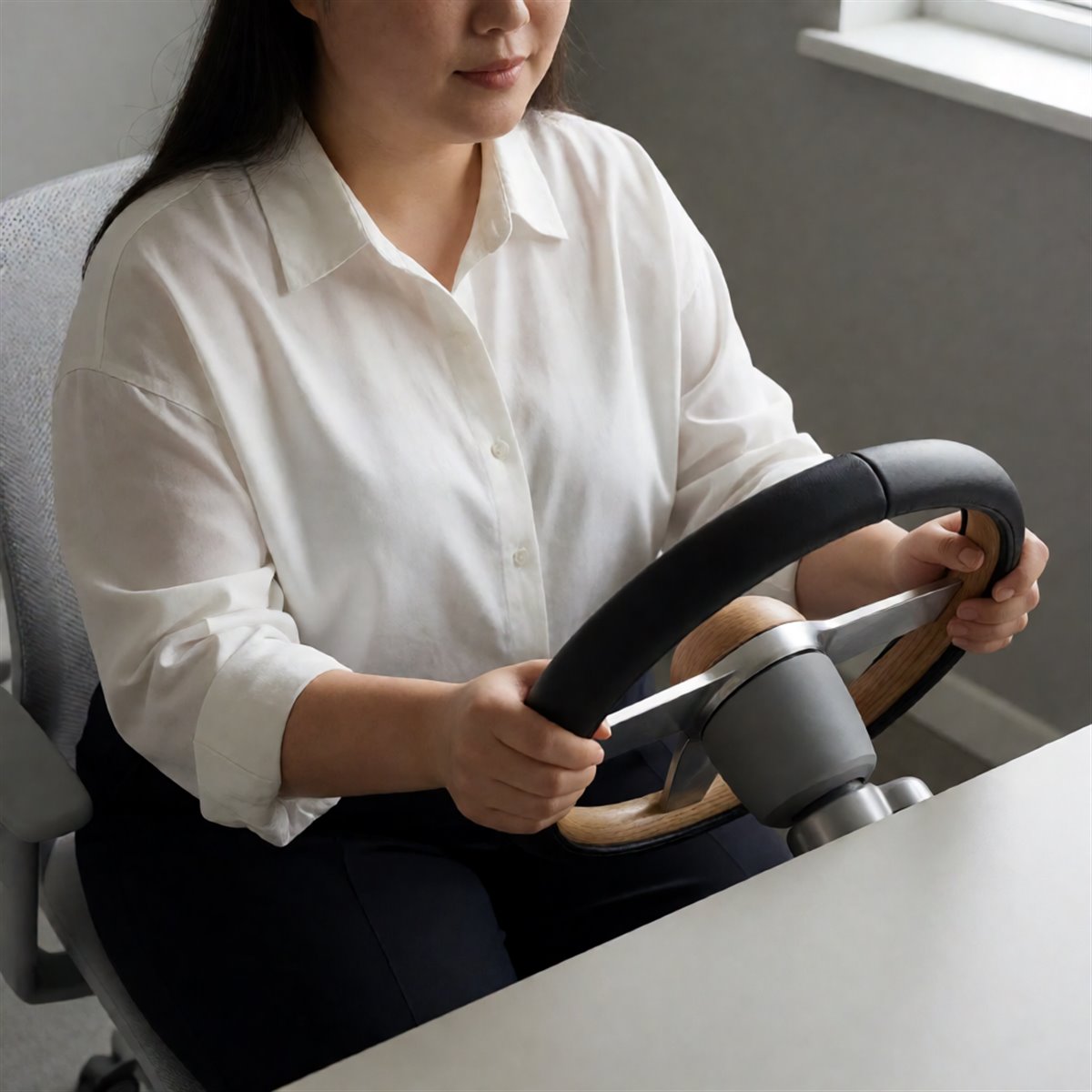
Selecting a steering wheel cover for larger hands requires matching wheel dimensions, material grip, and cover thickness to reduce hand cramping and improve control. Standard covers often stretch out or provide inadequate grip for broader palms, leading to hand fatigue during extended driving. The correct cover increases the effective wheel diameter to a comfortable grip size while maintaining tactile feedback.
Measuring Steering Wheel Circumference for Cover Sizing
Accurate wheel measurement prevents purchasing a cover that slips or requires excessive force to install. A flexible tailor's tape measure is wrapped around the outer edge of the steering wheel to find the circumference. Most standard wheels measure between 94 and 101 centimeters. This measurement is compared against the manufacturer's specified wheel circumference range, rather than just the generic size label.
Wheel diameter provides a secondary reference if a tape measure is unavailable. The distance is measured across the wheel from outer edge to outer edge. A 38-centimeter diameter corresponds to a standard wheel cover size. Wheels exceeding 40 centimeters in diameter require covers labeled for large or oversized wheels to ensure the material stretches properly over the rim.
The thickness of the bare wheel rim affects the final grip size. A leather-wrapped factory wheel has more volume than a bare plastic rim. The bare rim thickness is measured by checking the distance from the top of the rim to the bottom edge. This thickness is recorded to calculate how much additional volume the cover adds to the final grip.
Material Selection Based on Grip and Temperature Stability
Material composition determines the friction level between the palm and the wheel. Leather and perforated leather provide high friction and moderate breathability, reducing the likelihood of the hand sliding during maneuvers. Covers with a textured grain or perforations are selected to prevent sliding, as smooth leather becomes slippery when hands perspire.
Synthetic rubber and silicone covers offer consistent grip in wet conditions and resist temperature fluctuations. These materials remain pliable in cold environments and do not absorb moisture. The drawback is reduced breathability, which causes sweating during prolonged contact. Silicone covers with molded texture patterns are evaluated, as these channels redirect moisture away from the contact points.
Fabric and microfiber covers wick moisture effectively but sacrifice structural rigidity. These materials stretch over time, creating slack between the cover and the wheel rim. Slack produces a delayed steering response, as the cover moves independently of the wheel. Fabric covers are unsuitable for vehicles requiring precise handling and are restricted to casual, low-speed driving scenarios.
Determining Optimal Cover Thickness for Larger Hands
Steering wheel rim thickness dictates how the hand wraps around the wheel. A standard bare rim measures roughly 2.5 centimeters in thickness, forcing larger hands to grip tightly with stretched fingers. A cover adding 1 to 1.5 centimeters of thickness brings the total rim diameter to a range that allows the fingers to wrap naturally without overextension.
Excessive thickness creates new ergonomic problems. Covers exceeding 2 centimeters of padding force the hand into a wide pinch rather than a closed grip. This position strains the thumb tendons and reduces the force applied during steering inputs. A grip test involves wrapping the dominant hand around the covered rim; the fingertips should overlap the base of the fingers without touching the palm.
Internal lining material controls the firmness of the grip. Covers with dense foam padding maintain their shape and distribute pressure evenly across the palm. Covers with hollow rubber tubing collapse when squeezed, requiring more grip strength to hold the wheel steady. Covers specifying dense foam or solid rubber cores are preferred over hollow designs.
Installation Methods to Prevent Cover Slipping
A loose cover rotates around the steering wheel rim, creating a hazardous delay in steering response. Installation requires stretching the cover material evenly around the circumference to achieve a tight friction fit. The process begins at the top of the wheel, where the cover edge is worked over the rim in small increments, pulling equally on the left and right sides to maintain alignment.
A heat source is used to soften rigid leather and rubber covers, allowing the material to stretch without tearing. The cover is placed in direct sunlight or warmed with a hair dryer on a low setting for several minutes before installation. The warmed material conforms to the wheel shape more easily. After installation, the material contracts as it cools, tightening the fit against the rim.
Lacing serves as a secondary retention method for leather covers. Pre-punched stitching holes allow the cover to be sewn closed around the wheel. The lacing cord is pulled tight at regular intervals to eliminate gaps between the cover edges. A laced cover does not slip or rotate, making it the most secure installation method for thick, heavy leather variants.
Assessing Grip Security and Hand Comfort Post-Installation
Post-installation evaluation confirms the cover fits securely and improves the driving posture. The wheel is gripped at the nine and three o'clock positions with both hands. Firm rotational force is applied in both directions. The cover must not slide independently of the steering wheel rim. Any movement indicates an incorrect size or insufficient installation tension.
Hand placement during the grip test reveals comfort levels for larger palms. The base of the thumb should rest against the side of the cover without pressing into the hard inner rim. The fingers should curve around the front of the wheel without the knuckles bending past a ninety-degree angle. If the knuckles lock or the thumb base aches, the cover thickness is insufficient or excessive.
Temperature exposure alters material properties over time. The vehicle is left in varying temperatures, and the fit is rechecked after the cabin reaches extreme heat or cold. Rubber and silicone maintain grip in cold conditions but may become tacky in high heat. Leather remains stable but requires conditioning to prevent drying and shrinking after repeated sun exposure.
Steering Wheel Cover Fit and Comfort Checklist
The wheel circumference is verified with a tailor's tape measure before purchasing a cover. A cover adding 1 to 1.5 centimeters of thickness is selected for larger hands, avoiding overly thick padding that forces a pinch grip. Textured leather or molded silicone is chosen for high friction and temperature stability. Rigid covers are softened with low heat before stretching them onto the wheel. Leather covers with pre-punched holes are laced to eliminate rotational slipping. The installed cover is tested by applying rotational force at the nine and three o'clock positions to confirm zero movement. It is verified that fingertips overlap the base of the fingers without touching the palm during a resting grip. Cover tension is reassessed after exposing the vehicle cabin to high and low temperature extremes.