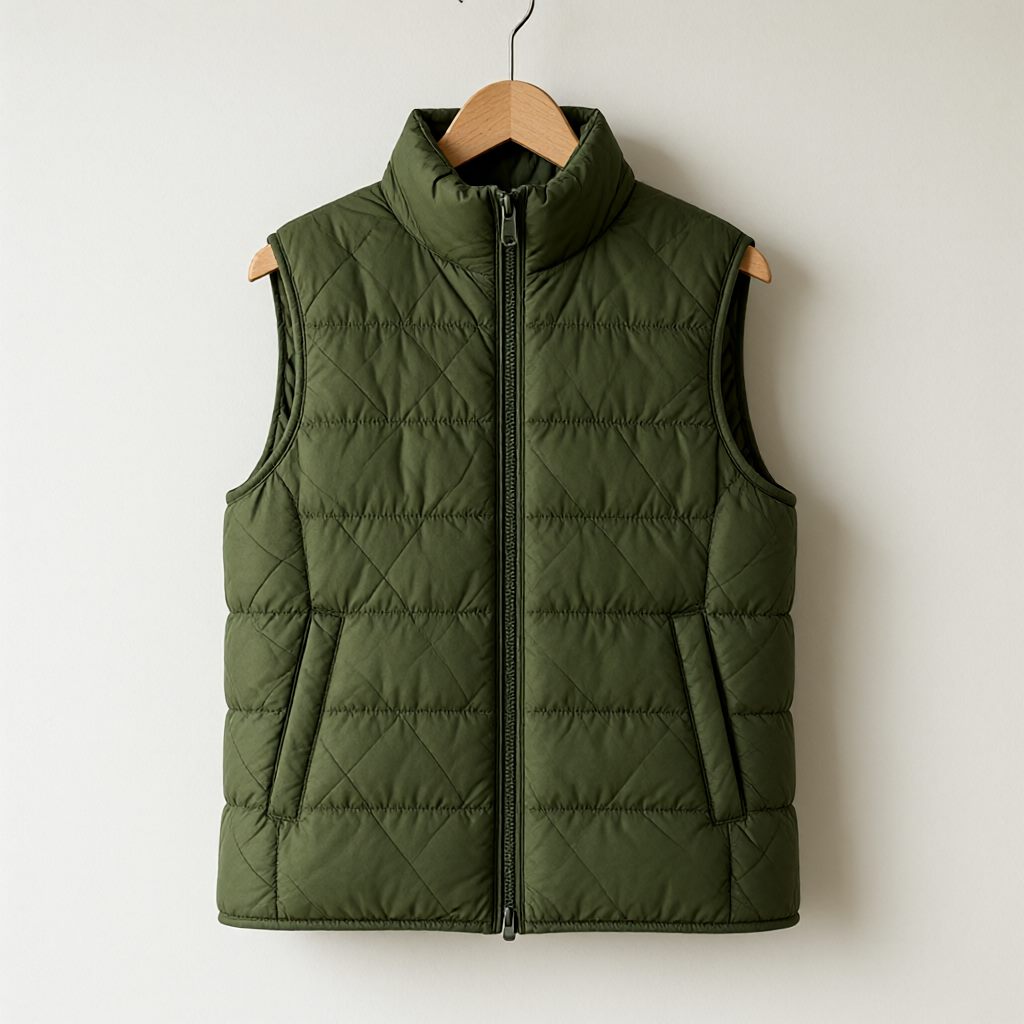
Plus size winter vests function as thermal barriers that must accommodate broader shoulders, fuller busts, and wider torsos without restricting arm movement or riding up. The four critical evaluation points are armhole depth, hem coverage, fill weight, and layering order. When these elements align with body proportions, the vest maintains consistent insulation across the torso and allows unrestricted upper body mobility.
Armhole Depth and Vertical Opening
Armhole depth is a critical issue for a large share of plus size wearers. If armholes are placed too high or cut too narrow, they restrict upper arm movement and pull at the shoulder seams. On a fuller bust, shallow armholes also gape, exposing the side of a bra or bunched shirt fabric. The armhole vertical opening must scale proportionally with the size. Manufacturer size charts for insulated vests show armhole vertical openings ranging from 26.5 cm at size XS up to 36 cm at size 8XL, growing by roughly 1.5 to 2 cm per size step at the top end of the range.
Deep armholes are a design feature intended to provide ease over thicker garments, but they require precise placement. The fit check is done over the exact shirt intended for that layer: the arms are raised once and the armhole gap is observed. If the opening separates from the body or exposes undergarments, the armhole depth exceeds the required ease for that specific layer. Conversely, if the shoulder seam lifts off the shoulder point or the fabric pulls across the upper chest, the armhole lacks sufficient vertical opening for the wearer's frame.
Hem Coverage and Length Proportions
Hem coverage dictates the thermal zone the vest protects. The hem should extend at least 3 inches below the natural waist for adequate coverage of the lower torso. A hem that stops at the fullest part of the hips creates a visual break at the widest point and tends to ride up during movement, exposing shirt fabric and breaking the continuous insulation layer. Three primary vest lengths serve different lower-body garments: cropped vests stopping at the waist pair with high-waisted bottoms; high-hip vests function as all-rounders; and long vests covering the hips work with leggings and slim pants.
Hip-to-thigh coverage of roughly 20 to 30 inches balances warmth and mobility, with taller styles reaching mid-thigh. When the vest length roughly matches the rise of the trousers, the side seams fall straight from the underarm to the hem, preventing the bottom edge from shifting upward. Many plus size vests incorporate design features to manage hem stability, including drawstring waists, side snaps, or elasticised hems to adjust the fit. Stretch panels at the sides keep the hem from riding up during daily tasks by allowing the fabric to flex with the torso rather than resisting it.
Fill Weight and Insulation Metrics
Fill weight determines the vest's thermal capacity independent of its shell material. For plus size insulated vests, padding between 180 and 240 GSM (grams per square meter) provides the thermal density required for winter conditions without creating excessive bulk across the midsection. A 100% polyester lining is standard for this fill range, offering adequate wind resistance while allowing the insulated chambers to maintain loft. As body surface area increases with plus sizing, the total fill mass increases proportionally, making the GSM rating a consistent metric across the size range from XS to 8XL.
Higher GSM values increase the vest's profile, which directly impacts layering capability under structured garments. A vest with 240 GSM padding requires more room under a coat than a 180 GSM vest. Body length and shoulder width must scale with the fill thickness; a heavily insulated vest that is too short will compress the fill at the hem when the wearer sits, reducing the effective insulation at the lower back. The half body measurement in size charts scales from 49 cm to 67 cm across the size range to distribute the fill weight without pulling across the chest or stomach.
Layering Order and Fit Integration
Layering order dictates whether a plus size vest functions as a standalone outer layer or a mid-layer under a larger coat. When worn as a mid-layer, the vest must fit over base layers without bunching at the waist. Relaxed fits add ease through the torso and slightly deeper armholes, which remains comfortable over thicker shirts but creates fabric accumulation under a structured jacket. If the vest will layer under a coat, the coat's own armhole vertical opening and shoulder-to-shoulder width have to exceed the vest's measurements, otherwise the sleeve compresses the vest armhole and restricts the upper arm.
Big and tall cuts shift proportions to accommodate layering by providing longer hems, more room across the chest and shoulders, and armholes shaped to reduce pulling for broader frames. The down shoulder measurement, which indicates the drop from the shoulder point to the armhole seam, ranges from 4 to 6 cm in plus size vests, allowing the shoulder to sit correctly over a sweater or fleece. When layering the vest over a sweater, check the collar opening width, which spans 14 to 19 cm across the size range, to ensure it clears the sweater's neckline without choking.
Plus Size Winter Vest Fit Checklist
Armhole vertical opening: 26.5 cm to 36 cm across standard plus sizing, wide enough for the upper arm without pulling. Armhole depth: checked over the intended shirt with the arms raised, looking for gaping or shoulder seam lift. Hem length: at least 3 inches below the natural waist, and never stopping at the fullest part of the hips. Ride-up control: stretch side panels, elasticised hems or drawstring adjustments at the hem. Fill weight: 180 to 240 GSM for winter thermal requirements. Layering order: under a structured coat, the coat's shoulder width and armhole opening are the binding measurements. Vest length: aligned with the trouser rise, so the side seams fall straight and the hem stays put in motion.