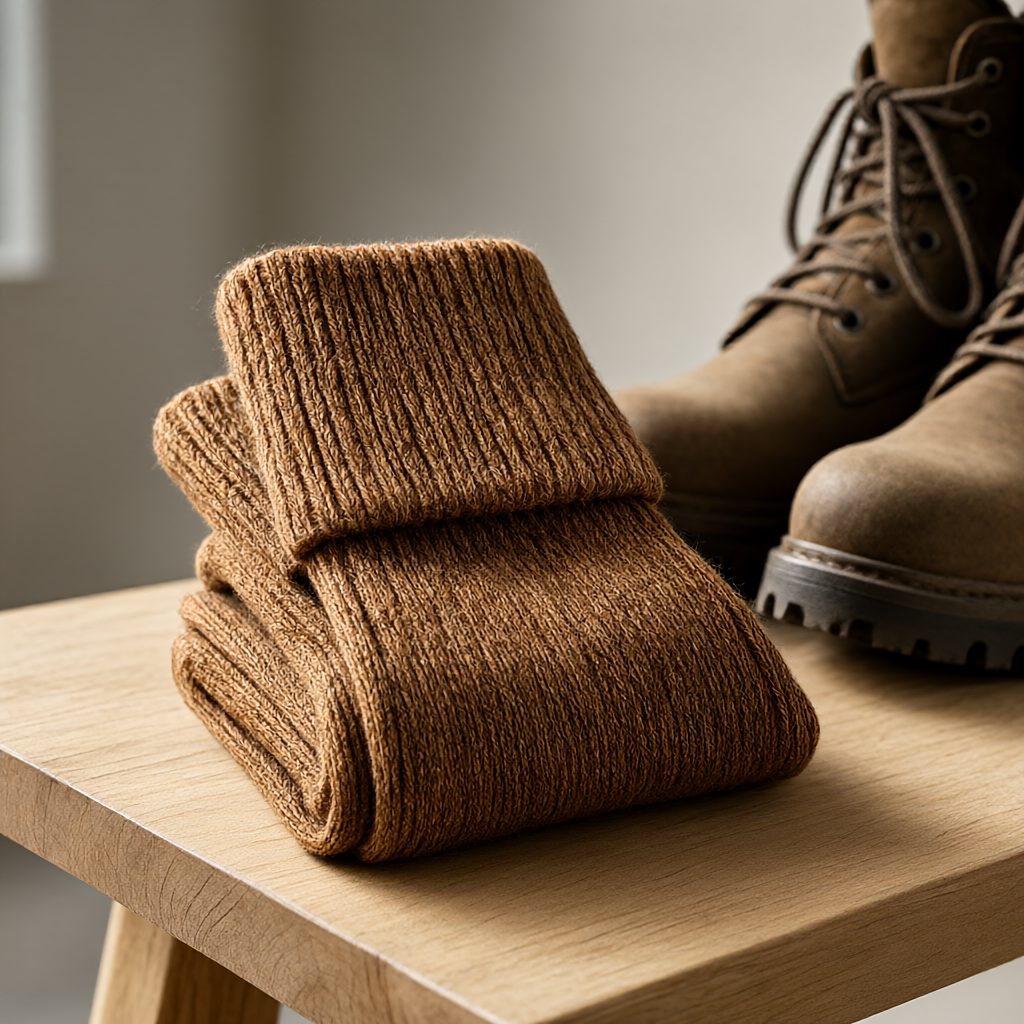
Plus size winter socks must address calf circumference, cuff construction, shaft height, and wool content to prevent circulation restriction and cold feet. A sock that fits the foot but binds at the calf cuts off warm blood flow, leading to cold skin and numbness. Standard socks with sewn elastic bands dig into wider legs, while socks made with insufficient wool content fail to regulate temperature when feet sweat. Evaluating these four variables ensures the sock stays up without constriction, fills the boot shaft without bunching, and retains warmth in damp conditions.
Calf Circumference and Size Charts
Measure the calf at its widest point before ordering tall or over-the-calf socks. Compare this measurement against the sock's listed calf circumference, not just the foot size. Many budget socks run small in the calf, so relying on standard shoe sizing leads to a tight fit. If the size chart lists a calf range, the measured calf should fall within the lower two-thirds of that range to allow for stretch recovery and layering. When between sizes, size up to avoid constriction.
A non-binding cuff opens wide enough to accommodate a full calf without stretching the fabric to its limit. A cuff that lays flat at 10 inches provides a 20-inch circumference. If the widest calf measurement exceeds 20 inches, this sock will stretch tightly and restrict circulation. Socks knitted wide from the ribbing down provide more volume throughout the shaft compared to standard socks that merely feature a looser top band. This structural difference prevents the sock from tapering sharply below the calf.
Non-Binding Cuff Construction
Non-binding tops lack sewn elastic bands that compress the leg. Instead, the stretch is knitted directly into the ribbing. This construction holds the sock in place by relaxing back against the leg rather than digging into the skin. A proper non-binding cuff stays up without leaving red rings or indentations on the calf. If the sock leaves a deep mark, the cuff is too tight or relies on traditional elastic that degrades and tightens over time.
Light compression in a winter sock helps manage fatigue during long periods of standing or walking, but it must not cut circulation. Tingling or pale skin indicates the compression is too firm for the calf size. For athletic or larger calves, choose models offered in multiple calf sizes or with higher stretch ratios. Flat-linked toe seams also contribute to overall comfort by eliminating bulk across the top of the foot, preventing pressure points when boots are laced tightly.
Sock Height and Boot Compatibility
Sock height determines how well the leg is protected from cold air and snow infiltration. Crew height stays above the boot collar and protects ankles from drafts, suiting most everyday winter boots. Over-the-calf height suits ski, snowboard, and tall work boots. It keeps the entire lower leg warm, prevents the boot cuff from chafing bare skin, and helps the sock stay up without sliding down into the boot.
Mid-calf and over-the-calf heights create a physical barrier that seals out snow and keeps ankles dry. The sock must be tall enough to overlap the boot top by at least two inches. If the sock ends at or below the boot collar, snow and cold air enter the gap. Conversely, knee-high socks can bind on larger calves if the shaft lacks sufficient stretch. Always verify the shaft height accommodates the calf without rolling down, as a rolled-down sock creates a tight band that restricts circulation.
Wool Content and Temperature Regulation
Check the actual wool percentage on the label. Anything under 50 percent will not breathe like true wool and fails to provide adequate temperature regulation for cold weather. A high-quality winter sock blend often contains 76 percent merino wool, with the remaining fibers consisting of synthetics like 13 percent polyester, 10 percent nylon, and 1 percent spandex for durability and shape retention. Merino wool keeps feet warm when damp and wicks moisture away from the skin. Synthetics dry quickly but lack the natural thermoregulation of wool.
Overly thick socks can restrict circulation inside a fitted boot, making feet colder rather than warmer. Thickness should match the boot's interior volume. A sock that makes the boot feel too tight compresses the insulation inside the boot and restricts blood flow. Testing socks with the intended winter boots is the practical way to confirm there is enough room for the foot, the sock, and the boot insulation to coexist without pressure.
Cushioning Placement and Friction Control
Cushioning adds warmth and impact protection, but its placement matters more than overall thickness. Targeted cushion under the heel and forefoot absorbs shock in high-impact areas without adding bulk across the top of the foot where laces press down. Full cushion suits roomy boots where volume is available, but can cause bunching in snug-fitting footwear. Bunching creates pressure points and friction, leading to blisters.
The sock must fit the foot snugly without constricting, hugging the foot and ankle to prevent sliding. A contoured shape that wraps the arch and heel prevents the sock from slipping into the boot. The most common failure point for winter socks is the heel and toe seam, where friction is highest. Reinforced stitching in these areas extends the sock's lifespan, especially under the repeated stress of walking in heavy winter boots.
Plus Size Winter Sock Verification Checklist
Measure the widest point of the calf and compare it to the sock's laid-flat cuff width multiplied by two. Select non-binding cuffs with stretch knitted into the ribbing rather than sewn elastic bands that dig into the leg. Choose a shaft height that overlaps the boot collar by at least two inches to block snow and cold air. Verify the wool content exceeds 50 percent to ensure breathability and warmth when damp. Confirm targeted cushioning sits under the heel and forefoot without making the boot fit tight or bunching across the top of the foot. Test the sock inside the intended boot to check for pressure points or restricted circulation.