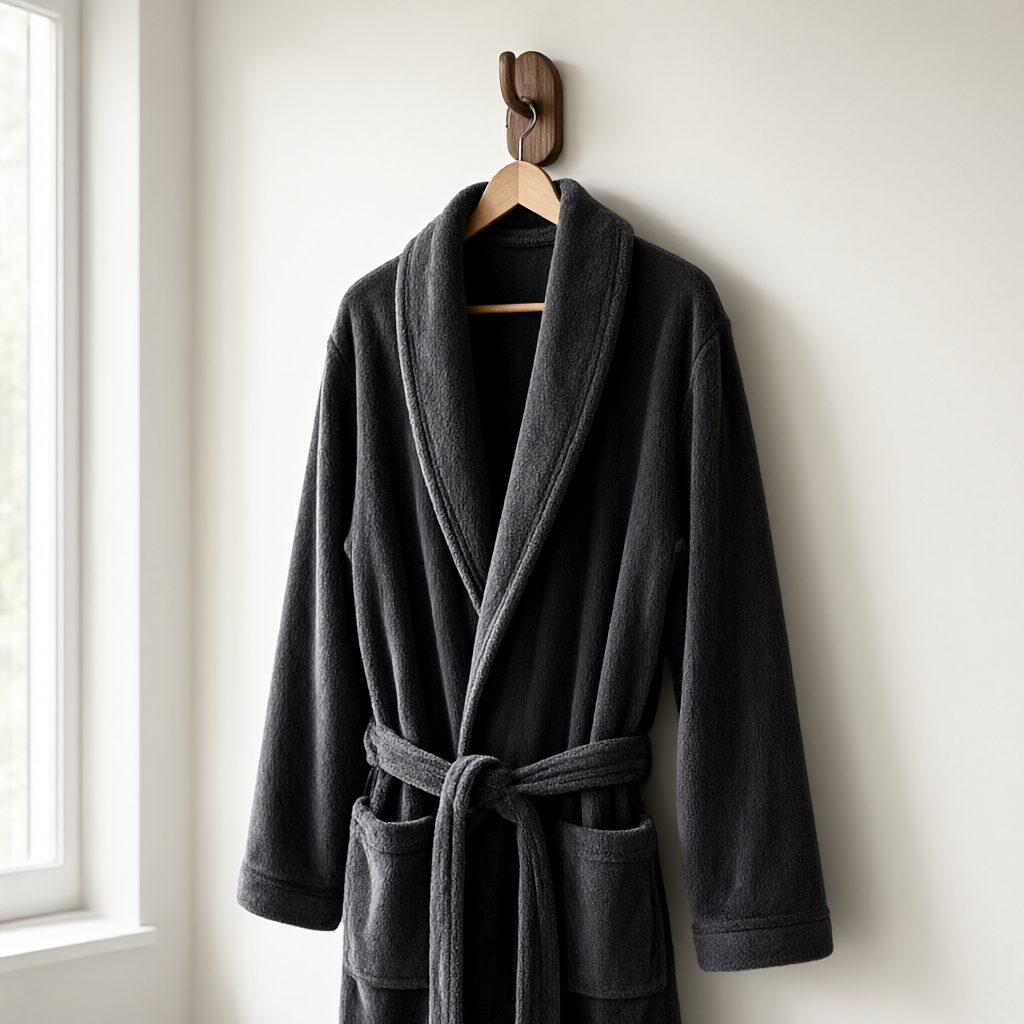
A plus size winter bathrobe must clear four structural and material hurdles to function properly in cold conditions: adequate body length, sufficient wrap overlap, secure belt loop placement, and appropriate fabric GSM. Missing any one of these metrics leads to functional failures such as stair hazards, front panel gaps, unstable closures, or insufficient heat retention. Sizing must rely on actual inch measurements for bust, hip, and sleeve length rather than generic letter codes, as robe sizing is not standardized across manufacturers.
Body Length and Sleeve Reach Measurements
Body length dictates both thermal coverage and physical safety. A robe that is too long brushes steps and becomes a tripping hazard on stairs. Mid-calf is the versatile middle length and the safe option on stairs for most wearers, providing lower leg coverage without interfering with footfall clearance. Ankle-length styles add warmth but require careful navigation on uneven flooring or steps.
Sleeve length requires specific inch measurement checks because a common fit complaint is a robe that fits the torso but has sleeves that are too short. Sleeves must be long enough that they do not ride up when reaching forward or bending. The size chart sleeve reach measurement should be compared against a standing arm extension to ensure continuous wrist coverage during movement.
Wrap Overlap and Inner Tie Anchoring
Wrap overlap measures the distance the front panels cross each other at the bust and hip when the robe is belted. A well-designed plus size robe wraps the front panels far enough that the overlap measures several inches at the bust and hip. This multi-inch overlap ensures that sitting, reaching, and bending do not open gaps that let cold air in. If between sizes, the larger size typically wears better because it preserves this necessary overlap margin.
Inner ties at the waist anchor the under-layer before the outer belt is tied, creating a secure double layer against drafts. Without inner ties, the under-layer shifts independently of the outer panel, causing uneven overlap and side exposure during routine arm movements. Three main closure types exist: belt-only, inside ties plus an outer belt, and a zipper. A two-way zipper allows lower leg venting while keeping the chest sealed, but inside ties with an outer belt offer the most adaptable overlap adjustment for fluctuating body measurements.
Belt Loop Placement and Attachment Methods
Belt loop placement determines whether the robe stays closed or blouses open under tension. Loops set at the natural waist suit most wearers by aligning the belt with the body's narrowest point, which pulls the overlap panels securely inward. Loops set low force the belt to ride downward and the top to blouse open, breaking the overlap seal at the chest and allowing heat to escape.
Belt attachment method dictates long-term closure reliability. A belt sewn into the back center seam or attached at the side seam will not get lost in the wash. Free-floating belts require knotting through a loop before laundering to prevent them from exiting the garment or tangling with other items. Fixed belts maintain consistent tension on the overlap panels wash after wash, preserving the intended fit geometry.
Fabric GSM and Material Weight Class
Fabric weight measured in grams per square metre (GSM) controls density, insulation, and moisture management. Lightweight robes in the 250-350 GSM range suit warm climates or year-round wear in a heated home. Mid-weight robes around 350-450 GSM balance coziness and comfort for most three-season use. Heavyweight robes above 450 GSM, typically terry cloth or fleece, are built for cold mornings and trap body heat effectively.
Material composition further modifies GSM behavior. Fleece robes typically run 200-400 GSM and provide high insulation with low absorbency. Terry cloth often ranges 300-500 GSM, trading some loft for moisture wicking, which is useful after a shower but adds noticeable weight on the shoulders when water is retained. Microfiber sits around 150-250 GSM, drying fastest but providing the least insulation. For winter use, heavyweight terry or fleece above 450 GSM provides the necessary thermal barrier for unheated spaces.
Plus Size Winter Bathrobe Fit Checklist
Wearers should verify that body length hits mid-calf or higher to prevent stair tripping hazards. Sleeve reach measurements on the size chart should be compared against a standing forward arm extension to confirm sleeves will not ride up. Wrap overlap should measure several inches at both the bust and the hip when belted. The presence of inner waist ties should be confirmed to anchor the under-layer before closing the outer belt. Belt loops should sit at the natural waist, not set low, to prevent the top from blousing open. The belt should be sewn into the back or side seam to prevent wash loss. Fabric selection for cold morning use should be at or above 450 GSM, choosing terry for moisture wicking or fleece for high insulation with low absorbency. Actual inch measurements on the size chart should be compared against personal bust, hip, and sleeve dimensions rather than relying on letter sizes.