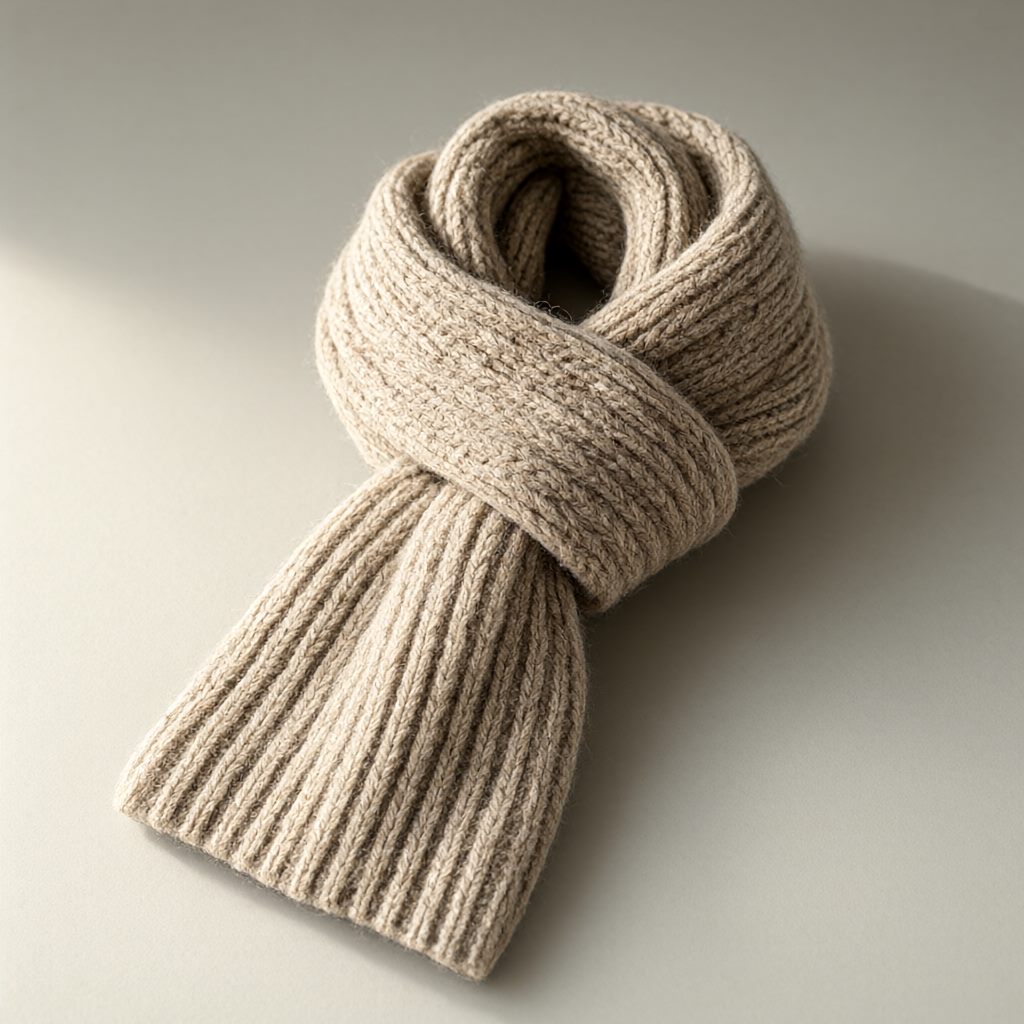
For a plus size frame, a winter scarf meets four simultaneous criteria: enough length to wrap without strain, enough width to cover the neck and chest, a wrap bulk that does not balloon under a coat, and neck coverage that stays put without gaping. A scarf that is merely long or merely wide fails in practice. The following checks use measurable standards to evaluate any scarf before purchase.
Length Requirements for Different Wrap Styles
Total scarf length determines the ability to perform a single loose loop, a snug double wrap, or a full blanket drape. For a plus size torso, the shoulder span often exceeds 20 inches, requiring the scarf to account for that extra distance across the back and chest. A scarf around 70 inches long allows one loose loop with hanging tails that reach the mid-torso, suitable for mild winter days. For a snug double wrap that stays close to the neck, 80 inches or more is necessary, as the second wrap consumes about 25 to 30 inches of length.
A blanket-style scarf in a square shape near 55 by 55 inches provides full chest and shoulder coverage without excessive length trailing behind. For a rectangular blanket scarf, dimensions of 70 to 95 inches long and 25 to 30 inches wide are ideal. A scarf shorter than 65 inches pulls at the back of the neck and leaves the front tails too short to tuck into a coat. Calculating the shoulder span and adding 12 to 16 inches for comfortable drape provides a comparison figure against the scarf length.
Width and Neck Coverage Checks
Width governs how much of the neck and upper chest the scarf shields. Standard winter scarves run 10 to 12 inches wide, but on a plus size neck and chest, that width often leaves a gap at the sides. A width of 15 inches or more is the threshold for genuinely oversized coverage. For petite plus frames, a width between 22 and 32 inches works well, while broader plus size frames need 26 to 40 inches. Narrow widths under 20 inches are a common miss, as they require multiple wraps to cover the neck and create unnecessary bulk.
Neck coverage relates to how the scarf sits against the throat and collarbone. A scarf with a width of at least 15 inches covers the front of the neck fully when wrapped once. Wrapping the scarf and checking for skin between the scarf edge and the coat collar tests coverage. A gap of more than half an inch indicates the scarf is too narrow or the wrap style leaves a V-shaped opening. For a snug fit, the scarf touches the coat collar on both sides without pressing into the windpipe.
Wrap Bulk and Coat Compatibility
Wrap bulk is the volume the scarf adds around the neck when looped. Chunky loose knits trap air and provide warmth, but they also add bulk under a zipped coat, making the neck area feel cramped. A roughly 3:1 length-to-width ratio keeps multiple wraps from building excess bulk at the neck. A scarf that is 80 inches long and 26 inches wide yields a ratio near 3.1:1, allowing a double wrap without creating a thick collar. A scarf that is 90 inches long and 20 inches wide has a ratio of 4.5:1, producing a long, narrow wrap that stacks rather than spreads.
Fabric weight affects bulk. Winter fabrics with a warmth-to-weight ratio near 3:1 deliver warmth without excessive thickness. Transitional weights sit around 200 to 300 GSM, providing insulation without a heavy drape. A scarf with a GSM above 400 may feel plush but pushes the coat collar outward. Checking coat compatibility involves wearing the scarf with the intended coat, zipping the coat, and moving the head from side to side. If the scarf forces the coat collar to ride up or creates a visible hump, the wrap bulk is too high for that coat.
Fiber and Texture for Warmth Without Itch
Warmth comes from fiber, knit density, and trapped air rather than thickness alone. Superfine merino wool at 17.5 microns or less provides warmth without itch or bulk, making it a suitable choice for plus size wearers who need to layer. A scarf made from a dense knit traps more air than a loose open weave of the same thickness. For a plus size frame, a dense knit with a moderate width is preferable to a chunky loose knit that adds bulk at the neck.
Texture matters for skin contact. A scarf that feels scratchy against the jaw or neck will not be worn, regardless of how well it fits. A brushed or felted finish, or a blend that includes a soft fiber like cashmere or alpaca, ensures comfort. A scarf with a smooth outer face and a soft inner face allows for a snug wrap without irritation. Scarves with exposed seams or stiff edges dig into the neck when the scarf is doubled over.
Wrap Security and Slippage Prevention
A scarf that slips out of position defeats the purpose of a snug fit. For plus size wearers, the scarf stays put across the shoulders and chest while walking or carrying a bag. A wrap that is too short tends to slide backward, leaving the front of the neck exposed. A wrap that is too wide may bunch at the back and fall off one shoulder. The ideal wrap is long enough to tuck the tails into the coat or belt, preventing slippage without requiring constant adjustment.
Infinity scarves offer a different security profile. For an infinity scarf, the loop circumference is a key metric. A loop around 60 inches doubles comfortably and still passes over the head. A loop shorter than 50 inches presses against the back of the neck. A loop longer than 70 inches hangs loosely and may not stay on the shoulders. Pulling the loop down over the chest tests the fit; it should rest without sliding off the shoulder line.
Practical Fit Checklist for Purchase
Measuring the shoulder span and neck circumference precedes purchasing a winter scarf. Adding 12 to 16 inches to the shoulder span determines a comfortable drape length. Multiplying the neck circumference by three yields a workable wrapping length. Comparing these figures to the scarf length listed in the product description verifies fit. For a single loop, the scarf length is at least 70 inches. For a double wrap, it is at least 80 inches.
The width compares against the shoulder span. A width of 15 inches or more is the minimum for genuine coverage. For a blanket style, 25 to 30 inches wide is appropriate. The length-to-width ratio falls near 3:1 to keep wrap bulk manageable. A fabric with a GSM between 200 and 300 suits transitional use, while a dense knit with a warmth-to-weight ratio near 3:1 is better for colder days. The fiber is soft against the skin, preferably superfine merino at 17.5 microns or less.
A quick wear test with the main winter coat finalizes the fit assessment. Wrapping the scarf in the preferred style and zipping the coat reveals gaps at the neck, bulk at the collar, and slippage when turning the head. If the scarf stays in place and covers the neck fully without forcing the coat collar upward, the fit is correct. Sliding, gaping, or a visible hump indicates an adjustment to the wrap style or a need for a different size is required.