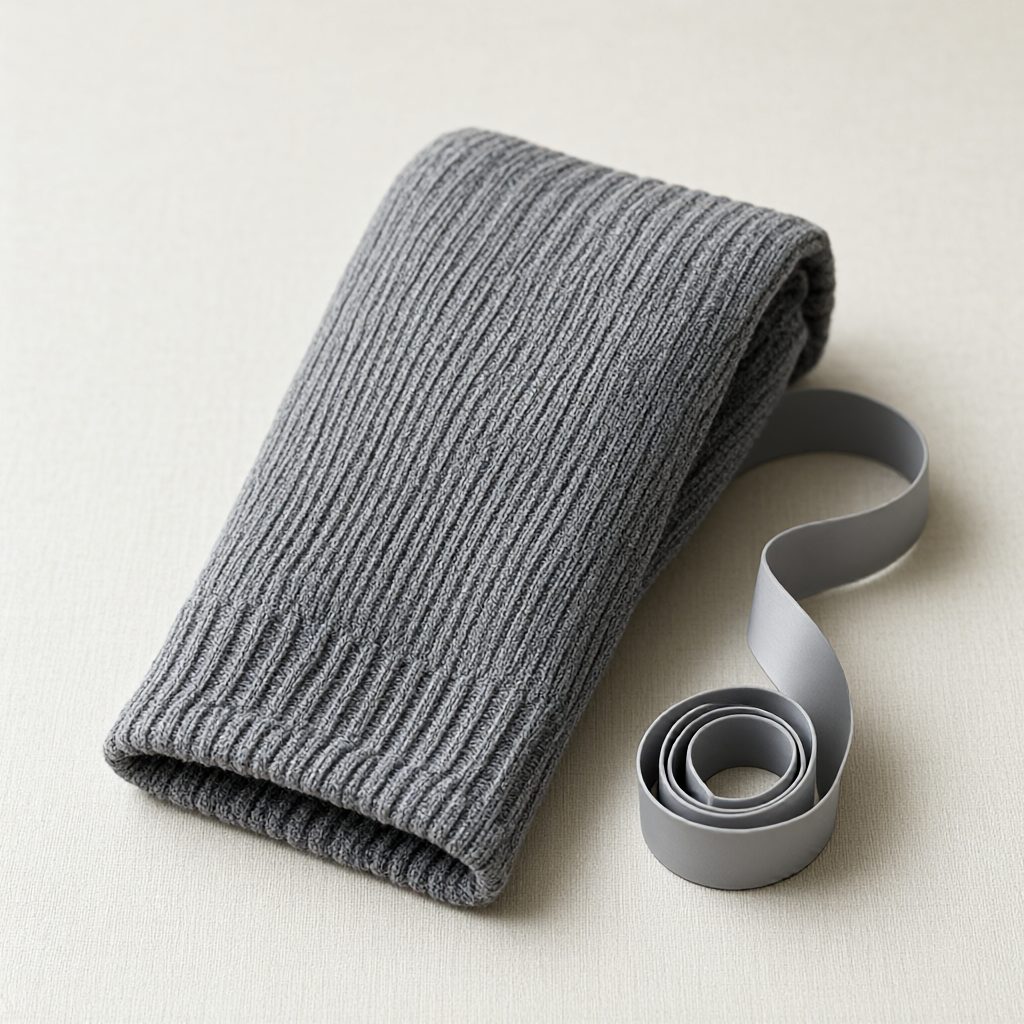
Selecting a plus size winter knee support sleeve depends on three variables: accurate thigh circumference measurement, compression level matching, and slippage prevention. Standard clothing sizes do not apply to compression garments. A sleeve that fits loosely provides only warmth without structural support, while a sleeve that fits too tightly restricts circulation and risks tissue damage during cold-weather wear when blood flow naturally decreases.
Thigh Circumference Measurement Protocol
A flexible measuring tape is applied to bare skin. The subject stands in a relaxed position with weight evenly distributed. The center of the kneecap is located, and the measurement is taken exactly 4.5 inches (approximately 11.5 cm) above that point. Alternatively, the measurement is taken at the widest point of the quadriceps, typically 15 to 20 cm above the patella. The result is recorded to the nearest 0.5 cm. Some sizing charts require a second measurement halfway between the hip crease and the top of the kneecap to confirm the taper of the leg.
The thigh measurement is cross-referenced with the manufacturer sizing chart. When the measurement falls between two sizes, the larger size is selected. For example, if a chart lists Large at 11.5 to 15.5 inches and Medium at 10.5 to 14.5 inches, and the measurement is 15 inches, the Large size accommodates the thigh without compressing the tissue beyond the intended therapeutic range. Sizing down to increase compression restricts arterial inflow and causes numbness.
Compression Level Selection
Compression bands operate in specific pressure tiers measured in millimeters of mercury (mmHg). Light compression ranges from 8 to 12 mmHg, providing warmth and minimal support suitable for mild winter aches. Athletic compression spans 10 to 18 mmHg, offering moderate support for movement. Medical-grade compression starts at 15 to 20 mmHg and addresses joint instability or post-injury recovery. The therapeutic window for sports compression garments sits between 10 and 25 mmHg at the skin surface.
Pressure below 10 mmHg affects mainly warmth, which is useful for winter layering but lacks structural joint support. Pressure above 30 mmHg risks restricting arterial inflow and limiting range of motion. Plus size users avoid assuming that tighter garments equate to better support; exceeding the 25 mmHg threshold compromises circulation, especially in colder temperatures where vascular constriction already occurs. The compression tier is selected based on the support requirement, not the garment size.
Slippage and Bunching Prevention
Winter fabrics and layered clothing increase the risk of a knee sleeve sliding down or bunching behind the knee. Slippage alters the compression distribution, creating pressure points under bunched fabric and reducing support over the patella. Plus size thighs often have a taper gradient that encourages downward migration if the sleeve relies solely on elastic tension to stay in place.
Product specifications are checked for a silicone bead band along the inner top cuff. This silicone band grips the skin or the base layer and reduces slipping and bunching during movement. The nylon and spandex blend provides the structural compression, while the silicone element handles the grip. Without this feature, the sleeve requires constant manual readjustment, which breaks thermal insulation and compromises the fit.
Circulation and Fit Verification
The two-finger rule is applied to verify the fit after the sleeve is put on. Two fingers are slid under the top band of the sleeve without forcing them. The band feels snug but allows the fingers to pass under the fabric without excessive resistance. If only one finger fits, the sleeve is too tight and requires a larger size. If three or more fingers fit easily, the sleeve is too loose and will slip.
Numbness or tingling is monitored within the first ten minutes of wear. These sensations indicate the sleeve exceeds the safe compression threshold for the limb, restricting venous return rather than assisting it. The sleeve is removed immediately if tingling occurs. The thigh circumference is re-measured and the size is upgraded on the chart. Proper winter wear allows continuous circulation while maintaining joint stability.
Material and Care Specifications
Winter knee sleeves use breathable nylon and spandex blends that manage moisture while retaining thermal heat. The construction balances insulation with ventilation to prevent sweat accumulation, which cools the joint rapidly upon rest. Product specifications are checked for the exact nylon to spandex ratio; a higher spandex percentage increases durability and compression retention over time.
The sleeve is washed in cold machine water without bleach or excess fabric softener. Fabric softener breaks down the spandex fibers and degrades the silicone grip band. The sleeve is air-dried completely before the next use. Heat drying damages the elastic fibers and alters the compression profile, causing the sleeve to lose its therapeutic tension and slip more frequently.
Selection Verification Checklist
Thigh circumference is measured 4.5 inches above the patella or at the quadriceps widest point. The value is recorded to the nearest 0.5 cm. The measurement is cross-referenced with the brand sizing chart, and the larger size is chosen if the value falls between sizes. A compression level between 10 and 25 mmHg is selected based on support needs, avoiding any garment exceeding 30 mmHg. The presence of a silicone grip band inside the top cuff is confirmed to prevent slippage. The two-finger rule is applied under the top band; two fingers slide under the fabric without resistance. Numbness or tingling is checked for within the first ten minutes, and the size is upgraded if either occurs. The sleeve is washed in cold water without softener and air-dried completely to maintain compression integrity.