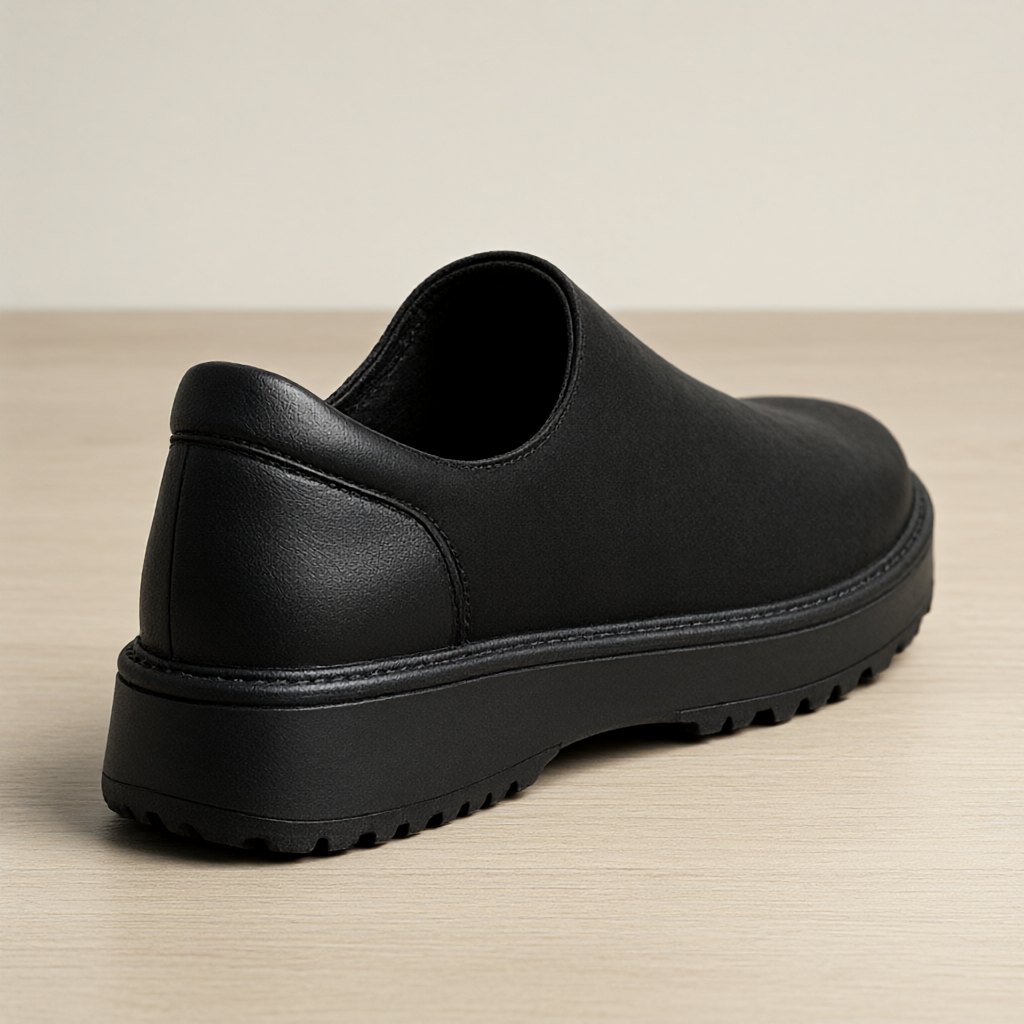
Plus size winter house slippers address four structural factors to function safely indoors: adequate width for foot volume and swelling, firm rubber sole grip for hard indoor surfaces, contoured cushioning for arch alignment, and enclosed heel hold to prevent mid-step slippage. Standard slip-on designs and soft foam soles do not meet these requirements, contributing to in-home fall risks, particularly on tile and wood floors.
Width Codes and Foot Volume
Standard footwear widths (D) restrict larger feet, creating pressure points across the forefoot. Wide fits start at 2E, extra-wide at 4E, and 6E accommodates marked fluid retention or bandaging. Foot volume increases through the day as gravity pulls fluid downward, requiring measurement and fitting at peak swelling, typically late afternoon. A slipper that fits in the morning will feel tight by evening if it lacks adequate width volume.
Wide and deep toe boxes support natural toe alignment and relieve pressure from bunions and hammertoes, accommodating deformities rather than pressing against them. Seamless interior construction removes raised seams that rub against widened forefoot joints. Adjustable hook-and-loop closures allow the fit to be reset as foot volume changes, providing a more reliable fit than fixed slip-on shapes that stretch out over time.
Sole Grip and Fall Prevention
Indoor fall risk escalates when slippers lack proper traction. A study of 765 older adults in Boston recorded 563 in-home falls, linking indoor footwear to fall frequency. The CDC STEADI footwear guide advises properly fitted shoes inside the home with strong heel support, and advises against backless shoes such as mules and clogs that allow the foot to slide off the sole during movement.
Soft foam or fabric soles slide on tile and wood floors, offering minimal friction. A firm slip-resistant rubber sole provides the necessary grip on smooth indoor surfaces. The heel height should remain under one inch to maintain a stable center of gravity. Elevated or soft foam heels compress unevenly, destabilizing the foot and increasing the likelihood of lateral slips on hard flooring.
Cushioning and Arch Support
Fit matters more than cushioning alone. Overly thick, flimsy cushioning allows the foot to compress the material unevenly, reducing stability and altering gait. Podiatrists recommend cushioned and contoured footbeds that maintain arch support rather than flat platforms that allow the arch to collapse. A contoured footbed distributes body weight across the midfoot instead of concentrating it on the heel and metatarsal heads.
Slippers should feel secure without being tight, offering a comfortable hold without creating pressure points. For individuals with hammertoes, bunions, or other forefoot deformities, the contour of the footbed must pair with a wide and deep toe box so the deformity is accommodated rather than pressed. Avoiding overly flimsy construction ensures the cushioning material does not bottom out under higher body weight, which would eliminate shock absorption and arch alignment.
Heel Hold and Enclosed Back Designs
Minimal heel slip is required for safe indoor ambulation. The heel must sit snugly inside a closed-back design to prevent the slipper from separating from the foot mid-step. Backless slippers force the toes to grip the footbed to keep the shoe on, causing fatigue and altering natural stride mechanics. An enclosed heel keeps the foot aligned over the sole, maximizing the contact area of the slip-resistant rubber outsole.
Adjustable hook-and-loop closures across the instep secure the heel into the back of the slipper and accommodate volume fluctuations. This closure system holds the foot firmly without creating localized pressure over the dorsal midfoot. A low, enclosed heel counter combined with an adjustable instep strap provides the structural stability that standard pull-on slippers lack, reducing fall risk and preventing friction blisters at the heel collar.
Slipper Selection Criteria
Width code selection aligns with 2E for standard wide needs, 4E for extra-wide needs, and 6E for severe swelling or bandaging. Feet are measured at peak swelling in late afternoon to ensure the width code accommodates maximum daily volume. The toe box is wide and deep enough to prevent rubbing against bunions or hammertoes.
The sole consists of firm slip-resistant rubber rather than soft foam or fabric. The heel height sits under one inch. The design features a closed-back structure that encloses the heel fully with minimal slip. The footbed includes contoured arch support instead of a flat, flimsy platform. The interior lacks raised seams that could irritate wide forefoot joints.