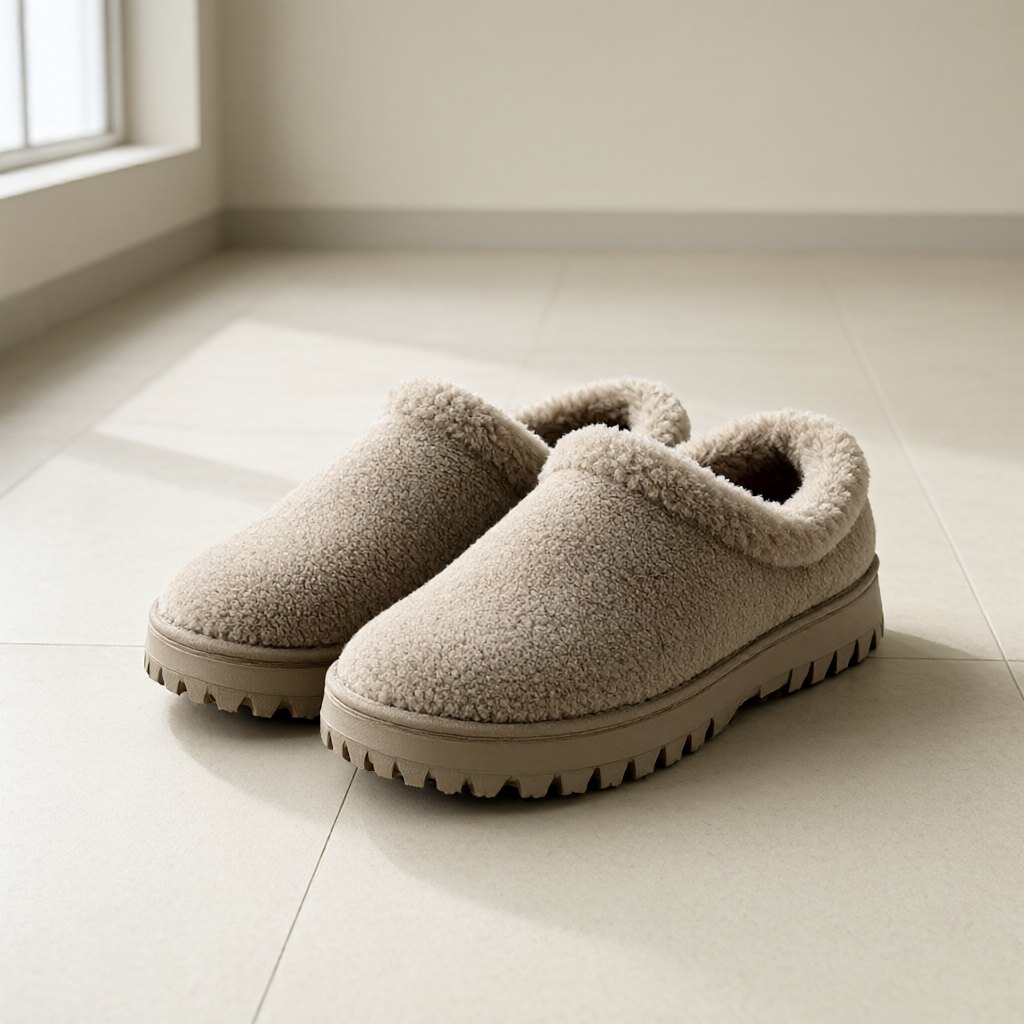
Plus size winter house slippers must balance structural support, thermal retention, and traction on wet indoor surfaces. Standard sizing frequently fails wider and higher-volume feet, leading to lateral slide inside the shoe, constriction at the toe box, and inadequate outsole contact. Evaluating footbed width, outsole grip coefficient, lining warmth, and toe room using specific measurable criteria prevents these fit and safety failures.
Footbed Width and Sunken Footbed Stability
Wide feet require a wide-fit last that maps to the actual ball and heel width, not just a scaled-up standard length. Sizing by shoe body label often results in incorrect fit; the accurate method involves measuring foot length in millimeters and cross-referencing the manufacturer's specified suitable foot length and width metrics. A sunken footbed, where the sole edge curves upward to enclose the bottom of the foot, restricts forward and lateral movement inside the slipper. This containment reduces friction hotspots and stabilizes the foot during movement on uneven indoor surfaces.
Upper straps on wide-fit slippers must possess sufficient extension to accommodate high insteps without compressing the top of the foot. An adjustable or wide-set strap distributes pressure across a larger surface area. Low-density EVA footbeds feel soft upon initial wear but compress and collapse within weeks under higher body weight, losing both cushioning and structural stability. High-density EVA resists this compression, maintaining the sunken footbed shape and supporting the arch and heel over extended periods.
Outsole Grip on Wet Tile and Coefficient of Friction
Slip resistance on wet tile depends on outsole tread design and the material's friction coefficient, not merely the material composition. The ASTM F2913 whole-shoe slip test measures the coefficient of friction (COF) during heel strike and forepart push-off on standard quarry tile under wet, dry, and oily-wet conditions. ASTM F3445-21 establishes the performance requirement at a minimum COF of 0.40 in both forward-heel and backward-forepart modes. Slippers meeting this 0.40 COF threshold provide a verifiable level of grip on wet indoor surfaces.
Shallow or smooth outsoles lack the channeling capacity to disperse water, allowing a hydroplane effect on wet tiles. Deep tread patterns and raised relief structures on the outsole create pathways for water escape, maintaining rubber or EVA contact with the floor surface. The European SR marking indicates the footwear passed a slip test on ceramic tile contaminated with glycerine while simulating a natural stride, replacing older SRA and SRB designations. Oil resistance is a durability rating for the outsole material and does not equate to slip rating; both properties require separate verification. Tread design and actual grip feedback remain the critical factors for wet area safety.
Lining Warmth and Thermal Retention
Winter slippers utilize insulating linings to retain foot heat, but lining density and fiber structure determine actual warmth. Long-pile fleece traps air for insulation but can mat down and lose volume under the pressure of a wider, heavier foot, reducing its thermal retention over time. Shorter, high-density synthetic plush or shearling maintains its loft and insulating capacity longer under compression. The lining must also extend fully around the heel and over the toe seam to prevent cold spots at the slipper's structural junctions.
Breathability and moisture vapor transmission rate matter even in cold weather, as feet perspire inside enclosed slippers. Linings that trap moisture without wicking it away lower the skin temperature and compromise the insulating layer. Moisture-wicking inner layers paired with insulating outer layers maintain a dry microclimate against the skin while retaining heat. Closed-cell foam footbeds add a secondary thermal barrier by blocking cold transfer from tile or concrete floors, preventing chill from the ground up.
Toe Room and High-Volume Foot Accommodation
Feet expand throughout the day, and plus size feet often require additional volume in the toe box to accommodate this swelling without constriction. A tapered toe box forces the smaller toes into an overlapping position, creating pressure points and restricting natural toe splay during the push-off phase of walking. A wide, deep toe box—often labeled as wide-fit or high-volume—provides vertical and horizontal clearance, allowing toes to lay flat and distribute body weight evenly across the forefoot.
Seam placement inside the toe box impacts comfort for wider feet. Internal seams that cross over the widest part of the foot or the tops of the toes create friction against expanded skin. Seamless toe constructions or internally tucked seams eliminate these pressure points. The toe bumper or upper material must possess enough flexibility to yield to foot width without stretching out of shape. Rigid toe boxes restrict movement and cause discomfort as the foot swells in the heated indoor environment.
Verification Checklist for Plus Size Winter Slippers
Measure foot length and width in millimeters and match to the product size chart rather than the shoe body label. Confirm the footbed features a sunken design with raised edges to prevent foot slide. Verify the outsole has deep tread relief for water channeling and a stated COF of at least 0.40 per ASTM F2913 or an SR marking. Check for high-density EVA or foam construction to resist compression under weight. Ensure the toe box provides vertical and horizontal clearance for toe splay without internal seam pressure. Confirm the lining covers all seams and maintains loft under compression.