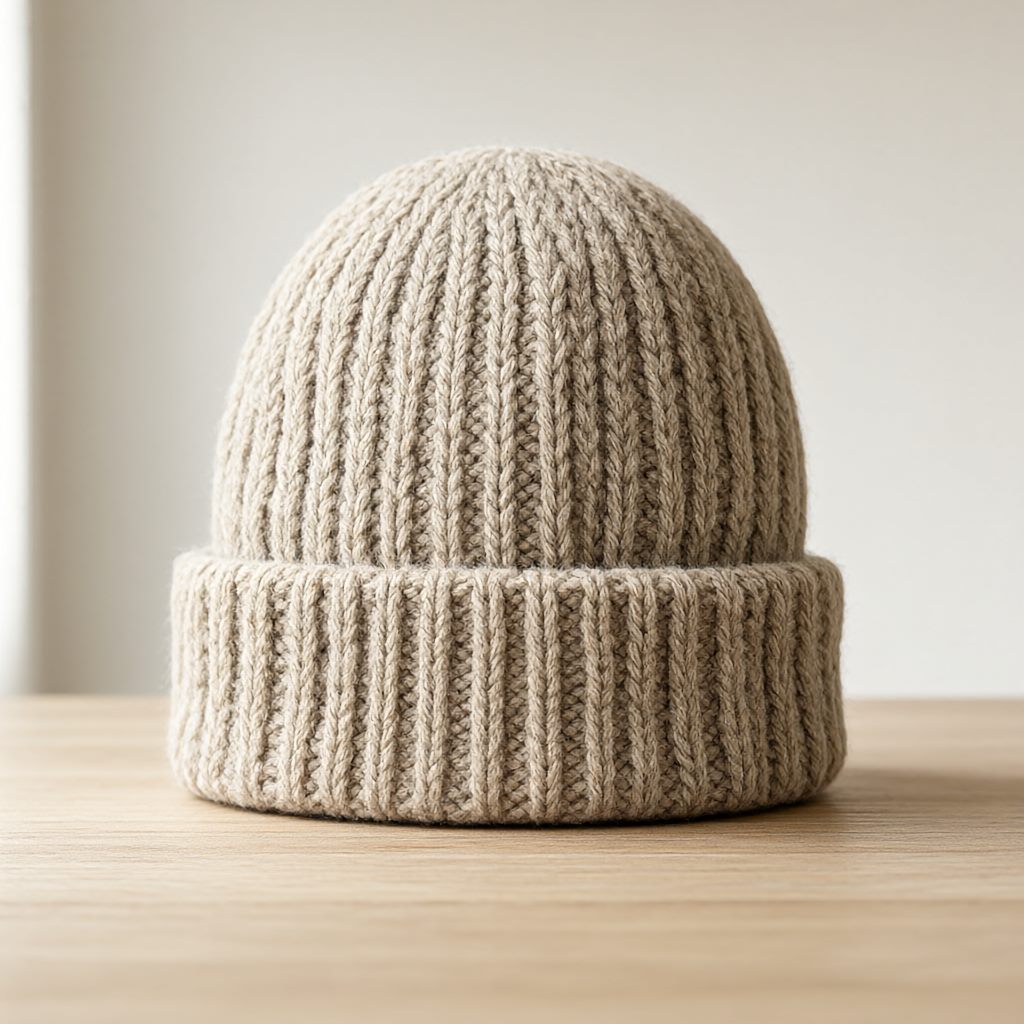
Plus size winter hat fit fails when standard sizing ignores larger head circumferences, shallow crowns, and abrasive interior seams. A proper fit requires measuring the head at its widest point, verifying the hat band covers the full ear without riding up, and checking interior construction for flat seams that do not dig into the scalp. Hats that lack stretch or depth create pressure headaches and leave ears exposed, negating thermal retention. Selecting a winter hat involves matching exact circumference to brand sizing charts, confirming ear coverage depth, and running a finger along the interior lining to verify seam flatness.
Measuring Head Circumference for Accurate Sizing
Head circumference dictates hat size, yet many buyers estimate rather than measure. Wrap a flexible tape measure around the head, positioning it over the occipital bone at the back and across the mid-forehead, just above the eyebrows. This path captures the largest cranial dimension. Record the measurement in both inches and centimeters, as sizing charts vary by region. A measurement of 24 inches or 61 centimeters falls into the plus size category, where standard one-size-fits-most caps max out at 22.5 inches.
Compare the recorded measurement against specific brand size charts rather than generic labels. A hat labeled XL often spans 23 to 24 inches, while 2XL accommodates 24.5 to 25.5 inches. Look for hats incorporating elastane or spandex in the primary knit, allowing 1 to 2 inches of mechanical stretch without distorting the weave. Hats relying solely on natural fiber stretch lose shape and slip off over time. Measure the head after recent haircuts or style changes, as volume differences alter the effective circumference.
Crown Depth and Ear Coverage Requirements
Crown depth determines whether a hat covers the ears and stays anchored on the head. Measure crown depth by placing the tape measure at the center front hairline, extending it over the crown to the base of the skull where the neck meets the occipital bone. A standard beanie averages 11 inches in total length, which often leaves the lower ear lobes exposed on larger heads. A plus size winter hat requires a minimum total length of 12 to 13 inches to secure the band below the ear tip.
Ear coverage fails when the hat band rests on the cartilage ridge instead of encircling the ear. The band must sit in the groove between the ear and the skull, sealing against the skin to block wind. Visually inspect the hat profile; the band should extend at least one inch below the ear canal opening. Hats with inadequate depth require constant pulling, which stretches the fabric and breaks the wind seal. Cuffed beanies offer adjustable depth, allowing the wearer to pull the cuff down for full coverage or fold it up, though the uncuffed length must still meet the minimum 12-inch requirement.
Lining Seams and Interior Construction Checks
Interior seams create pressure points on larger heads where the skin stretches taut over the skull. Standard hats often feature bulky gathered seams at the crown apex and thick overlock stitches along the lining edge. On a plus size head, these raised seams concentrate force against the scalp, causing headaches within minutes of wear. Run a finger inside the hat, pressing firmly along all stitch lines. Any ridge that catches the skin or feels sharp will cause irritation during prolonged wear.
Seek hats with flatlock seams, which lay smooth against the fabric, or bound seams enclosed within an edge binding tape. Fleece-lined hats must have the lining quilted or tacked to the outer shell to prevent shifting, which twists seams out of position. Hats constructed from a single tube of knit fabric eliminate crown seams entirely, removing the primary source of apex pressure. When evaluating a lined hat, turn it inside out and stretch it over a surface approximating head size; seams that gap or pull indicate insufficient seam allowance for larger dimensions.
Evaluating Hat Band Tension and Forehead Placement
Hat band tension must balance retention against circulation restriction. A band that leaves a deep red line across the forehead upon removal is too tight. Measure band tension by stretching the hat over a cylindrical object matching the head circumference. The band should require moderate force to stretch the required distance but snap back to its original length when released. Bands with integrated elastic gather excess fabric on smaller heads but provide necessary grip on larger ones, provided the elastic spans the full circumference rather than isolated segments.
Forehead placement indicates overall fit balance. The hat band should sit approximately one inch above the eyebrows, covering the lower half of the forehead. Hats that slide back toward the crown lack sufficient depth or band grip. Hats that sit low on the bridge of the nose possess excess depth or an overly tight band pulling the fabric down. Adjust cuff depth or utilize internal drawstrings to alter the band position. The band must maintain uniform contact around the entire head circumference without gaping at the temples or pressing unevenly at the occipital region.
Material Composition and Thermal Retention
Fabric choice impacts both fit stability and heat retention on larger heads. Wool blends provide structural memory, resisting the permanent stretch that occurs when larger heads strain acrylic fibers. A composition of 50 percent wool, 30 percent acrylic, and 20 percent nylon offers warmth, shape retention, and durability. Fleece linings add a static air layer, increasing thermal resistance without adding bulk that constricts circulation. Verify the outer weave density by holding the hat up to a light source; visible pinpricks of light indicate a loose knit that allows wind penetration.
Moisture management prevents scalp chill during temperature transitions. Hats with hydrophobic inner linings wick perspiration away from the skin, maintaining a dry microclimate. Cotton linings absorb moisture and hold it against the scalp, cooling the head rapidly when activity stops. Evaluate the fabric weight relative to the intended use; a 200-weight fleece lining suits stationary cold exposure, while a lightweight merino blend accommodates active wear. Ensure the fabric retains its stretch profile after moisture exposure by checking the label for pre-shrunk or wash-stable treatments.
Fit Verification Checklist
Execute the following checks to confirm plus size winter hat fit before extended wear. Measure head circumference over the occipital bone and mid-forehead, matching the result to brand size charts with a 1-inch stretch allowance. Confirm the total hat length measures at least 12 inches to cover the ear lobes fully. Verify the band sits in the groove behind the ear cartilage, extending one inch below the ear canal. Inspect all interior seams by touch, rejecting hats with raised crown gathers or rough overlock stitching. Test band tension by ensuring no red indentations form on the forehead after 10 minutes of wear. Check forehead placement to confirm the band rests one inch above the eyebrows without sliding backward.