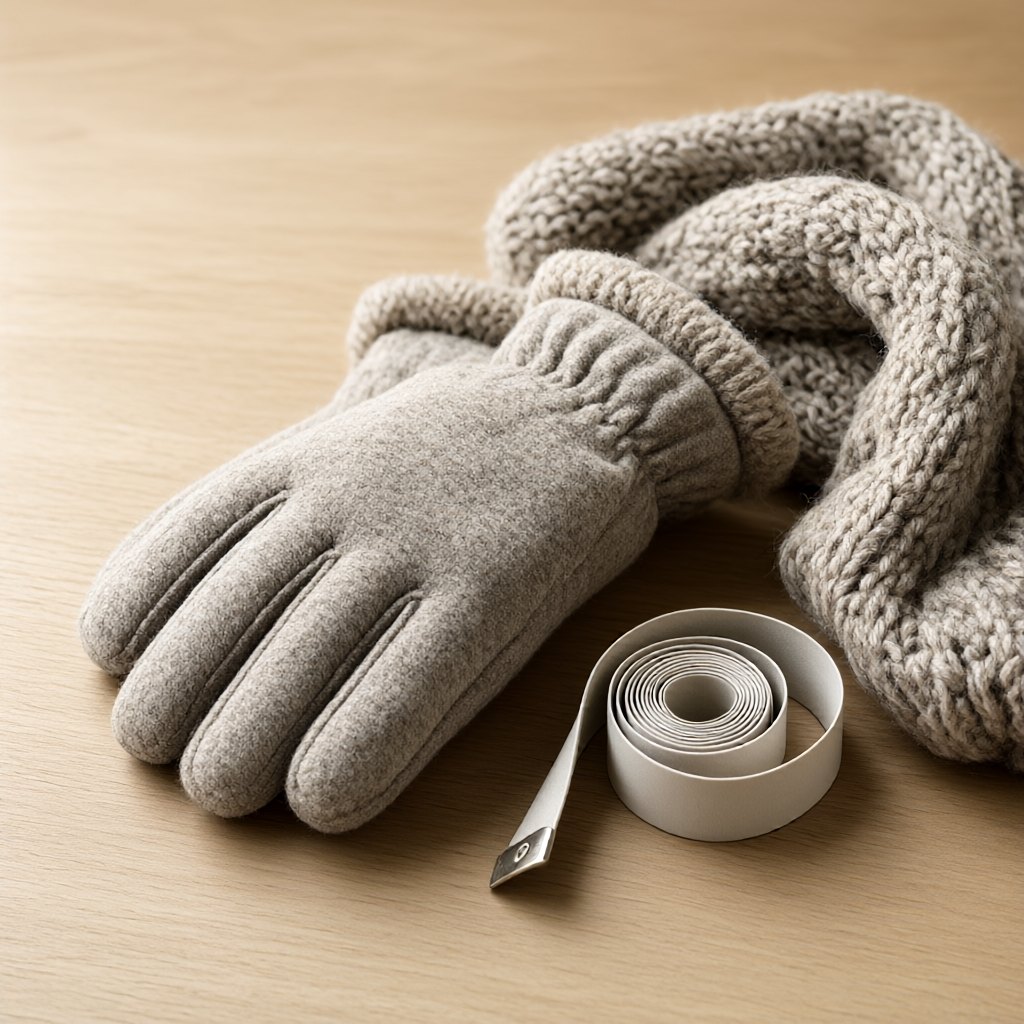
For plus size users, winter glove fit depends on more than the number on a size tag. The critical measurements are palm circumference and hand length, but the cuff, grip surface and touchscreen tips decide whether a pair actually works in cold weather. A glove that fits at the palm can still fail at the cuff, and a warm glove with poor touchscreen response becomes an inconvenience. This guide uses palm circumference, hand length, cuff length, grip and touchscreen checks to help you choose a pair that meets your needs.
Palm Circumference: The Primary Sizing Measure
Measure the dominant hand around the widest part of the palm, just below the knuckles, with the thumb excluded. Use a tape that is snug but not tight. For plus size adults, palm circumference typically ranges from 20 cm to over 28 cm. If you fall between two sizes, choose the larger one for winter gloves, because insulation takes up interior room and a small air gap helps retain heat. Overly tight gloves restrict circulation and make hands colder.
On the EN ISO 21420 scale, a medium glove fits a hand circumference of about 20.3 cm (8 inches) and a large fits about 22.9 cm (9 inches). Numeric sizes follow a similar progression: size 8 corresponds to roughly 19–21 cm, size 9 to 21.5–23 cm, size 10 to 22.5–24 cm, size 11 to 23.5–25 cm and size 12 to 24.5–26 cm. For plus size hands above 26 cm, look for extended sizes or unisex patterns with a wider palm cut and longer finger length. Women with palm circumference over about 22 cm often fit better in men's or unisex gloves, since women's patterns run narrower at the palm and shorter at the fingers.
Hand length is a secondary measurement but matters for driving and dress gloves. Measure from the tip of the middle finger to the base crease of the palm at the wrist. Winter gloves with a longer hand length provide better coverage and reduce the chance of the glove pulling off. When comparing two gloves with the same palm circumference, choose the one with hand length closer to your measurement.
Insulation and Liner Layering: Sizing Up or Down
Winter and insulated gloves should be sized up by 0.5 to 1 size if you plan to wear liner gloves underneath. The liner takes up interior volume, and a snug fit compresses the insulation, reducing its warmth. A small air gap inside the glove retains heat better than a tight fit that cuts off circulation. If you use a heated liner or a merino wool liner, measure the hand while wearing the liner to determine the outer glove size.
For non-insulated leather dress gloves, sizing down by 0.25 to 0.5 inch works because leather stretches and molds to the hand over time. However, this rule does not apply to insulated winter gloves. Leather winter gloves with a fleece or synthetic lining should be sized up, not down, because the lining already reduces interior space.
When testing a glove in-store, wear it for a few minutes and curl your fingers. If the fingertips feel cramped or the palm fabric bunches excessively, the glove is too small. If the glove slides around and you cannot feel the seams, it is too large. The ideal fit has a snug palm, comfortable finger length and no pressure points at the thumb web.
Cuff Length and Closure Checks
Cuff length determines whether snow, wind and cold air can enter the glove. Short cuffs that end at the wrist work for casual wear but leave a gap between the glove and the sleeve. Long cuffs that extend past the wrist and overlap the jacket sleeve provide better coverage. For plus size users, cuff circumference is as important as length. Measure the wrist or forearm where the cuff sits and compare it to the glove's cuff opening. A cuff that is too narrow compresses the wrist and restricts circulation, while a cuff that is too wide lets cold air in.
Check the closure mechanism. Elastic cuffs with a drawstring or a hook-and-loop strap allow adjustment for different wrist sizes. A gauntlet style with a wide opening and an internal drawcord fits over a jacket sleeve without creating a tight band. For users with larger forearms, look for cuffs with an expandable gusset or an elastic panel. Avoid cuffs with a fixed circumference that cannot be adjusted, unless you have measured your wrist and confirmed the fit.
Test the cuff by pulling the glove on and off. A winter glove should slide on easily without pinching at the wrist, and the cuff should stay in place when you move your arm. If the cuff leaves a red mark after five minutes of wear, it is too tight. If the cuff slips down over the palm, it is too loose.
Grip Check: Palm and Finger Surfaces
Grip matters for tasks like holding a steering wheel, carrying groceries or using a phone. Winter gloves often have a synthetic leather or rubberized palm with a textured pattern. For plus size users, the grip area should cover the entire palm and the inner side of the fingers. Check that the grip material extends to the thumb and the first finger, since these areas take the most pressure when gripping.
Test grip by holding a smooth object, such as a metal water bottle or a plastic handle, and applying moderate pressure. The glove should not slide on the object. A glove with a smooth palm or with grip patches only on the fingertips will be less secure. Look for a full palm grip with a silicone or rubber print that covers at least 70 percent of the palm surface.
For winter use, grip should also work in wet conditions. Some gloves have a water-resistant palm coating that maintains friction when wet. Check the palm material: a soft suede-like surface absorbs moisture and loses grip, while a rubberized or polyurethane coating stays grippy. If you use gloves for driving, choose a pair with a reinforced thumb and index finger area, as these areas wear faster.
Touchscreen Function: Fingertip Sensitivity
Touchscreen gloves have conductive material at the fingertips that allows capacitive screens to detect touch. For reliable operation, the glove must fit snugly at the fingertips. Loose fabric at the tip breaks the capacitive connection, causing missed taps or delayed responses. When trying on a touchscreen glove, tap the screen with each finger to confirm that all intended fingers work.
Plus size users with larger hands should pay attention to finger length. A glove that is too long at the fingers creates a gap between the fingertip and the conductive pad, reducing sensitivity. A glove that is too short leaves the fingertip exposed, which defeats the purpose of a touchscreen glove. Check that the conductive pad covers the entire fingertip, not just a small dot.
Test the touchscreen function with the glove on and with a liner glove underneath. Some liners have their own conductive tips, while others do not. If you wear a non-conductive liner, the outer glove's conductive tip may not work because the liner blocks the signal. Choose a liner with conductive tips or use a touchscreen glove with a thin, non-insulated fingertip area.
Pre-Purchase Checklist
Before buying a pair of plus size winter gloves, verify the following points:
Measure palm circumference at the widest point below the knuckles, excluding the thumb, with a snug tape. Measure hand length from the wrist crease to the tip of the middle finger. Compare both measurements to the glove size chart and choose the larger size if you are between sizes.
If you plan to wear liner gloves, add 0.5 to 1 size to the measured circumference. Check the cuff length and circumference to ensure the cuff overlaps your jacket sleeve or fits comfortably over your wrist. Confirm that the closure can be adjusted without compressing your wrist.
Test the grip on a smooth surface with moderate pressure, and verify that the palm and finger surfaces have adequate grip coverage. For touchscreen use, confirm that the conductive pads fit snugly at the fingertips and that each finger registers taps correctly with and without a liner.
Finally, wear the gloves for a few minutes and move your hands through a full range of motion. The gloves should not restrict circulation, cause pressure points or slip off during movement.