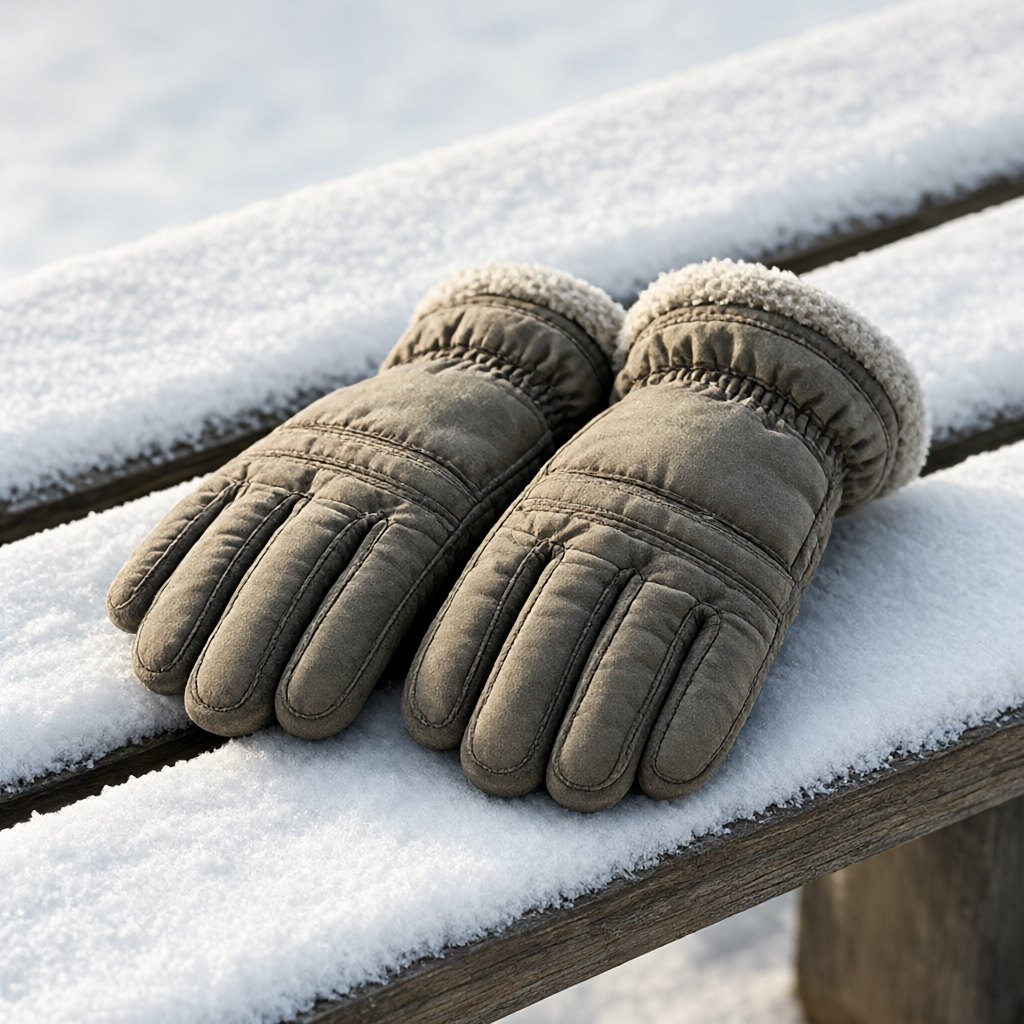
Selecting plus size winter gloves relies on four measurable variables: palm width, cuff length, insulation weight, and cold ratings. When any single variable is mismatched, heat loss accelerates. A glove that fits palm width but lacks adequate insulation weight fails in sub-zero conditions. A glove with high thermal ratings but a short cuff allows cold air to flush the wrist. Plus size hands require specific circumference measurements and sufficient finger airspace to trap heat without restricting circulation.
Palm Width and Finger Airspace
Hand circumference dictates glove size. Measure the dominant hand at the widest part of the palm just below the knuckles, excluding the thumb. Plus size sizing begins where standard sizing ends, typically above 25 cm in circumference. A correct winter glove fit feels snug across the palm and knuckles but never tight. Restricted blood flow makes hands colder than a slightly loose fit, because circulation delivers heat to extremities.
Fingertip clearance provides primary insulation. A correct winter glove leaves about a quarter inch (6 mm) of air space beyond the longest fingertip. Trapped air acts as the insulation layer. Fingertips pressing against the glove fabric conduct heat straight out of the hand. Signs of a correct fit include fingertips that do not press into the ends, a natural grip, and an easy fist closure without fabric strain.
Cuff Length and Wrist Seal
The wrist is a high-circulation, low-insulation area where cold air enters. The glove cuff must stay put without sliding down. Short cuffs leave a gap between the glove and the coat sleeve, creating a channel for cold air and snow. Plus size wrists often need longer cuffs to bridge the gap to outerwear without stretching the fabric to its limit.
Cuff length choices include standard wrist length, mid-forearm, and gauntlet. For winter use in cold wind or snow, a cuff that extends at least 10 cm past the wrist joint provides adequate overlap with a coat sleeve. Gauntlet cuffs extend further up the forearm and loosen to fit over bulky coat sleeves. Elastic or drawcord closures at the cuff end secure the seal and prevent cold air entry.
Insulation Weight and Temperature Ranges
Insulation weight measures the grams of insulating material per square meter of glove area. Higher weights trap more air but reduce dexterity. Insulation weight guidelines correspond to specific temperature ranges and activity levels. For cool to mildly cold conditions around 4 to -4 C with active use, 40 to 70 g of insulation is appropriate. For -4 to -12 C with moderate activity or longer exposure, 70 to 100 g of insulation works. For very cold, low-activity settings below -12 C, 150 g and above provides the necessary thermal barrier.
Water penetration compromises insulation. Wet insulation loses most of its thermal value because water conducts heat far faster than air. A waterproof membrane layered beneath the outer shell keeps the insulation loft dry in snow, slush, and freezing rain. In plus size gloves, ensuring the waterproof membrane stretches adequately across the palm without tearing is critical for maintaining the dry loft during grip tasks.
Cold Ratings and the EN 511 Standard
The EN 511 standard quantifies protective glove performance against cold down to -50 C. Products are marked with three digits, for example 121. The first digit represents convective cold protection, scored on levels 1 to 4. The second digit represents contact cold protection, scored on levels 0 to 4. The third digit represents water penetration, scored 0 or 1. Level 0 means water penetrates during a 30-minute whole-glove immersion; level 1 means no penetration.
Convective cold measures thermal insulation on a heated hand model in a climatic chamber. The chamber temperature sits at least 20 C below the hand temperature, which is held between 30 and 35 C with controlled airflow. The electrical power needed to hold the hand temperature defines the insulation value, with thresholds at 0.10, 0.15, 0.22, and 0.30 square-metre-degree-C per watt for levels 1 through 4. Contact cold measures the material thermal resistance against a cold solid surface. A palm sample goes between a warm plate at body temperature and a cold metal plate. After 30 minutes of cooling, the temperature drop across the material determines the score.
Prerequisite requirements apply to EN 511 scores. To report level 2, 3, or 4 in either cold test, the glove must also reach at least level 2 in abrasion resistance and tear resistance under the EN 388 standard. This ensures the thermal insulation layers remain intact during regular work tasks. When selecting plus size gloves for cold environments, verifying the full three-digit EN 511 code confirms the specific type of cold protection rather than relying on general temperature claims.
Plus Size Winter Glove Fit Checklist
Measure dominant hand circumference at the widest palm point below the knuckles, excluding the thumb. Match this measurement to the manufacturer plus size chart before considering length. Confirm 6 mm of airspace exists beyond the longest fingertip to preserve the trapped air insulation layer. Check that fingertips do not press into the glove ends and that making a fist requires no fabric strain.
Verify the cuff extends at least 10 cm past the wrist joint to overlap with outerwear. Ensure the cuff stays in place without sliding down and allows no skin exposure at the wrist during arm movement. Select insulation weight based on temperature and activity: 40-70 g for 4 to -4 C active use, 70-100 g for -4 to -12 C moderate exposure, and 150 g or more for below -12 C low activity. Confirm the presence of a waterproof membrane if working in snow or freezing rain. Read the three-digit EN 511 code to validate convective cold, contact cold, and water penetration levels suitable for the working environment.