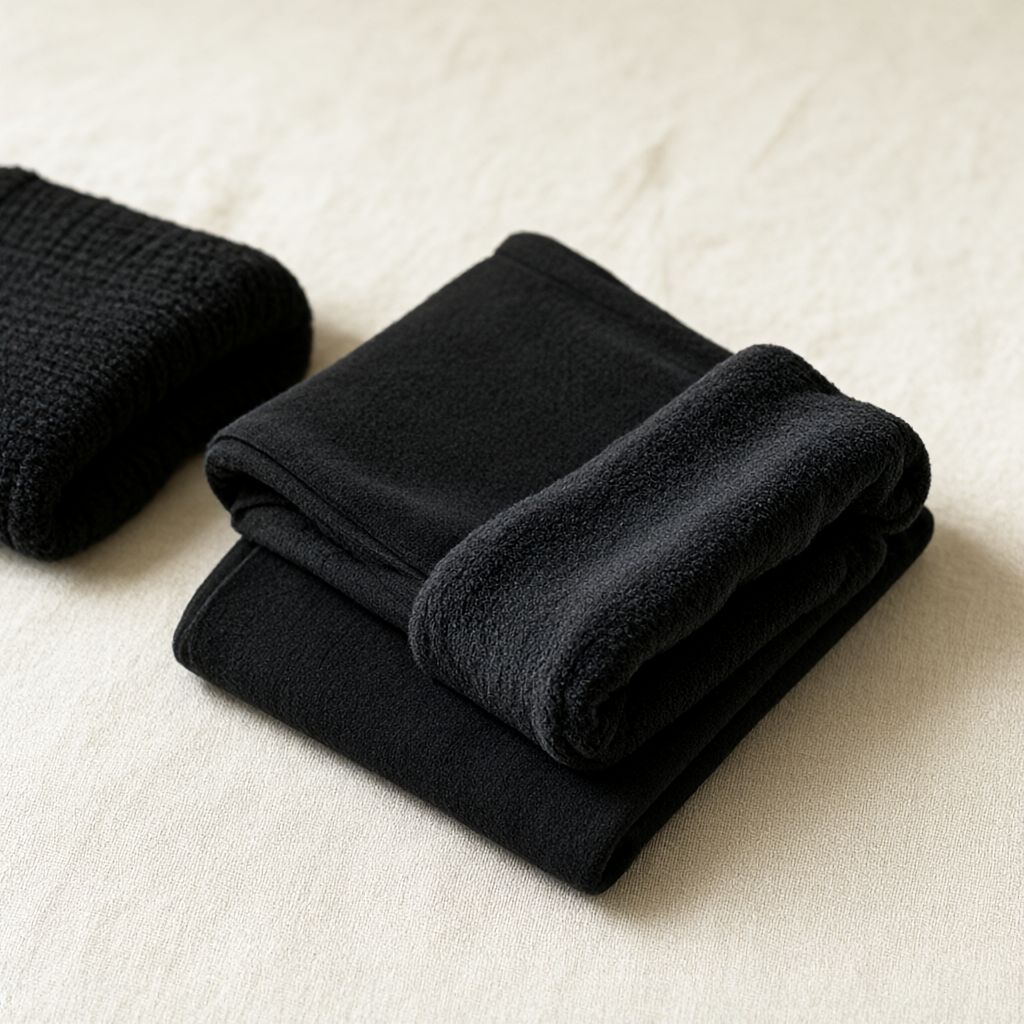
Fleece-lined tights for plus size bodies fit differently from standard hosiery because the lining adds fixed thickness while the outer shell must stretch across a wider hip and thigh profile. The practical goal is to find a pair that holds its rise at the waist, does not bind at the thigh, and leaves enough inseam length for a full range of motion when walking or sitting. Use a soft tape measure and record four numbers before ordering: waist circumference, hip circumference at the fullest point, thigh circumference at the widest point, and inseam from the crotch to the floor. These four values determine which size band and which construction style will work for your frame.
Waist Rise and Band Placement
Fleece-lined tights with a high-rise waistband are recommended for plus size wearers because the wide band distributes pressure over a larger abdominal area. Look for a rise measurement of at least 25 cm from the crotch seam to the top edge of the waistband. A shorter rise tends to roll down when the wearer sits, especially if the abdomen is fuller. The waistband should be at least 4 cm wide and contain elastane or spandex in the knit so it returns to shape after stretching.
Waist measurements on the size chart should be treated as a range rather than a single number. Many manufacturers list a waist range from 52 cm to 120 cm across their size bands. If your waist falls near the upper end of a listed range, choose the next size up rather than squeezing into the smaller band. A waistband that digs in leaves red marks and causes the tights to shift downward during a day of walking. The band should sit level at the natural waist or just below the navel without folding over itself.
For wearers with a prominent lower abdomen, a paneled front construction reduces pressure on the belly. Single-seam designs create a smoother silhouette but offer less vertical give through the torso. Double-seam or gusseted fronts are preferable when the waist-to-hip difference exceeds 25 cm, because the extra seam allows the fabric to angle outward instead of pulling straight down from the band.
Thigh Stretch and Circumference Limits
The thigh area is the most common failure point for plus size fleece tights. A standard size chart may list a leg circumference range of 20 cm to 80 cm from unstretched to fully stretched. Measure your thigh at the widest point, usually 5 to 8 cm below the crotch, and compare that number to the stretched limit. If your thigh measurement is within 5 cm of the listed maximum, the tights will feel tight and may cut into the skin during a full stride. Choose a larger size or a style marked as curve or plus size specific.
Four-way stretch fabric is essential for thigh comfort. Polyester and spandex blends with at least 12 percent spandex provide enough recovery to prevent bagging at the knee. When you pull the tights over the thigh, the fabric should glide rather than grab. If you see visible horizontal tension lines across the front of the thigh, the size is too small. Some manufacturers offer separate height and weight bands within a single size label, so check both axes. A person at 175 cm and 82 kg may need the same size as someone at 160 cm and 90 kg, but the inseam requirement will differ.
Thigh circumference also affects how the tights behave when layered under pants or a skirt. If the tights are at the upper limit of their stretch, they compress the thigh and make additional layers feel tight. For layering, choose a size that leaves at least 3 cm of slack in the thigh measurement after the tights are on.
Inseam Length and Height Considerations
Inseam on fleece-lined tights is listed from the crotch to the ankle or to the sole for stirrup styles. Standard inseam values in plus size ranges run from 55 cm to 72 cm depending on the brand and size band. For wearers under 165 cm, a 70 cm inseam will create extra fabric at the ankle that needs to be smoothed or tucked into boots. For wearers above 175 cm, a 55 cm inseam will pull at the crotch and cause the rise to drop.
Manufacturers often provide a height range for each size band. A typical band may cover 152 cm to 175 cm. If you are taller than the listed height, use weight as the primary guide and accept that the tights may ride up slightly at the ankle. Stirrup styles are a practical solution for tall plus size wearers because the open foot allows the leg to be pulled up further, effectively adding 2 to 3 cm of usable inseam. If your height exceeds the chart by more than 5 cm, avoid closed-foot designs and choose stirrup or footless tights instead.
When sitting, the tights should not pull at the crotch. Sit on a chair with your knees bent at 90 degrees. If the crotch seam drops below the natural crotch line, the inseam is too short. If the fabric bunches at the ankle, the inseam is too long. The ideal fit has a slight amount of extra length at the ankle that can be smoothed upward without creating a wrinkle at the knee.
Layering Room and Base Layer Compatibility
Fleece-lined tights are often worn over a base layer or under additional trousers in cold weather. The tights should have enough internal volume to accommodate a thin thermal layer without compressing it. If you plan to wear thicker socks or a base layer underneath, go up one size from your regular fit. The larger size provides extra room through the hip and thigh while the waistband remains secure.
When layering over the tights, choose outer garments with a relaxed fit through the hip and thigh. Tight jeans or slim trousers will compress the fleece lining and reduce its insulating air pockets. The total thickness of tights plus outer layer should not restrict walking or sitting. A simple check is to bend your knee fully while wearing the full outfit; the fabric at the back of the knee should not pinch or bind.
For wearers who prefer a sheer look over opaque fleece, select a style with a 220 gsm lining. This weight provides warmth without excessive bulk and allows a base layer underneath. If the tights are 300 gsm or heavier, layering under trousers becomes cumbersome and the waistband may roll. Match the lining weight to your typical activity level; sedentary wearers need a heavier lining, while active wearers generate enough body heat with a midweight lining.
Care and Fit Maintenance
Fleece-lined tights lose stretch over time if washed in hot water or dried in a machine. Cold gentle wash and air drying preserve the elastane fibers and keep the waistband from stretching out. After several wears, the fabric may mould to the body and feel slightly looser. This is normal for four-way stretch knits and should not be mistaken for a size error. If the tights become baggy at the knee after a few hours, the spandex content is too low or the size is too large.
Check the waistband and thigh seams for signs of pilling or thinning after each wash. A single back seam is smoother under clothing but may be less durable than a double seam. For daily wear, choose a double-seam construction even though it may feel slightly more textured. The added durability is worth the minor seam visibility under a long tunic or dress.
Fit Verification Checklist
Before purchasing, confirm that the size chart includes both height and weight bands plus a measured thigh circumference range. If the chart only lists waist and hip, contact the seller for additional measurements. The rise should be at least 25 cm. The inseam should match your height within 5 cm for closed-foot styles. The thigh stretch limit should exceed your thigh measurement by at least 3 cm. The waistband should be wide and contain spandex. If you plan to layer, select one size up from your measured fit. After trying on, perform a seated knee bend and a full stride to check for pinching at the crotch or behind the knee. The tights should feel secure at the waist without digging in, and the lining should stay smooth against the skin without wrinkles.