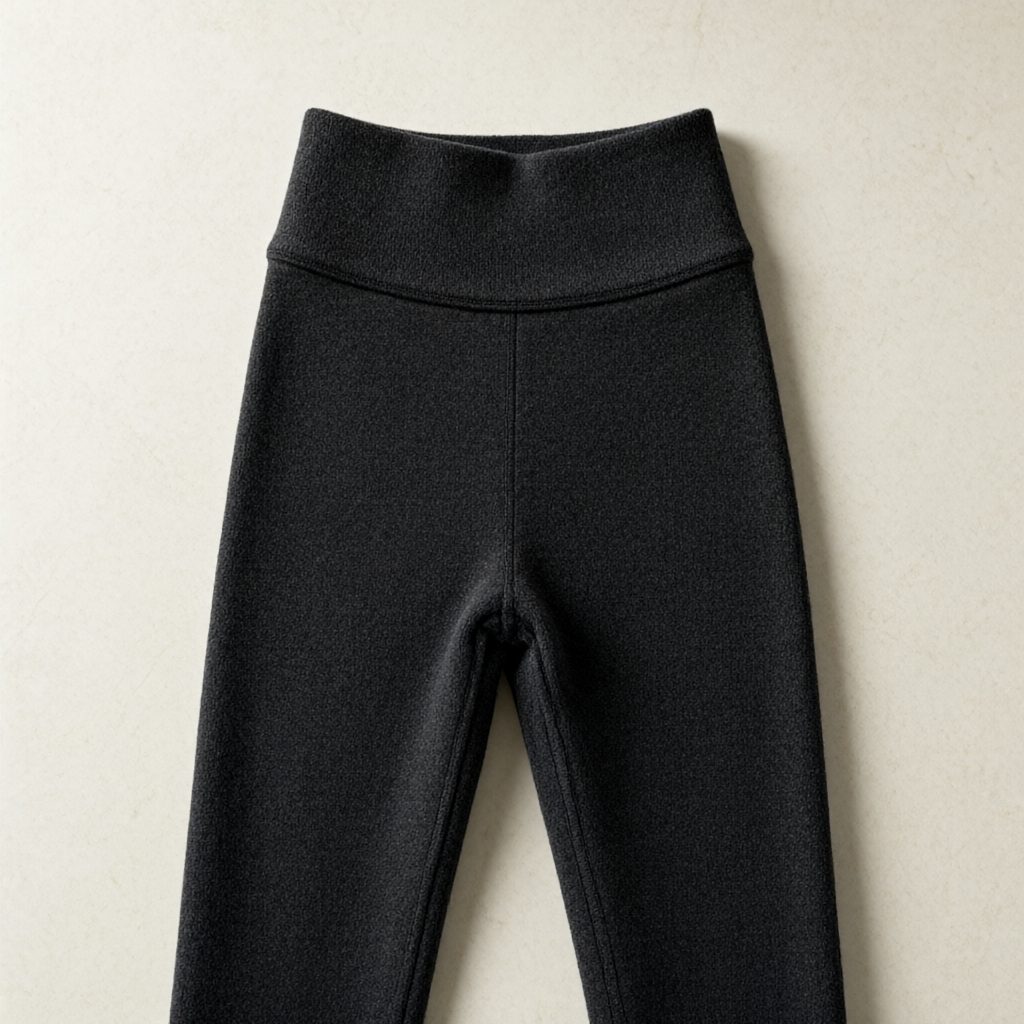
Plus size winter compression leggings must balance thermal insulation, firm support, and structural stability without sacrificing opacity under full stretch. Fabric weight measured in grams per square meter (GSM) dictates warmth and squat-proof coverage, while waistband construction, seam placement, and panel design determine long-term wear stability. Evaluating these specifications against body measurements ensures the garment functions as a supportive second skin rather than a restrictive or sheer layer.
Fabric Weight in GSM and Thermal Compression
Winter athletic leggings require a fabric weight range of 250 to 320 GSM as a starting point to provide adequate insulation for cold climates. This weight range trades breathability for firmer compression and warmth. Mid-weight fabrics around 150 to 200 GSM balance coverage with flexibility but lack the thermal retention needed for low-movement cold exposure. Fabrics under 180 GSM frequently turn translucent under tension and fail to provide compression-grade support.
Compression-grade leggings typically land between 220 and 280 GSM, supplying enough heft to maintain opacity through deep squats while delivering muscle support. For plus size bodies, the nylon-spandex balance within this GSM range determines stretch recovery after repeated movement and washing. A brushed interior finish adds softness and traps warm air against the skin, enhancing the insulation value of the heavier fabric weight without adding bulk.
Match fabric weight to activity intensity to regulate body temperature. Lightweight to mid-weight fabrics suit high-sweat activities, mid-weight suits fluctuating temperatures, and heavyweight fabrics above 280 GSM suit low-movement cold exposure. Final specifications must be confirmed by physical sampling rather than selected by weight alone, as fiber composition and knit structure alter the perceived warmth and compression level.
Waistband Roll-Down Prevention
Single-panel stretch leggings compress evenly but cannot target the midsection, leading to frequent waistband roll-down on plus size figures. A high-waisted panel with an internal elastic band or a silicone grip strip anchored inside the waistband prevents the garment from sliding down during movement. The waistband should stay secure during squats without digging into the midsection, which requires a wide, firm band that distributes pressure evenly across the abdomen.
Waistband stability depends on panel alignment and stitching consistency. A multi-panel design that contours to the natural waist and hip ratio anchors the garment more securely than a single tube of fabric. Between two sizes, sizing up is safer because an undersized pair digs in at the waistband and restricts circulation. A pinch test should allow a small amount of fabric to be pulled away from the skin; if the fabric cannot be pinched, the compression is too firm and will cause discomfort and roll-down as the body moves.
Seam Placement and Chafing Reduction
Flatlock seams reduce bulk and chafing in close-fitting leggings, which is critical for plus size bodies where inner thigh rub is common during repetitive motion. This seam construction lays flat against the skin, preventing the raised ridge associated with overlock stitching. Checking seam placement involves running fingers along the interior seams to feel for any rough edges or threads that could irritate the skin during extended wear.
A diamond or full gusset at the crotch removes the center seam, eliminating a major source of discomfort and seam failure under tension. The gusset allows the fabric to stretch in multiple directions without pulling at the central junction. Panel alignment must follow the natural curves of the body; misaligned panels create uneven tension that pulls the fabric away from the waistband or twists the leg seams during movement.
Opacity Under Stretch and Fit Checks
Squat-proof construction requires the fabric to remain opaque even when fully stretched, which comes down to fabric weight and knit density. Plus size leggings undergo greater circumferential stretch, making opacity a primary concern. Heavier winter leggings over 200 GSM typically maintain coverage, but the nylon-spandex ratio must provide tight loop structures that do not gap when the fabric is pulled to its maximum extension.
Hip measurement drives fit more than waist measurement for leggings. Measure the fullest part of the hips to select the correct size, as an undersized pair is more likely to go sheer at the hips and thighs. Sizing up between sizes allows trapped air to provide insulation while preserving opacity, since the fabric stretches less across the widest points of the body.
Ankle cuffs should sit snugly against the lower leg to stop cold air from travelling up the leg. If the cuffs gap, cold air enters and warmth escapes. The entire garment should maintain its shape and opacity throughout the full range of motion, recovering quickly without bagging at the knees or waist.
Care Practices for Elastane Recovery
Compression leggings rely on elastane fibers for stretch recovery, and improper washing degrades these fibers, leading to permanent bagging and loss of opacity. Cold water washing preserves elastane integrity, while fabric softeners coat the fibers and reduce their ability to snap back. Placing leggings in a mesh laundry bag prevents snagging and stretching during the wash cycle.
Air drying maintains the thermal compression properties and prevents heat damage to the spandex fibers. Machine drying on high heat breaks down elastane, causing the fabric to lose its compression grade feel and drop below its intended GSM performance over time. Consistent care preserves the waistband elasticity, seam strength, and opacity of the garment across multiple winter seasons.
Pre-Purchase Verification Checklist
Verify the GSM falls between 250 and 320 for winter thermal requirements. Check for a high-waisted panel with an internal elastic or grip strip to prevent roll-down. Confirm flatlock seams and a diamond or full gusset at the crotch to eliminate center seam chafing. Measure the fullest part of the hips rather than the waist to determine size, and size up between measurements to preserve opacity and circulation. Perform a pinch test on the fitted garment to ensure compression is firm but not restrictive. Inspect ankle cuffs for a snug fit that blocks cold air entry.