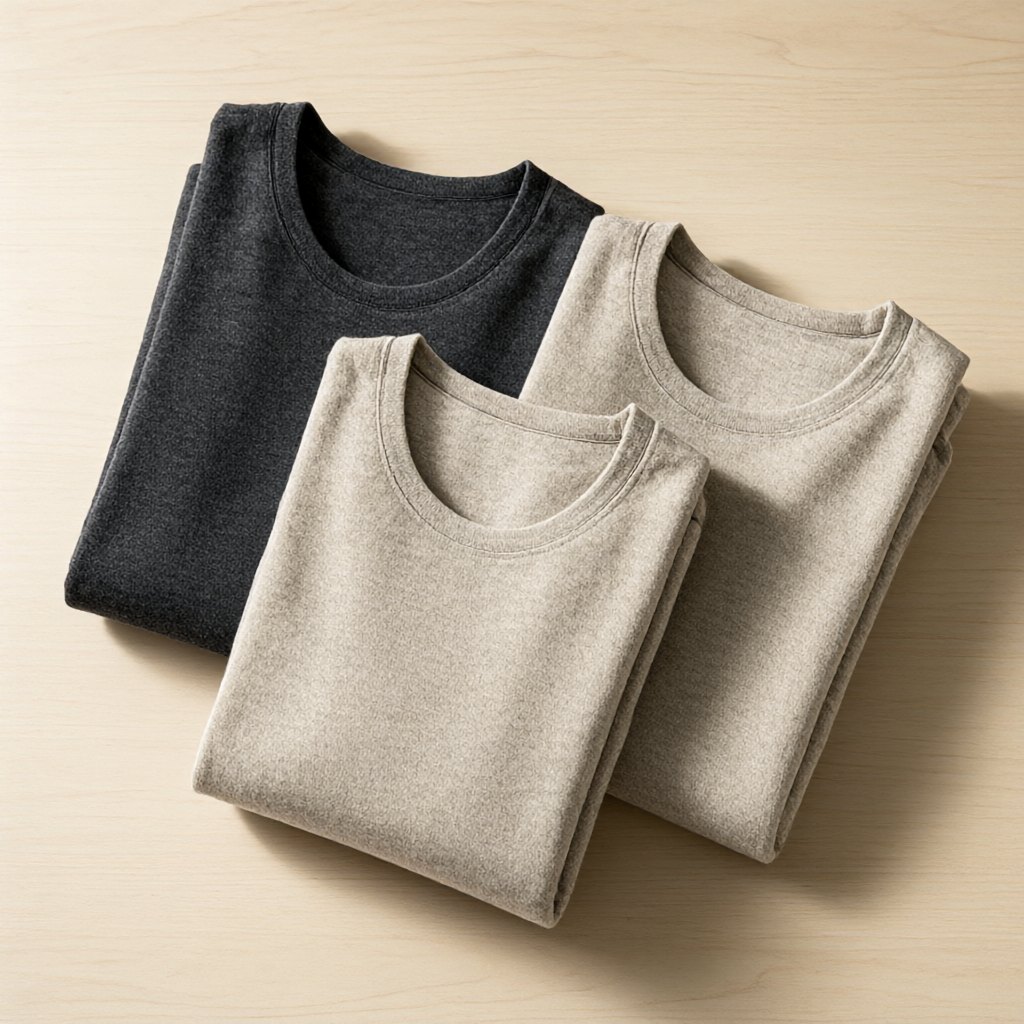
Selecting plus size winter base layers demands exact metrics for fabric weight, stretch recovery, seam placement, and layering room. The primary function of a base layer is moving moisture off the skin; if this fails, every subsequent layer retains dampness and loses thermal efficiency. For plus size bodies, insufficient stretch recovery causes fabric sagging, poorly placed seams create pressure indentations, and inadequate layering room compresses the base layer against a mid layer, blocking moisture dispersal. Fabric weight measured in grams per square metre dictates the thermal baseline, while micron count determines skin comfort. Evaluating these variables against specific temperature ranges and activity outputs determines the functional viability of the garment.
Fabric Weight in GSM and Temperature Mapping
Fabric weight measured in GSM establishes the warmth and moisture management capacity of a base layer. Lightweight base layers range from 150 to 190 GSM, dispersing sweat rapidly and packing small, which suits high-output activities in mild weather. Midweight base layers range from 200 to 250 GSM, providing a balance of warmth, breathability, and durability for temperatures roughly between 15F and 40F. Midweight offers approximately 40 percent more warmth than lightweight. Heavyweight base layers at 260 GSM and above trap more warm air through higher fiber density but slow moisture dispersal, making them suitable for stationary use in freezing conditions below 30F.
Windchill drops effective temperature by 10 to 20F, requiring a step up in weight class when lacking a windproof shell. For temperatures between 5C and -5C, 170 to 200 GSM provides adequate regulation. For temperatures between -5C and -20C, activity level determines the choice; 200 GSM combined with a fleece mid layer often outperforms 260 GSM alone, as the latter causes sweat accumulation against the skin during active trekking. Synthetics wick moisture faster in high sweat situations, while merino wool resists odor over extended wear.
Micron Count and Merino Wool Maintenance
Beyond GSM, fiber thickness measured in microns dictates the tactile comfort of merino wool against the skin. Superfine merino measures under 17.5 microns and offers the softest hand feel. Fine merino ranges from 17.5 to 19 microns, which is suitable for direct skin contact without irritation. Fibers measuring 19 to 21 microns may feel itchy to sensitive skin, and anything over 21 microns is coarse, rendering it unsuitable for base layers. Plus size garments require higher total fabric surface area, making micron count critical to prevent overall garment weight from becoming oppressive while maintaining softness.
Maintenance of merino wool base layers preserves fiber integrity and fit. Wash merino every 3 to 7 wears using a cold gentle cycle with wool-safe detergent. Heat shrinks merino permanently, so lay the garments flat to dry and avoid tumble drying. Correct washing prevents the fabric from tightening, which would reduce the layering room and stretch recovery required for plus size fits.
Stretch Recovery and Elastane Content
Plus size base layers require robust stretch recovery to maintain shape during movement and after multiple wash cycles. Pure merino wool lacks inherent elasticity; garments without elastane content stretch under tension and fail to recover, leading to sagging panels that trap cold air against the skin instead of maintaining a close fit for moisture wicking. A minimum of 4 to 5 percent elastane or nylon blended into the merino provides the necessary snap-back. Stretch recovery is assessed by pulling the fabric 10 percent beyond its resting length and releasing; it should return to its original dimensions within seconds without residual distortion.
Stretch also accommodates fluctuating body measurements and prevents restrictive binding at the waist, hips, and thighs. A base layer that fits correctly in the resting state but lacks recovery will stretch longitudinally with movement, shortening the torso or inseam coverage and exposing skin to cold air. Testing stretch recovery involves trying the garment on, performing a deep bend or reach, and checking if the hem or cuff retracts to its starting position without pulling or staying stretched out.
Seam Placement and Construction Types
Seam placement dictates comfort under layering compression. Traditional overlock seams create raised ridges on the interior of the garment. When a mid layer or shell presses these ridges into the skin over extended wear, they cause pressure lines and chafing, particularly across the shoulders, side torso, and inner thighs where plus size bodies experience continuous fabric contact. Flatlock seam construction lays the seam flat against the fabric surface, eliminating the raised ridge and distributing pressure evenly across the stitch area.
Seam placement must also account for high-friction zones. Side seams that fall directly on the widest point of the hip or thigh experience greater tension and friction during walking. Forward side seams, also called princess seams, shift the seam line off the curvature peak, reducing friction and improving mobility. Raglan sleeves remove the shoulder seam entirely, replacing it with a seam that runs from the collarbone to the underarm, preventing shoulder ridge compression when carrying a backpack or wearing a fitted winter coat.
Layering Room and Moisture Channel Maintenance
Layering room refers to the space between the base layer skin contact surface and the interior of the mid layer. A base layer that fits too tightly against the skin restricts capillary action, slowing the moisture wicking process. A base layer that fits too loosely creates air pockets that cool rapidly when activity stops. Plus size garments must provide sufficient circumference ease to avoid compression from outer layers without adding excess volume that folds and creases under a shell.
When selecting a plus size base layer, choose the size that aligns with the primary measurement of chest or hips without sizing up for length, as sizing up compromises the close skin contact necessary for moisture movement. If torso or limb length requires a larger size, verify that the additional fabric width does not bunch under the armpits or crotch. The base layer must move moisture off the skin; if the fit prevents this, every layer above gets damp and cold. Cotton anywhere in the layering system retains moisture and must be avoided.
Activity Level and Shell Interaction
Activity level determines the effective operating temperature of the base layer. The body warms within approximately ten minutes of walking, so the initial sensation of coolness when stepping outside indicates a correct base layer weight for active use. Overdressing at the trailhead leads to rapid sweat saturation, which freezes when activity ceases. Vent the shell by opening pit zips or front closures when climbing or generating high output to allow the base layer to disperse moisture without saturating the fabric.
In stationary scenarios such as sitting in a cold camp or watching outdoor events, the body generates minimal heat, and the base layer must prioritize warmth over breathability. In these conditions, 260 GSM fabric traps warm air effectively, and the reduced moisture output prevents sweat accumulation against the skin. Without a windproof shell, windchill penetrates the mid and base layers, dropping the effective temperature by 10 to 20F and necessitating a step up to the next GSM weight class.
Fit Verification Checklist
Measure chest, waist, and hips and match to the brand size chart without adding ease for layering; the mid layer provides the ease. Check the GSM rating against the expected temperature and activity level: 150-190 GSM for high output above 40F, 200-250 GSM for 15F to 40F, and 260+ GSM for stationary use below 30F. Verify the merino micron count is 19 or below for direct skin comfort. Confirm the elastane blend is at least 4 percent by checking the fiber composition label. Inspect the interior seams for flatlock construction and run a finger over the seam to ensure no raised ridge exists. Locate the side seams and confirm they fall off the peak curvature of the hips and thighs. Pull the fabric 10 percent beyond its resting length and release to confirm it snaps back without residual stretch. Perform a full range of motion and verify the cuffs and hem remain in place without riding up or sagging.