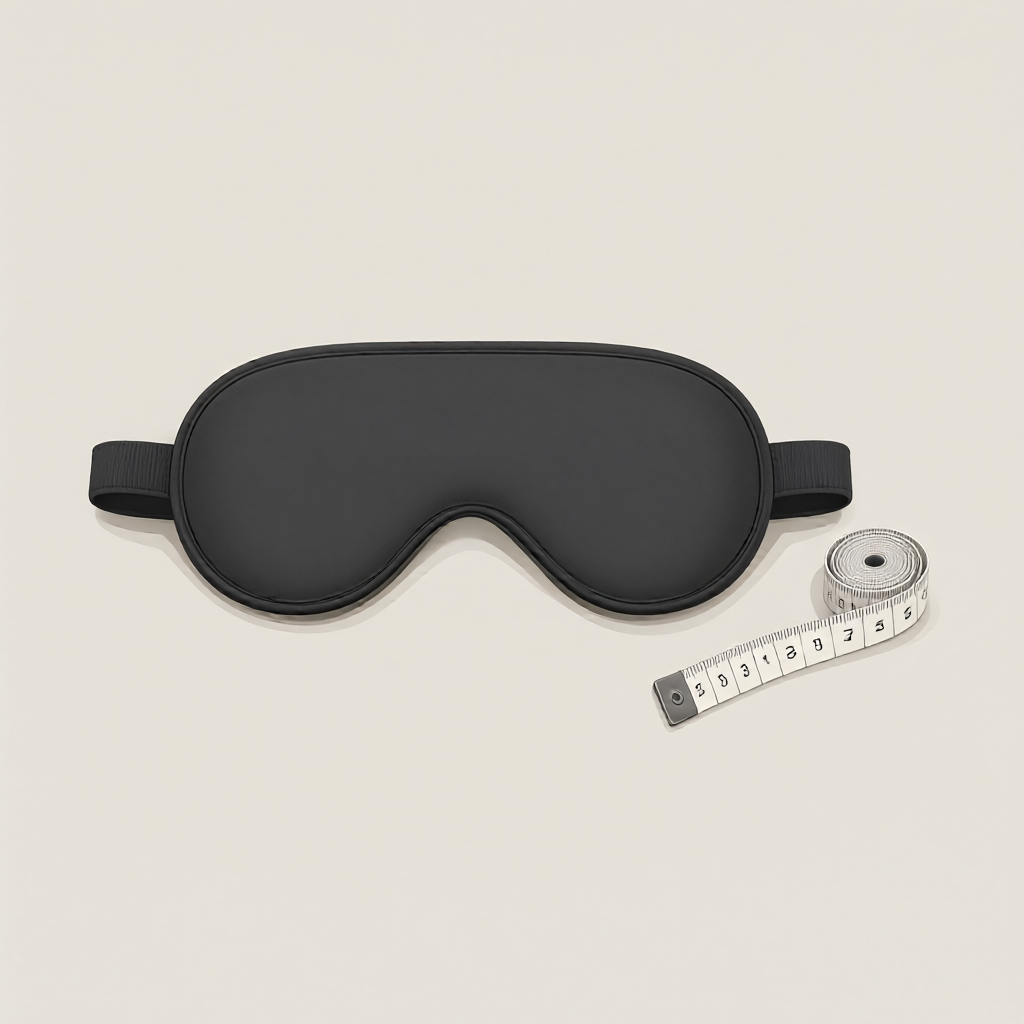
A sleep mask fits a larger head when the strap reaches around the skull without stretching to its limit, the eye cups clear the eyelashes, and the nose bridge seals without pinching. Standard masks fail because their straps max out at 20 inches, causing pressure behind the ears, and their flat profile lets light enter from the bottom. Selecting a mask for a broader face requires measuring head circumference, checking strap hardware, and evaluating cup depth.
Head Circumference and Strap Length
Measure head circumference at the widest point above the ears and across the forehead. A measurement over 23 inches requires a strap length of at least 26 inches when fully extended. Straps that rely entirely on elastic tension without a sliding adjuster create constant pressure. Straps with a buckle or sliding toggle adjust the total length, allowing the mask to stay on without stretching the elastic band tight.
Strap width matters for weight distribution. A narrow elastic band under half an inch digs into the back of the skull, creating a pressure point that builds over hours. Wider straps around one inch distribute tension. Some masks use a split strap design that wraps above and below the ears, which further reduces direct pressure on the ear cartilage and prevents the mask from shifting during sleep.
The adjuster hardware placement affects comfort. A buckle sitting directly behind the head is uncomfortable for back sleepers. Sliding toggles placed at the ends of the straps near the ears allow the bulk of the adjuster to sit off the pillow. For side sleepers, a single wide strap with a small, flat adjuster at the back center reduces the chance of the hardware pressing into the side of the head.
Eye Cup Depth and Lash Clearance
Contoured eye cups must stand away from the face to avoid pressing against eyelashes or eyelids. The depth of the eye cup is measured from the inner rim to the peak of the dome. A depth of at least 0.5 inches provides clearance for average lashes, but deeper cups around 0.75 inches accommodate longer lashes or lash extensions. Flat masks without contouring press directly on the closed eye, which disrupts rapid eye movement sleep and causes morning eye fatigue.
The internal volume of the eye cup determines how much space the eye has to move. Cups that are too narrow side-to-side touch the outer corners of the eyes, while cups that are too short top-to-bottom press against the brow bone. The inner diameter of the cup opening should be at least 2.5 inches for a larger face to sit comfortably around the orbital bone without rubbing the skin at the corners.
Memory foam eye cups conform to the face to block light, but the foam density dictates how much the cup collapses under strap tension. High-density foam retains its shape and keeps the mask off the lashes. Low-density foam flattens against the eyes when the strap is pulled. The foam resists compression and springs back immediately rather than staying indented when pressed by a finger.
Nose Bridge Width and Gap Sealing
Light leaks most often at the nose bridge. Standard masks use a narrow nose bridge cutout that fits smaller noses but leaves a gap on wider or higher nasal bridges. A mask with an adjustable nose bridge wire or a molded wide-flare bridge seals this gap. The wire allows the wearer to pinch the material to the exact shape of the nose, blocking the sliver of light that enters at the top corner of the mask.
The depth of the nose bridge cutout also affects the seal. A shallow cutout sits high on the nose, which works for smaller features but pulls away from the face on a larger nose, creating a triangular gap at the inner corners of the eyes. A deeper cutout accommodates a larger nose profile and allows the eye cups to sit flush against the cheeks. A cutout extending at least 1.5 inches down from the top edge of the mask is ideal.
Some masks use an inner nose flap or baffle, a small strip of fabric inside the nose bridge area, to block residual light. This feature provides a secondary seal if the outer bridge shifts during the night. The flap is made of the same light-blocking material as the mask exterior and sits flat against the skin without folding or creasing.
Material Weight and Face Coverage
The total surface area of the mask determines how much of the face it covers. A larger face requires a mask width of at least 4.5 inches and a height of at least 8 inches from the top edge to the bottom of the nose cutout. Smaller masks slide out of position because the edges rest on curved parts of the forehead or cheeks rather than sitting on flatter planes of the face.
Material weight affects how the mask drapes. Silk and single-layer cotton are lightweight but lack the structure to hold contoured cups away from the eyes on a larger head, as the tension from a wider strap pulls the flimsy material inward. Multi-layer constructions with an outer silk layer, a middle foam layer, and an inner soft lining provide the structural rigidity needed to maintain the eye cup dome shape under strap tension.
Breathability is a factor for full-face coverage masks. Materials like memory foam trap heat against the face. Masks with ventilation holes in the eye cups or moisture-wicking inner linings reduce sweat buildup. Natural fibers like cotton or bamboo wick moisture better than synthetic polyester against the skin for a full night of use.
Side Sleeping Mask Profile
Side sleepers need a mask with a low-profile edge that does not press against the pillow. Contoured masks with thick foam borders push against the side of the face when lying on a pillow, causing the mask to shift and break the seal. A tapered edge, where the foam thins out to a flat fabric edge at the sides, reduces this bulk and allows the mask to sit flush against the side of the head.
The strap attachment point dictates how the mask behaves when side pressure is applied. Straps attached at the outer edges of thick eye cups act as a lever; pillow pressure pushes the cup inward, lifting the opposite side. Straps attached closer to the top and bottom edges of the mask distribute this force more evenly and keep the mask centered.
When pressed against a flat surface in a side-lying position, the eye cups should not collapse inward toward the eye. If the cup inverts or the rim folds, the mask will fail during side sleep. A mask that retains its dome shape and continues to block light even when half of the mask is pressed into a pillow passes this test.
Fit Verification Checklist
The strap length should extend at least 3 inches past the measured head circumference. The adjuster hardware should sit off the sleep surface for the primary sleep position. The inner eye cup depth must measure 0.5 inches or more to clear lashes. The inner cup opening width should be at least 2.5 inches for orbital bone clearance. The nose bridge should feature an adjustable wire or a cutout deeper than 1.5 inches. The mask body width should reach 4.5 inches to cover a broader forehead. The side of the mask pressed against a flat surface should confirm the eye cup does not collapse. The foam density should allow the cup to spring back without staying indented when pressed.