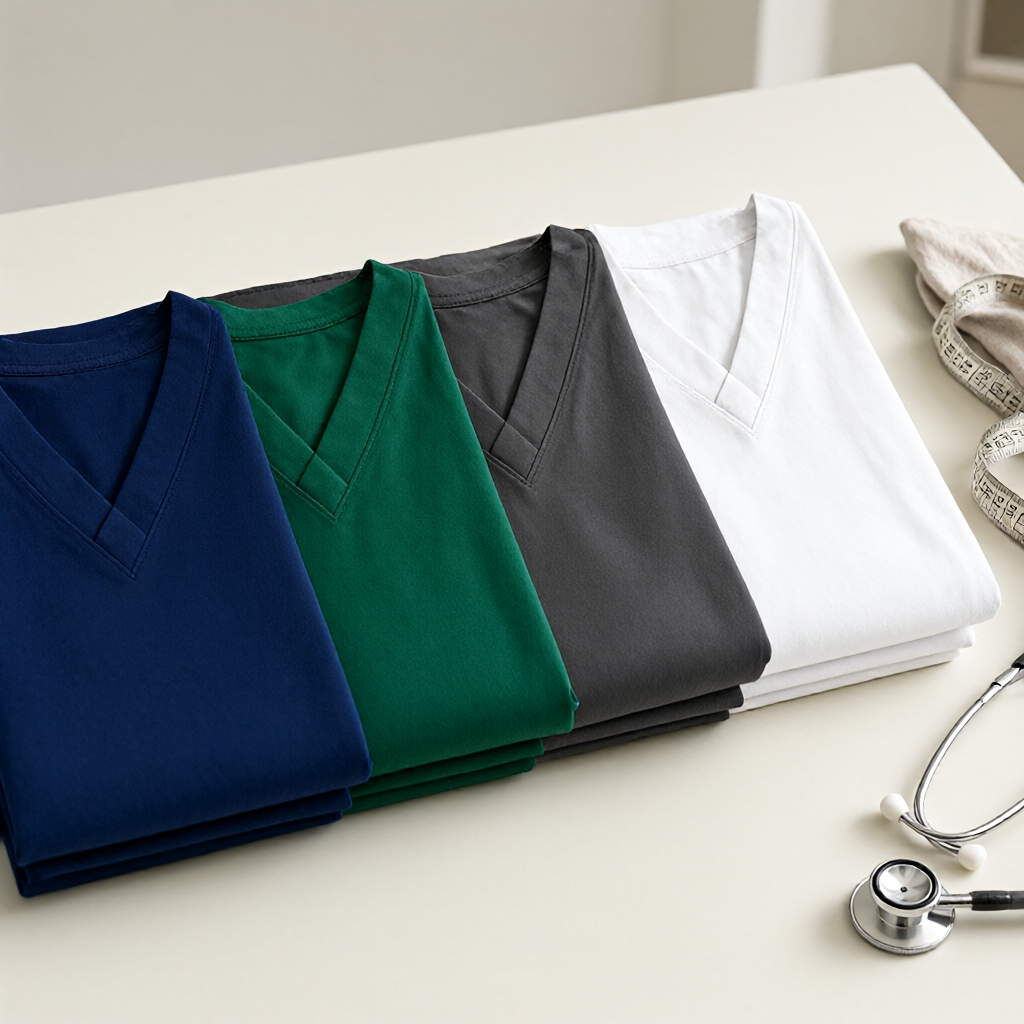
Standard medical scrub sizing fails for plus-size bodies when the garment restricts shoulder movement, rides up the torso, or digs into the waist during a 12-hour shift. Selecting functional scrubs requires measuring chest sweep, torso length, and inseam while accounting for motion and fabric stretch. A proper fit prevents constant readjustment and reduces skin irritation from tight waistbands or seam friction.
Scrub Top Chest Sweep and Shoulder Range
Chest sweep, the measurement from armpit to armpit across the front, determines whether a scrub top allows full arm extension. Measure the chest at its widest point and add a minimum of 6 inches for a non-stretch fabric and 4 inches for a fabric with 2 percent or more spandex. This ease accommodates reaching overhead or across a bed without lifting the hem above the waistline.
Shoulder seam placement affects neck and upper back strain. Set-in sleeves with seams sitting on the shoulder bone restrict upward motion. Raglan sleeves or dropped shoulder seams shift the seam away from the joint, providing a larger range of motion. Verify the fit by raising both arms to shoulder height; the bottom hem should not rise more than 2 inches above its resting position.
Side seam venting provides additional hip room. Vents that start at the waist and extend 4 to 6 inches down allow the top to spread rather than cling when sitting or bending. If the top lacks vents, the hip measurement plus 4 inches of ease must fit within the finished garment measurement at the hem.
Torso Length and Bending Coverage
Torso length dictates whether the back remains covered when bending forward. Standard scrub tops often lack sufficient length for longer torsos, resulting in skin exposure. Measure from the base of the neck at the shoulder seam down the front to the desired hemline, typically past the hip curve. A back length measurement from the nape of the neck to the hem should exceed the front measurement by 1 to 2 inches to account for shoulder slope and prevent back exposure.
Mock wrap styles create a visual waistline but often pull open across the chest on larger busts. If choosing a mock wrap, check the snap or tie placement. The top closure point must sit above the fullest part of the chest. A gap between snaps indicates insufficient chest ease; sizing up or switching to a straight-hem pullover top resolves the strain.
Scrub top length increases when fabric contains elastane, but frequent high-heat drying degrades the stretch. Pre-wash the top in hot water and machine dry before hemming. A hem that shrinks more than 1 inch indicates poor recovery, requiring the purchase of a longer initial length to compensate for progressive shrinkage.
Scrub Bottom Inseam and Rise Adjustments
Inseam length must clear the top of the shoe without dragging. Measure from the crotch seam to the desired ankle point while wearing work footwear. Add 1 inch to this measurement to account for the leg shortening that occurs when the fabric shifts forward during sitting. A pant leg that sits at the ankle bone while standing will ride up 1 to 2 inches when seated.
Rise measurement, the distance from the crotch seam to the center front waistband, determines crotch comfort. A short rise pulls the waistband down when sitting or squatting, creating a wedgie effect. Measure the rise on a pair of pants that fits comfortably in the crotch and compare it to the scrub size chart. A rise measurement 2 inches longer than the standard size chart prevents downward pulling.
Leg taper affects how the pant leg fits over the calf and thigh. A straight leg or bootcut provides more thigh and calf room than a tapered ankle style. If selecting a tapered style, verify the leg opening circumference is at least 2 inches larger than the calf measurement to allow the pant leg to slide over the calf without resistance.
Waistband Construction and Pressure Distribution
Elastic waistbands create pressure points that lead to skin irritation, numbness, or restricted circulation over a long shift. A half-inch elastic encased in a fabric tunnel digs into soft tissue. A 1.5-inch to 2-inch wide elastic distributes pressure over a larger surface area. Knit waistbands without exposed elastic provide the most even distribution and reduce rolling.
Drawstrings supplement elastic waistbands but fail when the buttonhole anchoring them rips. The drawstring channel must sit entirely above the hip bone. If the channel sits on the hip, the string slides down and fails to hold the pants up. Tie the drawstring before washing; a fused knot prevents the string from retracting into the channel during laundering.
Front and back rise proportions affect waistband tilt. If the back rise is too short relative to the front rise, the waistband pulls down in the back when sitting. Scrubs with a 1 to 2 inch longer back rise than front rise maintain a level waistband across the hip in a seated position.
Fabric Weight, Seam Type, and Stretch Recovery
Fabric weight, measured in grams per square meter (GSM), indicates opacity and durability. Scrubs under 150 GSM are prone to tearing at stress points and show undergarment lines. A GSM between 180 and 250 provides sufficient opacity for solid colors and resists punctures from instruments or blunt impacts. Check opacity by placing a hand inside the garment; if skin tone is visible, the fabric is too thin.
Seam construction determines whether the garment splits under tension. Overlock stitches finish edges but lack tensile strength. Bound seams, where a fabric strip encases the raw edge and is stitched down, reinforce the seam and prevent fraying under stretch. Check the crotch and underarm seams; a reinforced bar tack stitch at the stress point prevents seam blowouts.
Stretch recovery is the fabric's ability to return to its original shape after being stretched. Pull a 4-inch section of the fabric to 6 inches and release. If the fabric remains longer than 4.25 inches after 10 seconds, it lacks sufficient recovery for a garment that must retain its shape over multiple wears without sagging at the knees or rear.
Fit Verification Checklist Before Keeping Scrubs
Perform these checks with the scrubs on, using movements that replicate work tasks. Do not remove tags until all criteria pass. Sit in a chair and lean forward; the back must remain covered and the waistband must not gap or dig. Raise arms straight overhead; the top hem must not rise above the waistband. Squat down until thighs are parallel to the floor; the crotch must not pull tightly against the body and the knee must not strain the fabric. Check the chest sweep by crossing arms tightly across the chest; seams at the shoulder or chest must not pull open. Wash and dry the garment once to confirm shrinkage is within a half-inch tolerance and the waistband does not twist.