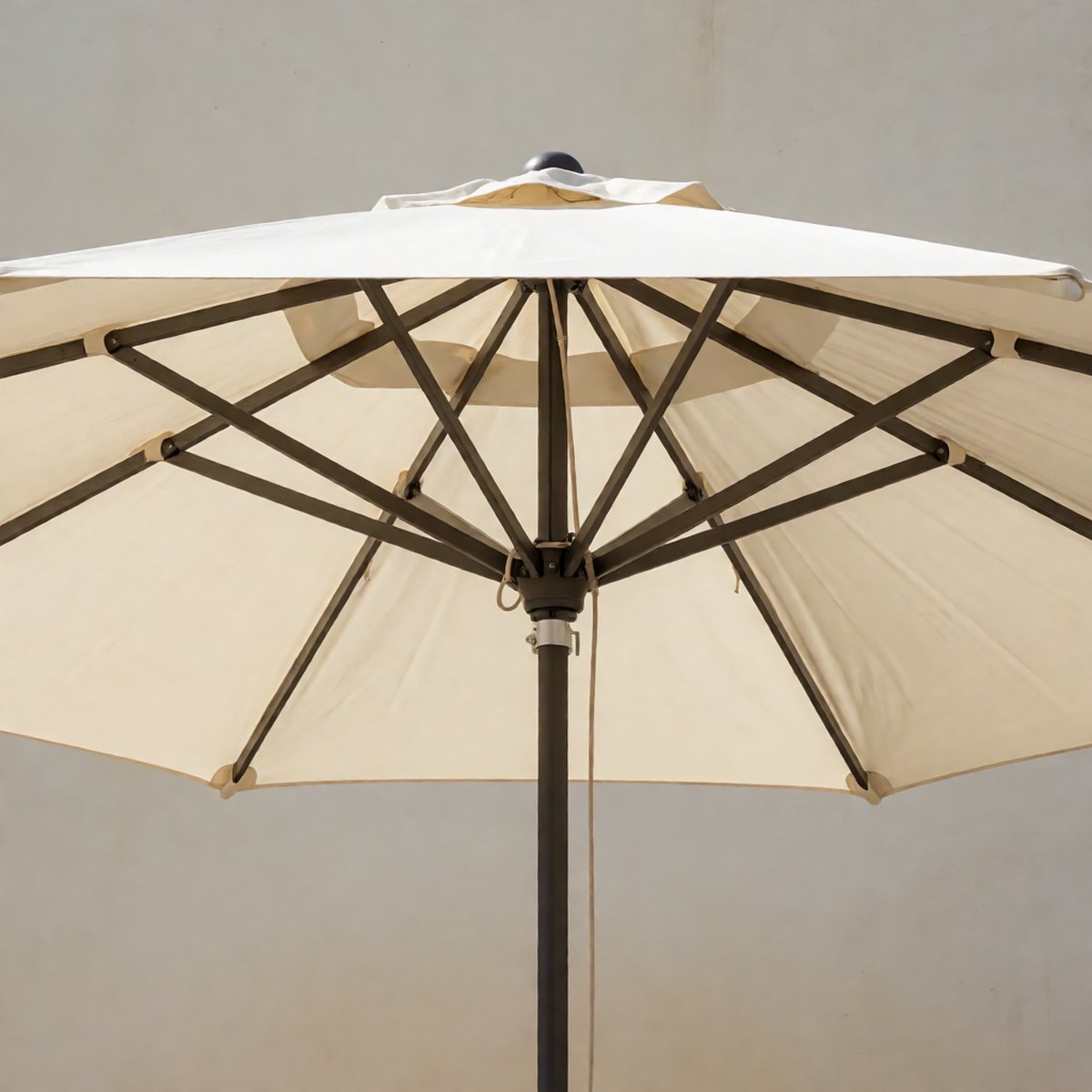
Standard umbrellas fail for larger bodies because the canopy width leaves shoulders, arms, and backpacks exposed to rain. A larger frame requires a canopy diameter of at least 48 inches, with 52 to 62 inches providing full coverage for the torso and lower body. Shaft flexibility and rib construction dictate whether the frame deforms or breaks in wind speeds above 15 miles per hour. Handle dimensions affect grip endurance; narrow handles compress the palm and force a white-knuckle grip that accelerates hand fatigue.
Canopy Dimensions and Coverage Area
Canopy diameter determines the dry radius. A 42-inch umbrella covers a shoulder span of up to 18 inches, leaving the outer shoulders and arms wet. A 48-inch canopy increases the dry radius to 24 inches, accommodating a shoulder span up to 22 inches. For shoulder spans exceeding 24 inches, a 54-inch or larger canopy is required to prevent lateral runoff from soaking the sleeves.
Canopy shape influences coverage during wind. A flat dome canopy blocks rain from above but allows sideways rain to hit the torso at a 90-degree angle. A deep dome or birdcage shape extends coverage 6 to 8 inches lower on the sides, shielding the upper arms and the sides of a backpack. Measure the vertical drop of the canopy from the peak to the lowest rib; a drop of 10 inches or more provides adequate side protection for a larger torso.
Double-canopy construction adds a vented layer beneath the main fabric. The vent allows updrafts to escape through the gap instead of pressing against the inner fabric, which reduces inversion risk. Verify the vent alignment by checking that the inner layer openings sit directly beneath the outer layer seam lines.
Shaft Material and Wind Resistance Ratings
Wind resistance depends on shaft flexibility and rib integrity. Fiberglass shafts flex up to 180 degrees without snapping, returning to their original shape after the gust passes. Steel shafts resist bending under normal conditions but develop permanent creases at the crown when subjected to gusts over 20 miles per hour. Aluminum shafts are lightweight but fracture at the joint points under similar stress.
Rib count and rib material dictate structural redundancy. An 8-rib umbrella distributes wind pressure across fewer points, concentrating stress at the crown. A 10-rib or 12-rib frame distributes the load evenly, reducing the chance of a single rib snapping. Fiberglass ribs outperform metal ribs in gusty conditions because the material absorbs shock rather than transferring it to the joint.
Gust-proof ratings are verified through standardized wind tunnel testing. An umbrella rated for 55 miles per hour sustains repeated flexing without structural failure. To assess an unrated umbrella, flex the shaft gently by pushing the crown toward the handle; a shaft that bends 45 degrees without creasing will withstand winds up to 25 miles per hour. Avoid any shaft that resists bending entirely, as rigid frames shatter under sudden shear force.
Handle Grip Width and Ergonomics
Handle circumference dictates grip comfort for larger hands. A standard J-hook handle measures 3.5 inches in circumference, forcing the fingers into a pinched hold. A handle circumference of 4.5 to 5.5 inches allows the fingers to wrap around the grip without overlapping the thumb, reducing tendon strain in the forearm.
Handle shape affects wrist alignment during prolonged use. Straight cylindrical handles force the wrist into a 30-degree extension, which compresses the carpal tunnel. A pistol-grip or forehand-grip handle aligns the wrist straight with the forearm, transferring the weight of the umbrella to the larger arm muscles instead of the wrist joint.
Material texture prevents slippage when the hands are wet. Smooth plastic handles require constant squeezing force to maintain hold, which accelerates grip fatigue. Ribbed rubber or EVA foam handles increase friction, allowing a relaxed grip. To test the grip diameter, wrap the hand around the handle; a 0.5-inch gap between the fingertips and the palm indicates an appropriately sized handle.
Weight Distribution and Carry Straps
Large-canopy umbrellas weigh between 1.5 and 2.5 pounds, which creates leverage strain on the wrist when carried by the shaft. Carrying the umbrella closed with the canopy pointing down concentrates the weight at the handle, reducing rotational force on the wrist. A carry strap attached near the handle allows the umbrella to rest against the hip, transferring the load to the torso.
Backpack integration requires a shaft length that clears the top of the pack. A shaft shorter than 30 inches allows the canopy to rest against the backpack fabric, directing runoff into the pack. A shaft length of 32 to 36 inches positions the canopy above the pack, keeping the fabric dry. Verify the strap placement by hanging the closed umbrella from a backpack loop; the canopy tip should extend at least 2 inches above the highest point of the pack.
Umbrella Purchase Checklist
Measure shoulder span and add 6 inches to determine the minimum canopy diameter. Select a deep dome canopy with a vertical drop of 10 inches or more for side coverage. Choose a fiberglass shaft and a minimum of 10 ribs for wind resistance. Measure hand width and select a handle with a circumference of at least 4.5 inches. Test the handle material for friction when wet. Verify the shaft length clears the top of a standard backpack by 2 inches. Confirm the presence of double-canopy vents for updraft release.