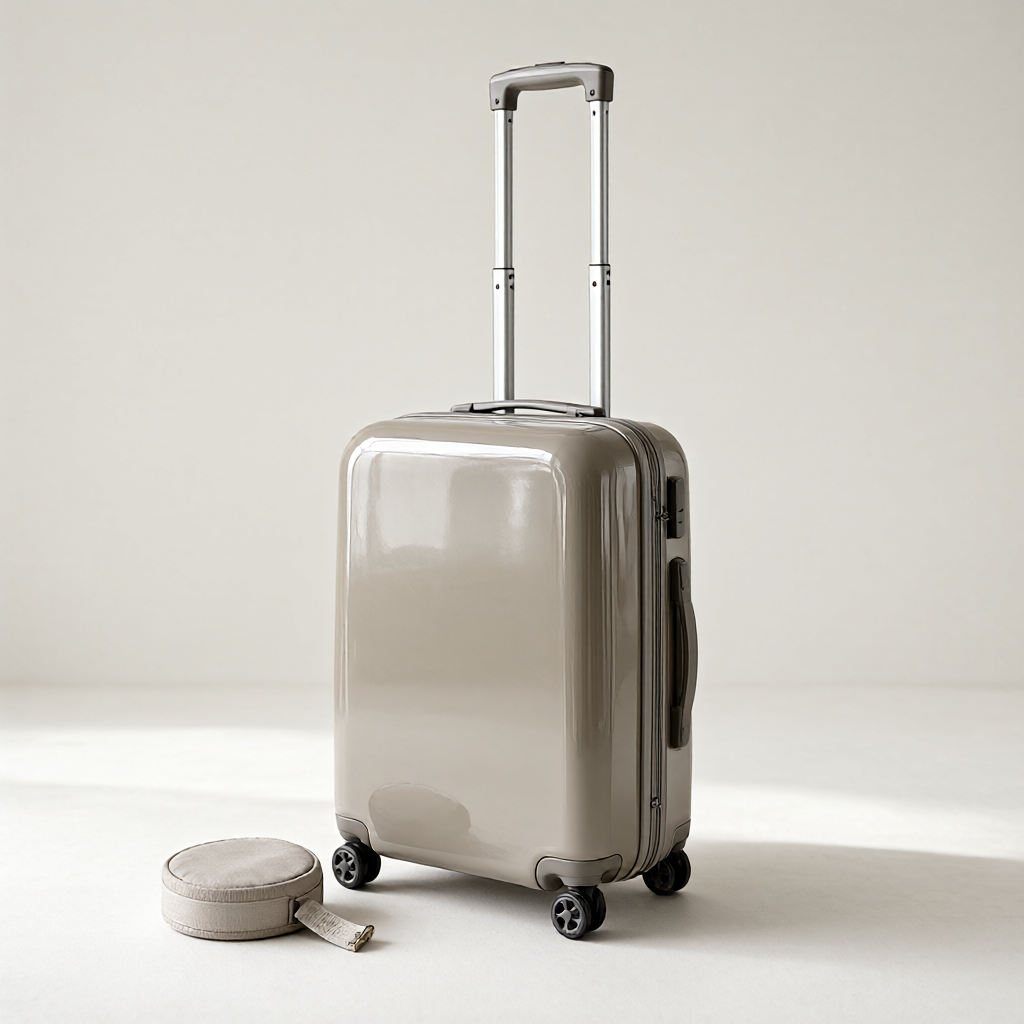
Selecting carry on luggage for a larger body requires evaluating handle height, wheel stability under load, and pull angle. Standard carry on bags sit low and feature short handles, forcing lateral leaning and wrist strain during extended walks through airport terminals. The correct luggage matches torso height, rolls straight when packed to capacity, and allows a neutral arm position while walking.
Handle Extension and Pull Angle
Handle height dictates posture while pulling luggage. A handle that extends to the waist or lower ribs forces the shoulder to drop and the torso to lean, creating uneven spinal loading. Measure handle extension from the floor to the top of the grip when fully extended. For a torso length corresponding to a height of 5'9" and above, the handle must reach at least 40 inches from the floor. Taller frames require 42 to 44 inches to maintain a straight elbow and vertical posture.
Pull angle affects shoulder and wrist alignment. The grip should sit level with the wrist when the arm hangs naturally at the side, allowing a 90-degree bend at the elbow without shrugging. Single telescoping handles often sit offset from the bag center, pulling the arm inward and crossing the body midline. Double-bar handles distribute pull force evenly and keep the arm aligned with the shoulder, reducing rotator cuff fatigue during long walks.
Grip width matters for broader shoulders. Narrow grips between the two handle bars force the hand into a constricted position, which compresses the fingers and strains the forearm. Test the grip by wrapping the hand fully around the bar; there should be visible space between the fingers and the palm, indicating the bar diameter is not forcing a clenched fist. Flat grips distribute pressure better than thin cylindrical rods, preventing nerve compression during prolonged gripping.
Wheel Type and Roll Resistance
Wheel configuration determines how much force transfers to the arm and shoulder. Four-wheel spinners allow pushing alongside the body, which eliminates twisting at the waist. However, spinner wheels sit on the exterior corners, reducing internal packing volume and catching on narrow jet bridge transitions. Two-wheel rollers keep the bag closer to the leg, preventing ankle strikes, and offer larger wheel diameters, which roll over carpet and cobblestones with less resistance.
Wheel diameter dictates roll ease on high-pile airport carpet. Wheels under 50 millimeters sink into soft surfaces, requiring sharp shoulder force to maintain momentum. Wheels measuring 60 to 80 millimeters bridge carpet fibers and roll over expansion joints with minimal vertical jarring. Polyurethane wheels outperform standard hard plastic by absorbing vibration and resisting cracking under heavy loads, keeping the roll quiet and smooth across terminal concourses.
Bearing quality controls straight-line tracking. Luggage with unsealed bushings wobbles and drifts, forcing constant shoulder correction to keep the bag aligned with the walking path. Sealed ball bearings keep the wheels spinning at equal rates, preventing the bag from pulling to one side. Test tracking by pushing the empty bag forward on a flat floor; it should maintain a straight line for at least ten feet without veering.
Bag Weight, Frame, and Load Balance
Empty bag weight subtracts directly from the allowed carry on payload. Hard-shell polycarbonate cases weigh between 7 and 9 pounds, leaving limited capacity for contents before hitting airline weight limits. Soft-side nylon bags with internal aluminum frames weigh 5 to 6 pounds, maximizing packing allowance while retaining structural integrity. Frameless soft bags collapse under heavy packing, causing the bag to sag onto the wheels and drag on the ground, which burns out the wheel housings.
Load distribution changes the pull force. Packing dense items near the top of the bag shifts the center of gravity above the wheel axis, making the bag feel heavier and more prone to tipping backward. Placing weight at the base, directly over the wheels, anchors the bag and reduces the downward force required to tilt it onto the rolling wheels. Use internal compression straps to lock contents at the bottom and prevent shifting that alters the center of gravity mid-walk.
Structural rigidity prevents bag distortion when stuffed to capacity. A carry on that bulges at the sides exceeds the sizer bin dimensions, even if the base measurements fit when empty. Rigid corner guards and reinforced side panels maintain the rectangular shape under pressure. Check the zipper path; curved zippers accommodate expansion but compromise structural stiffness, while straight, recessed zippers keep the shell taut and dimensionally stable.
Testing Luggage Before Purchase
Store aisles provide the necessary floor conditions for testing roll resistance. Thick carpet mimics airport terminal surfaces, while smooth tile mimics jet bridges and cabin aisles. Load the bag with twenty pounds of weight before testing; empty bags roll effortlessly, but loaded bags reveal bearing friction, wheel wobble, and handle flex. Pull the loaded bag behind the body at a normal walking pace and observe whether the arm remains relaxed or the shoulder elevates to compensate for height or resistance.
Push the bag on all four wheels to evaluate spinner stability. A loaded spinner should glide forward with a light push and decelerate evenly without veering left or right. If the bag resists forward motion or tips onto the front edge, the wheel placement is too close to the center of gravity, making the bag front-heavy. Check handle locking by applying downward pressure on the grip while rolling; the telescoping tubes must not collapse or slip under the load.
Inspect the wheel housing clearance. The gap between the wheel and the bag shell should measure at least five millimeters. Tight clearance allows debris, carpet fibers, and luggage tags to jam the wheel axle. Spin each wheel individually and listen for grinding or rubbing sounds, which indicate misaligned axles or tight housing tolerances that will worsen with wear and added body weight pushing down on the handle.
Pre-Purchase Checklist for Plus Size Carry On
Verify handle extension reaches at least 40 inches from the floor to maintain upright posture without shoulder drop. Confirm double-bar handle construction to keep the pulling arm aligned with the shoulder and prevent cross-body reaching. Measure wheel diameter at 60 millimeters or above to ensure roll capability over thick carpet and sidewalk cracks. Validate sealed bearings by pushing the bag empty and loaded, checking for straight tracking without wobble. Weigh the empty case at 7 pounds or under to preserve maximum packing capacity. Pack dense items at the base over the wheel axis and secure them with internal straps to prevent tipping. Test grip width to ensure fingers do not clench tightly around the bar, avoiding forearm strain. Check wheel housing clearance for at least five millimeters of space to prevent axle jamming from debris.