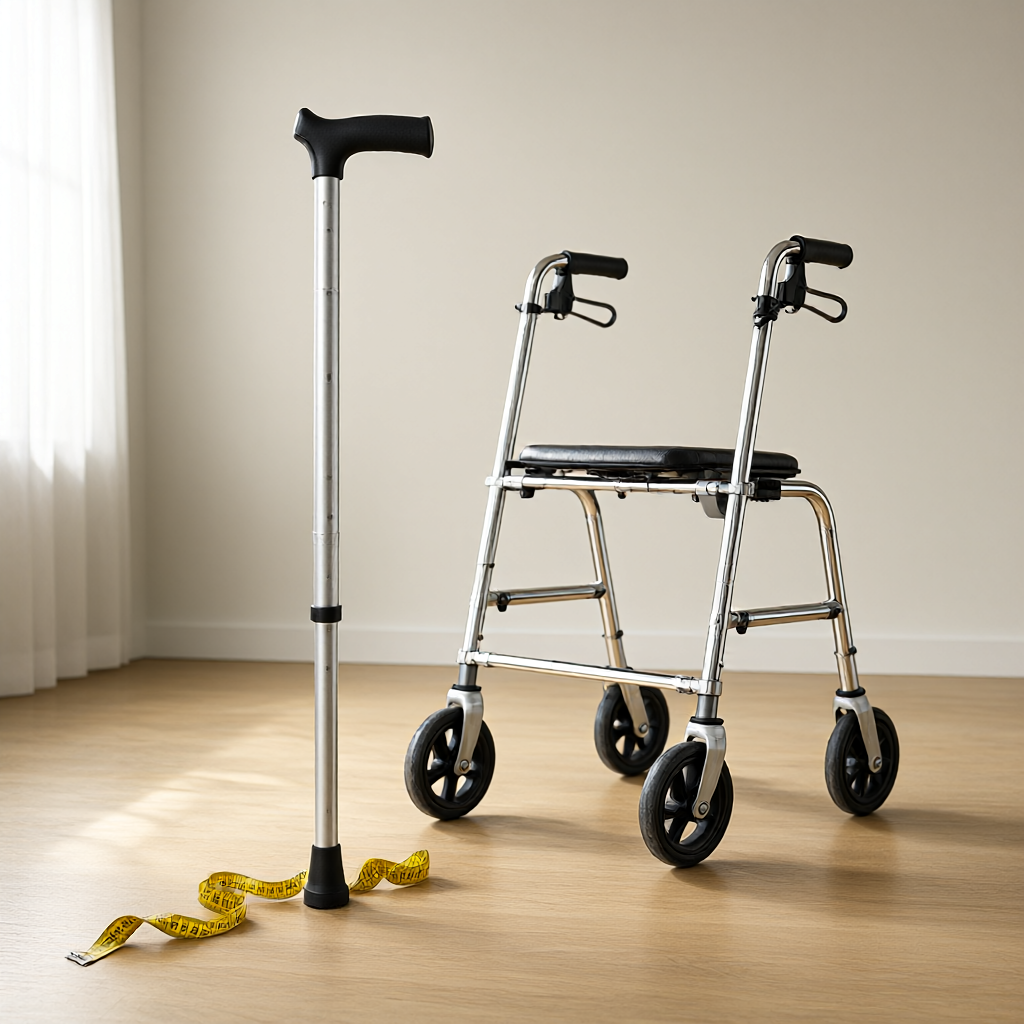
Standard canes and walkers fail under higher body weight because their weight ratings, handle heights, and frame widths accommodate average dimensions. A plus size user must evaluate the static weight rating, the handle height relative to shoulder alignment, the grip circumference for hand comfort, and the frame width for unimpeded gait. Ignoring these factors leads to structural buckling, shoulder impingement, and unstable base support.
Weight Rating and Structural Integrity
Manufacturers assign static weight ratings to mobility aids. A standard cane holds up to 250 pounds, while a standard walker holds up to 300 pounds. For a larger body, the selected aid must possess a weight rating that exceeds the user's body weight by at least 50 pounds to account for downward momentum and uneven weight shifts during movement. Bariatric walkers rated for 500 to 600 pounds utilize reinforced steel frames and double-braced legs, providing the necessary structural redundancy.
Frame construction dictates actual weight tolerance independent of labeled ratings. Aluminum frames bend under lateral stress at lower thresholds than steel. Inspect the joint connections on folding walkers; rivets loosen faster than welded joints under repetitive heavy loads. A folding walker requires heavy-duty hinge pins rated for high shear stress. Replace standard rubber tips with reinforced wide-base tips to prevent the leg shaft from punching through the bottom under concentrated load.
Handle Height and Wrist Alignment
Handle height determines shoulder alignment and wrist extension. An improperly sized handle forces the shoulder upward, causing rotator cuff strain, or forces a downward reach, creating carpal tunnel compression. Stand upright wearing regular walking shoes, arms resting at the sides. Bend the elbow 20 to 30 degrees. Measure the distance from the floor to the wrist crease. This measurement sets the correct handle height. Most adjustable canes increment in one-inch intervals; select the setting closest to the calculated measurement without going shorter.
Quad canes and walker handles require the same wrist crease measurement protocol. When gripping the handle, the wrist must remain in a neutral, flat position, avoiding flexion or extension. Foam padding alters the effective height by compressing under grip pressure; measure handle height with the padding fully compressed. Forearm crutches offer an alternative for users with limited hand strength, shifting load to the upper arm, but the cuff height must clear the thickest part of the forearm without squeezing.
Grip Width and Hand Circumference
Grip circumference affects hand fatigue and finger circulation. Standard cane grips measure 1 to 1.5 inches in diameter, forcing larger hands into an overly tight pinch grip, which exhausts the flexor tendons. A grip diameter of 1.75 to 2 inches allows the fingers to wrap around the handle without the thumb overlapping the index finger, distributing pressure across the palm. Measure the hand width across the knuckles; a width over 4.5 inches necessitates an oversized grip.
Grip material dictates friction and shock absorption. Hard plastic transfers impact shock directly to the carpal bones. Silicone and neoprene grips dampen vibration and maintain friction against sweaty palms. Orthopedic grips with contoured finger grooves accommodate specific hand placements, but users must verify the groove spacing matches their finger width. Narrow grooves cause lateral finger compression, reducing blood flow during extended use.
Walker Frame Width and Gait Clearance
Walker frame width restricts hip movement and pacing. Standard walker interiors measure 18 to 21 inches wide. A plus size user requires a minimum interior width of 24 inches to prevent the thighs from brushing the frame legs during stride. Measure the widest part of the hips or abdomen while standing, then add 4 inches to calculate the minimum required interior frame width. Narrow frames force a shortened step, destabilizing balance and increasing fall risk.
Wheel walkers and rollators introduce turning radius constraints. A wider rollator requires more space to pivot. Check the wheel base width; the distance between the outside edges of the rear wheels must clear standard residential doorframes, which measure 32 inches. If the rollator exceeds 31 inches in total width, it requires removal of the wheels or side panels to pass through narrow passages. Seat width on rollators must also accommodate the user; a seat depth under 16 inches provides insufficient support, leading to pressure sores during seated rest.
Base Stability and Tip Friction
Base stability depends on the footprint area created by the legs or wheels. Standard quad canes position the legs too close to the shaft, creating a narrow footprint that tips when the user leans heavily on one side. A wide-base quad cane spaces the legs at least 6 inches from the shaft center, expanding the footprint and resisting tipping. Test stability by pressing down on the handle at a 45-degree angle; the cane must not rock onto a single leg.
Tip material and diameter control friction on smooth surfaces. Standard 3/4-inch rubber tips slip on wet tile. Replace standard tips with 1.25-inch diameter ice-grip tips featuring a metal ring insert. For walkers, fixed-front walkers provide a rigid, stable base, whereas swivel-wheel walkers allow directional movement but reduce lateral stability. Heavier users prioritizing stability over maneuverability should select fixed-front frames or swivel-wheel models with a locking mechanism for the front wheels.
Verification Checklist for Plus Size Mobility Aid Selection
Confirm the static weight rating exceeds body weight by 50 pounds or more. Measure the wrist crease from the floor while wearing shoes, setting the handle height to this exact measurement. Verify the grip diameter measures 1.75 inches or larger for hands wider than 4.5 inches across the knuckles. Measure the widest hip or abdomen dimension and ensure the walker interior width exceeds this measurement by 4 inches. Check the total exterior width of rollators against 31-inch doorframe constraints. Inspect the base footprint of quad canes, requiring a minimum 6-inch leg offset from the shaft center. Replace standard rubber tips with 1.25-inch reinforced wide-base tips on all leg endpoints.