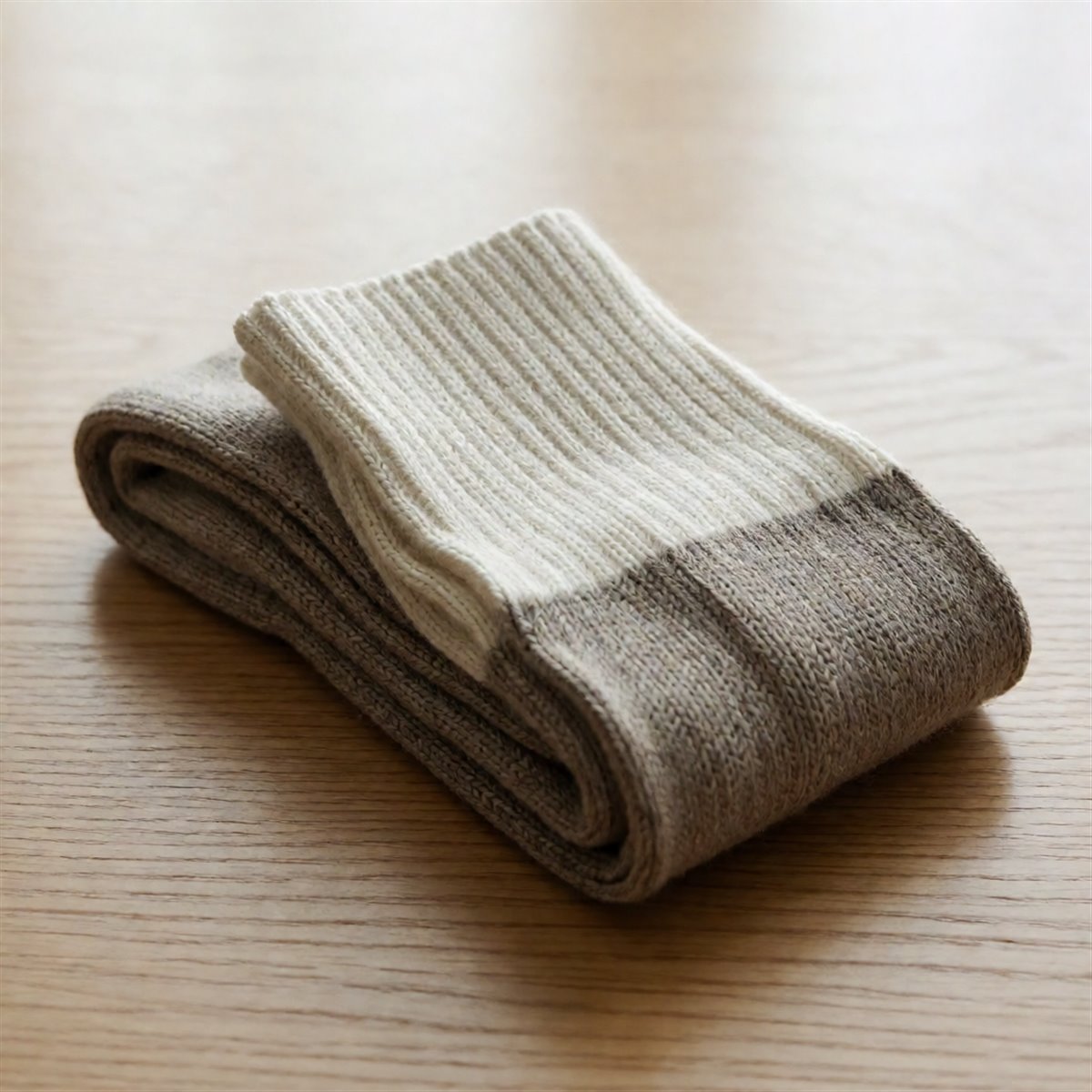
Sock fit for larger bodies depends on four variables: calf circumference, cuff pressure, sock length, and toe room. Standard sizing charts often use calf measurements under 18 inches, which causes cuffs to restrict circulation or slide down the leg. A proper fit requires matching the sock's unstretched circumference to the leg, verifying the cuff's stretch recovery, confirming the length accommodates the calf taper, and ensuring the toe box does not compress the foot. Evaluating these factors prevents skin indentations, restricted blood flow, and fabric bunching.
Measuring Calf Circumference for Sock Sizing
Measure the calf at its widest point while standing, as weight distribution expands the muscle. Wrap a soft tape measure around the calf without pulling it tight. Record the measurement in inches or centimeters. If the calves measure over 18 inches, standard one-size-fits-most socks will lack the fabric capacity to stretch without excessive compression. Look for wide-calf or plus-size sock labels that list maximum stretch circumferences matching or exceeding the measured calf size by at least one inch to allow comfortable expansion during prolonged sitting or walking.
Compare the measured calf circumference to the sock's listed maximum stretch. If the manufacturer does not list a maximum stretch, measure the sock cuff laid flat and multiply by two to get the total unstretched circumference. A sock with an unstretched circumference of 8 inches relies entirely on elastane to reach a 20-inch calf. High elastane dependency leads to rapid fabric fatigue and tight cuffs. Choose socks where the unstretched fabric width is at least 60 percent of the measured calf circumference to reduce reliance on elastic stretch.
Evaluating Cuff Pressure and Elastic Recovery
Cuff pressure determines whether a sock stays up or leaves deep indentations on the skin. To test cuff pressure, stretch the sock cuff over a cylindrical object matching the calf circumference, such as a large bottle or custom form. Leave it stretched for one hour. Remove the sock and measure the cuff width immediately. A cuff that remains stretched more than 15 percent beyond its original unstretched width lacks the recovery strength for long-term wear on larger calves. Socks with a higher percentage of spandex or elastic yarns woven into the cuff rather than a single elastic band at the top distribute pressure more evenly and maintain recovery better over time.
Check the cuff construction for wide, non-binding bands. A narrow elastic band concentrates force on a small strip of skin, increasing pressure per square inch. Wide ribbed cuffs with multiple elastic threads distribute constriction force across a broader area. When trying socks on, wait 15 minutes and examine the skin. Red lines that remain visible for over five minutes after removing the sock indicate excessive cuff pressure. The cuff should feel secure without causing skin discoloration or indentation. Socks labeled as non-binding or diabetic often feature reduced elastic tension and wider bands suitable for larger lower legs.
Matching Sock Length to Calf Shape
Sock length dictates where the cuff sits on the leg. Crew socks typically end mid-calf, but on a larger leg, the widest part of the calf often sits higher than standard crew length reaches. If the cuff lands below the widest point, the sock slides down because the leg circumference increases above the cuff, offering no anchor. Measure the distance from the floor to the widest point of the calf. Choose a sock length where the cuff sits at least one inch above this widest point. Knee-high or extra-long crew lengths provide this necessary anchor for high or wide calves.
Micro-crew or ankle socks present a different challenge for plus-size lower legs. The opening must clear the ankle joint without sitting directly on the ankle bone, as this creates friction during movement. Measure the ankle circumference and ensure the ankle sock opening accommodates it without overstretching. For mid-calf socks, check the taper. Legs with a large difference between the ankle and calf circumference require socks with a pronounced graduated shape. Straight tube socks force the ankle fabric to bunch while the calf fabric over-stretches, leading to uneven pressure and rapid wear at the calf.
Checking Toe Room and Forefoot Volume
Toe room involves both length and vertical volume. Plus-size feet often have greater depth and width in the forefoot, requiring more fabric volume than standard socks provide. To assess toe volume, pull the sock over the foot without putting the heel into the heel pocket. If the fabric over the toes stretches flat and tight before the heel engages, the sock lacks sufficient volume for the forefoot. A sock with adequate toe volume allows the fabric to dome slightly over the toes even when the heel is seated in its pocket. Seamless toe closures reduce friction, but the overall fabric volume remains the primary factor for preventing toe compression.
Verify the heel pocket depth. A shallow heel pocket pulls the toe fabric backward, shortening the effective toe box length. Put the sock on and flex the foot upward. If the fabric pulls tight under the toes or slips off the heel, the heel pocket is too shallow for the foot length and instep height. Socks with Y-heel construction provide a deeper, shaped pocket that accommodates a higher instep without robbing length from the toe box. Measure foot length and add half an inch when selecting sock size to account for foot spread under body weight, ensuring the toe box does not restrict toe splay.
Fit Check Checklist for Plus Size Socks
Use this checklist to evaluate socks before committing to full-day wear. Measure calf circumference standing and verify the sock maximum stretch exceeds this measurement by at least one inch. Stretch the cuff over a form matching the calf size for one hour and confirm it recovers within 15 percent of its original width. Measure the distance from the floor to the widest calf point and ensure the sock cuff reaches at least one inch above it. Pull the sock over the foot without seating the heel and confirm the toe fabric is not stretched flat. Flex the foot upward with the sock on and verify the heel pocket stays seated without pulling the toe fabric tight. Check the skin after 15 minutes of wear and confirm no red indentations remain visible for over five minutes.