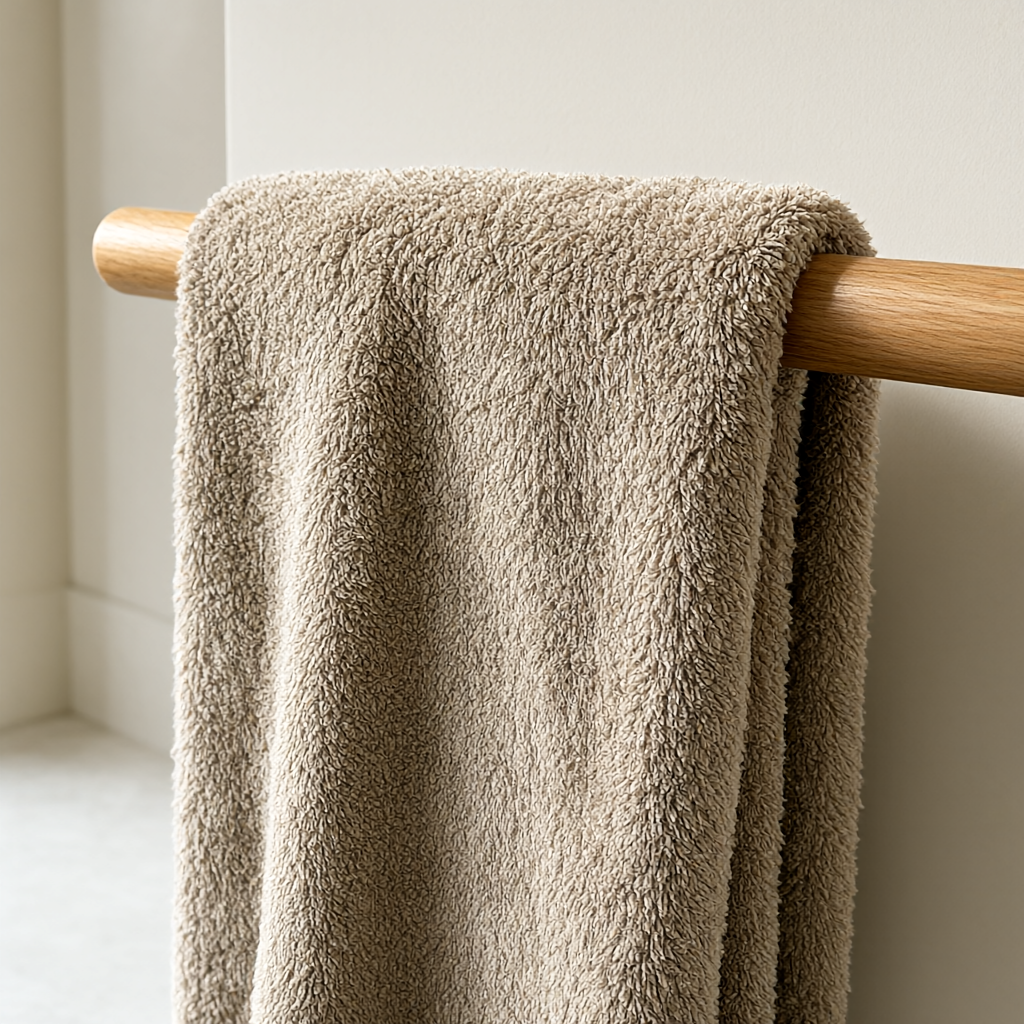
Selecting a bath towel for a larger body requires evaluating dimensions and fabric weight rather than accepting standard sizing. Standard towels average 27 by 52 inches, which fails to wrap around a broader torso or dry the full surface area efficiently. The solution involves shifting to bath sheets or oversized tiers, verifying a minimum 35-inch width for wrap coverage, and matching GSM to drying speed without adding unmanageable laundry weight.
Towel Width and Wrap Security
Wrap security depends on the towel width exceeding the widest circumference of the torso by at least four inches. Measure the waist or hip circumference whichever is larger. A 48-inch waist requires a towel width of at least 26 inches to meet at the front, but a 35-inch width provides a secure overlap that prevents the towel from falling when worn after a shower. Standard bath towels lack this overlap, causing constant slippage.
Bath sheets generally start at 35 inches wide and provide the baseline overlap for waists up to 62 inches. For measurements beyond this, seek oversized or jumbo bath towels labeled with 40-inch widths. Check product specifications rather than relying on category names, as some brands market 30-inch wide towels as bath sheets.
Stretch the towel width manually before purchasing if possible. Some cotton blends shrink up to eight percent on the first high-heat wash. Pre-washed towels offer a more reliable dimension measurement. Account for a potential two-inch shrinkage margin when calculating wrap overlap.
Length Requirements for Full Torso Coverage
Towel length dictates whether the fabric covers from the shoulder line to the knee while standing. Standard 52-inch lengths leave the lower legs exposed, leading to cold air exposure and requiring a second towel to finish drying. A minimum length of 64 inches allows a plus-size user to tuck the upper edge under the armpits and have the lower hem reach mid-calf.
Bath sheets typically measure 68 to 70 inches long, accommodating taller and broader frames simultaneously. Verify the length specification against shoulder-to-knee measurements. Sit down while wearing the towel to confirm the lower edge does not ride up above the thigh, which compromises lap coverage and warmth.
Long-staple cotton fibers resist pilling and maintain length integrity after repeated laundering. Short-staple fibers pull and shrink, reducing the usable length over a span of six months. Inspect towel edges for double-turned hems with closed seams. Single-stitched hems on long towels unravel under the tension of wrapping larger body masses.
Fabric Weight and Absorbency Metrics
GSM measures grams per square meter and indicates fabric density. A GSM below 400 feels thin and lacks the fiber volume to absorb moisture from a high surface area. A GSM above 700 holds excessive water, becoming heavy when wet and requiring extended drying cycles in a machine. The functional range for plus-size drying needs falls between 500 and 650 GSM.
Higher GSM towels trap water within the loop pile, but they also retain moisture longer between uses. In humid environments, a 600 GSM towel may develop a musty odor before it dries completely on a standard towel rack. Zero-twist yarn constructions offer high absorbency with a lower overall weight, reducing drying time in the laundry while maintaining surface area contact with the skin.
Hydrocotton or ring-spun cotton treatments process the raw fibers to remove short strands before weaving. This results in a towel that absorbs water on initial contact rather than pushing moisture around the skin surface. Test absorbency by dropping a small water bead on the towel corner in the store. Immediate wicking indicates proper fiber treatment.
Weave Type and Surface Contact
Terry cloth features raised loops that trap water, making it the standard for bath towels. The loop height determines the volume of water held. Longer loops increase absorbency but flatten under body weight, reducing the effective drying area if the loops lack structural recovery. Look for loops tied off individually rather than sheared across the top, which prevents snagging on dry skin or rough calluses.
Waffle weave towels present a flat, textured surface that absorbs a lower volume of water but dries rapidly against the skin. For plus-size users who experience heat retention after showering, waffle weave provides cooling evaporation while still removing surface moisture. Use waffle weave as a secondary drying tool or in high-humidity climates where terry cloth remains damp too long.
Velour towels shear one side of the terry loops to create a smooth texture. While velour offers a soft hand feel, the sheared side loses absorbency and functions poorly for drying large surface areas. Reserve velour towels for hair drying or facial use, and rely on two-sided terry cloth for body coverage.
Maintenance and Longevity Checks
Wash new towels in warm water with half the standard detergent amount before first use. Manufacturer coatings on cotton fibers repel water until stripped away by initial laundering. Skipping this step results in a towel that pushes water off the skin rather than absorbing it for the first several weeks of use.
Avoid fabric softeners during ongoing wash cycles. Softener coats cotton fibers in a waxy residue that blocks absorbency channels. Over time, towels washed with softener lose their ability to wick moisture, requiring replacement despite the fabric showing no physical wear. Use white vinegar in the rinse cycle to break down detergent residue and maintain fiber openness.
Dry towels on a low-heat setting with dryer balls to maintain loft in the terry loops. High heat bakes the cotton fibers, causing them to stiffen and crack. Stiff fibers scratch the skin and reduce the surface area that makes contact with the body, increasing drying time.
Towel Selection Checklist
Measure the largest torso circumference and add four inches to determine the minimum required towel width. Confirm the towel length reaches at least 64 inches for shoulder-to-knee coverage. Select a GSM between 500 and 650 to balance absorbency and laundry drying time. Choose long-staple or zero-twist cotton to minimize shrinkage and maintain fiber integrity. Verify double-stitched hems on all four edges. Discard fabric softener from the washing routine to preserve moisture wicking capacity.