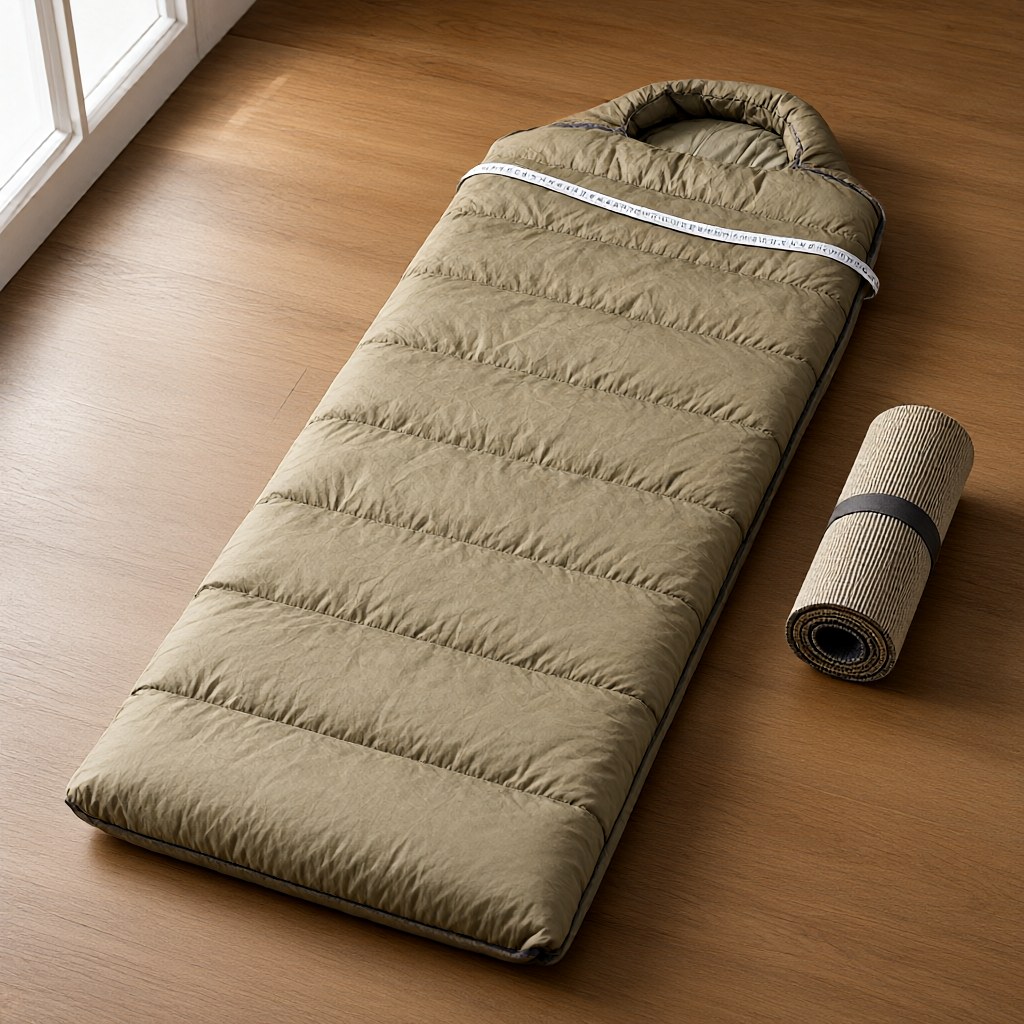
Selecting a sleeping bag for a larger body requires matching internal bag dimensions to physical measurements rather than relying on standard size categories. Standard bags restrict shoulder and hip movement, compress insulation, and create cold spots along the torso and legs. A properly fitted bag provides sufficient shoulder girth, adequate hip room, and continuous insulation loft without excess empty space that cools rapidly.
Measurement Requirements for Bag Selection
Accurate body measurements dictate the minimum internal dimensions of the sleeping bag. Shoulder width is measured across the widest point of the shoulders while wearing a base layer. Adding eight to ten centimeters to this measurement calculates the minimum shoulder girth required for unrestricted arm movement and side sleeping. Hip circumference is measured at the widest point, with ten to twelve centimeters added to determine the minimum hip girth needed to avoid fabric tension that compresses leg insulation.
Torso length determines the necessary bag length. This measurement runs from the base of the neck to the floor, or is derived from a standard inseam measurement subtracted from total height. The bag must exceed torso length by at least fifteen centimeters. This extra space accommodates a pillow without pushing the shoulders into the tapered foot box and allows room to store small items like a water bottle at the feet to prevent freezing.
Shape and Cut Considerations
Mummy bags offer high thermal efficiency but frequently restrict larger bodies. A mummy bag is suitable only if the manufacturer specifies a wide or extended girth model with stretch panels in the elbow and knee areas. These elastic panels expand to accommodate broader shoulders and hips but retract to maintain contact with the body, reducing the volume of air the insulation must heat. Without stretch panels, mummy bags compress chest and hip insulation, lowering the thermal rating of the bag.
Semi-rectangular or barrel-shaped bags provide a practical compromise between thermal retention and spatial comfort. These bags maintain a consistent width from the shoulders through the hips, eliminating the restrictive taper of traditional mummy designs. For larger bodies, a semi-rectangular cut prevents the knee from pressing against the shell fabric when sleeping on the side in a curled position. Rectangular bags offer the maximum internal volume but create large air pockets that require more body heat to warm, making them suitable only for warm weather conditions.
The hood and neck collar design also play a role. A hood that tapers too sharply fails to accommodate a wider head and neck profile, leaving gaps that allow heat to escape. The neck baffle or draft collar circumference must wrap fully around the neck without stretching tight against the throat, which restricts breathing and creates pressure points.
Insulation Type and Loft Maintenance
Insulation performance depends on loft, which is the thickness of the material after expansion. Down insulation provides a high loft-to-weight ratio and retains warmth over many compression cycles, but it clumps and loses all thermal value when wet. Down with a fill power of 700 or higher is recommended for cold weather use, and the manufacturer specification for a hydrophobic treatment on the down clusters should be verified. Synthetic insulation retains warmth when damp and dries faster, but it weighs more and occupies more packed volume. For larger bodies, synthetic bags require careful sizing because the thicker fill can make the internal dimensions feel narrower until the material compresses slightly under body weight.
Compression from a tight bag fit destroys insulation loft. When the shell fabric stretches tight over a shoulder or hip, the insulation inside compresses to a fraction of its rated thickness, creating a cold spot. To verify sufficient loft, the user can lie inside the fully zipped bag while a second person inspects the exterior. The fabric over the shoulders, hips, and knees must appear relaxed and slightly puffy rather than drum-tight. If the fabric stretches smooth, the internal dimensions are insufficient for the current insulation volume.
Temperature Rating Validation
Standard temperature ratings assume a specific body type and metabolism that may not align with larger bodies. A bag rated for a specific lower limit is tested with a standard thermal manikin. Individuals with broader frames may experience less heat generation per square centimeter of surface area in cold conditions, requiring a bag with a lower temperature rating than the expected ambient temperature. A comfort rating that is five to seven degrees Celsius lower than the lowest expected sleeping temperature is appropriate for this scenario.
Layering inside a sleeping bag increases warmth only if the bag has sufficient internal volume to accommodate the extra clothing without compressing the bag's own insulation. Wearing a thick jacket inside a tightly fitted mummy bag crushes the bag's loft against the shell, reducing total warmth. If layering is necessary for extreme cold, the bag must feature an oversized cut to accept the additional bulk without external fabric tension. Alternatively, a sleeping bag liner made of fleece or merino wool adds warmth efficiently without requiring extra girth.
Hardware and Feature Checks
Zippers on sleeping bags for larger bodies must operate smoothly under lateral tension. A bag that fits tightly across the chest or hips places stress on the zipper track, causing snags or separations during movement. Two-way zippers allow venting from the foot box without fully unzipping the bag, which is critical for regulating temperature in a high-volume bag that takes longer to cool down. The anti-snag guard behind the zipper teeth functions effectively when tested under slight outward pressure.
Zipper placement affects heat retention and accessibility. A right-hand zipper suits right-handed users for easier reach, but the placement of the draft tube along the zipper seam matters more. The draft tube must be wide enough and sufficiently filled to cover the zipper teeth completely when the bag is zipped. In wider bags, the draft tube must span the extra distance without leaving gaps at the curves of the shoulders or hips where the shell fabric pulls away from the track.
Executable Sizing Checklist
The sizing process involves measuring shoulder width in a base layer and adding eight to ten centimeters for minimum shoulder girth. Hip circumference is measured and increased by ten to twelve centimeters for minimum hip girth. Bag length must exceed torso length by at least fifteen centimeters. The bag shape should accommodate side sleeping without knee pressure against the shell. The exterior should be inspected for stretched fabric over shoulders and hips, which indicates compressed insulation and cold spots. The comfort rating should be five to seven degrees Celsius lower than the lowest expected temperature. The two-way zipper operation should be tested under lateral tension to ensure smooth tracking. The draft collar circumference requires full neck coverage without throat restriction.