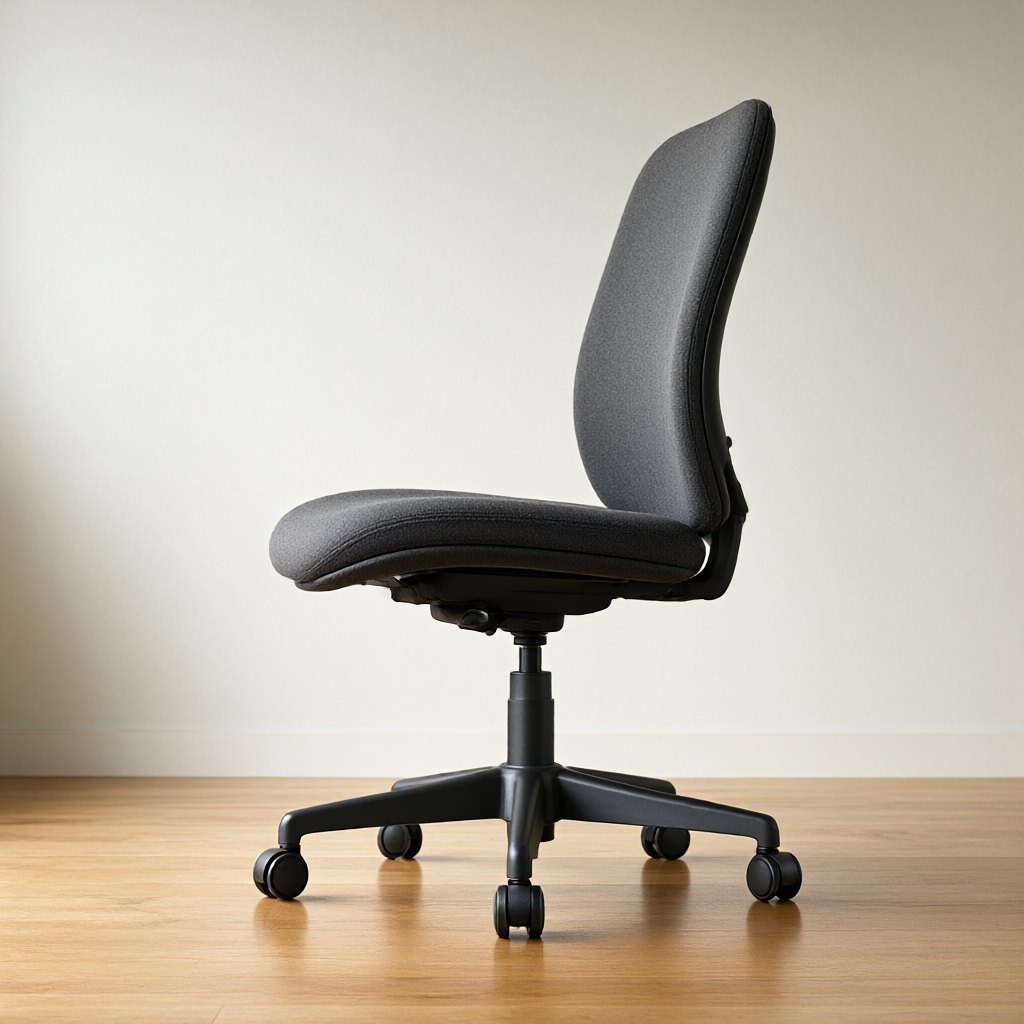
Standard office chairs are tested to the ANSI/BIFMA X5.1 standard using a 253 lb user benchmark. For users exceeding this weight, selecting a chair built to the ANSI/BIFMA X5.11 large occupant standard, which uses a 400 lb test load and mandates a minimum 22-inch seat width, becomes necessary. A suitable plus-size chair differs from general-purpose models through a higher tested weight rating, larger dimensional specifications, and heavier-duty components. The selection process must prioritize a weight capacity margin above body weight, verify seat depth for knee clearance, and confirm caster and base load ratings to prevent premature component failure.
Weight Capacity Margin and Frame Integrity
Weight capacity ratings on office chairs reflect static load testing, which does not capture the dynamic forces generated during regular seated movement. Reaching, leaning, and shifting body weight create momentary load spikes that exceed the static rating. To accommodate these forces, the selected chair rating must exceed the user's body weight by at least 50 lb. A user weighing 350 lb requires a chair rated for 400 lb or higher under the X5.11 standard.
The chair frame is rarely the first component to fail under excess load. Secondary components, specifically the gas cylinder, tilt mechanism, and casters, absorb the majority of daily stress. A reinforced steel frame and a Class 4 or Class 5 gas lift indicate a build designed for higher load tolerance. Exceeding the stated weight rating voids manufacturer warranties and accelerates structural fatigue, making the capacity margin a functional requirement rather than a preference.
Seat Depth and Knee Clearance Checks
Seat depth determines how the thighs rest on the chair pan and how the lumbar interacts with the backrest. Plus-size chair seat depths commonly range from 18 to 22 inches. Proper depth allows the sitter to press the back fully against the lumbar support while keeping the thighs supported without compressing the area behind the knees. Excessive seat depth forces the user to perch forward to keep feet flat, removing lumbar support and increasing lower back strain.
The knee clearance test provides the measurement standard. When seated fully back against the lumbar support, there must be a gap of two to four finger widths between the back of the knees and the front edge of the seat pan. This clearance prevents vascular pressure that restricts blood flow to the lower legs. Adjustable seat depth mechanisms allow users with shorter leg lengths to achieve this clearance on wider plus-size chairs, maintaining ergonomic alignment across varying body proportions.
Seat Width and Hip Room Requirements
Seat width dictates lateral comfort and the ability to shift positions throughout the workday. ANSI/BIFMA X5.11 requires a minimum seat width of 22 inches, with plus-size models typically ranging from 22 to 28 inches. The width measurement applies to the usable sitting area between the armrests, not the overall chair width. Fixed arms that narrow the effective seat width restrict movement and create pressure points on the hips.
The hip test requires at least one inch of space on each side of the hips when seated centrally. This space accommodates clothing, lateral shifting, and changes in sitting posture without pressing against the sides of the body. Chairs with width-adjustable or removable arms provide the most flexibility for users who need maximum hip room but also require arm support for desk tasks.
Caster Load Rating and Base Geometry
Casters represent the most frequent failure point on plus-size office chairs. The metal stem of the caster bends under lateral stress when the user pushes off a desk to roll or when shifting weight to one side while moving. Standard casters rated for general-purpose chairs lack the stem diameter and material density to withstand these forces. Plus-size chairs require casters with reinforced metal stems and larger wheel diameters to distribute load across the floor surface.
Base geometry directly influences tipping stability and caster load distribution. A wider base prevents the chair from tipping when reaching sideways. The base diameter rule of thumb dictates a 25 percent increase in base diameter for every 50 lb of capacity required above 250 lb. Bases measuring 27 to 28 inches in diameter provide the necessary stability for chairs rated between 400 and 500 lb, ensuring the casters track properly under load without binding or bending.
Lumbar Height and Postural Alignment
BIFMA G1 ergonomics guidance places lumbar support roughly 15 to 25 cm above the compressed seat pan. On plus-size chairs, the distance from the seat to the lumbar curve of the spine remains consistent, but the backrest height must accommodate taller torsos. A backrest that ends too low fails to support the upper back and shoulders, leading to a hunched posture.
Adjustable lumbar height allows the user to position the support pad precisely at the inward curve of the lower spine, regardless of torso length. The back support test requires the lumbar pad to fit into the natural hollow of the lower back without creating a pressure point. When combined with correct seat depth and knee clearance, proper lumbar height distributes upper body weight across the backrest rather than concentrating it on the seat pan and lower spine.
Plus Size Office Chair Selection Checklist
Verify the chair meets ANSI/BIFMA X5.11 testing standards for a 400 lb load minimum. Confirm the weight capacity rating exceeds body weight by at least 50 lb to handle dynamic forces. Check the gas lift classification for a Class 4 or Class 5 rating. Measure seat depth to ensure two to four fingers of clearance exist behind the knees when fully seated against the backrest. Confirm at least one inch of space exists on each side of the hips for lateral movement. Ensure the base diameter is at least 27 inches for capacities above 400 lb to prevent tipping. Inspect caster stems for reinforced metal construction to resist lateral bending stress. Position the lumbar support 15 to 25 cm above the compressed seat to match the spinal curve.