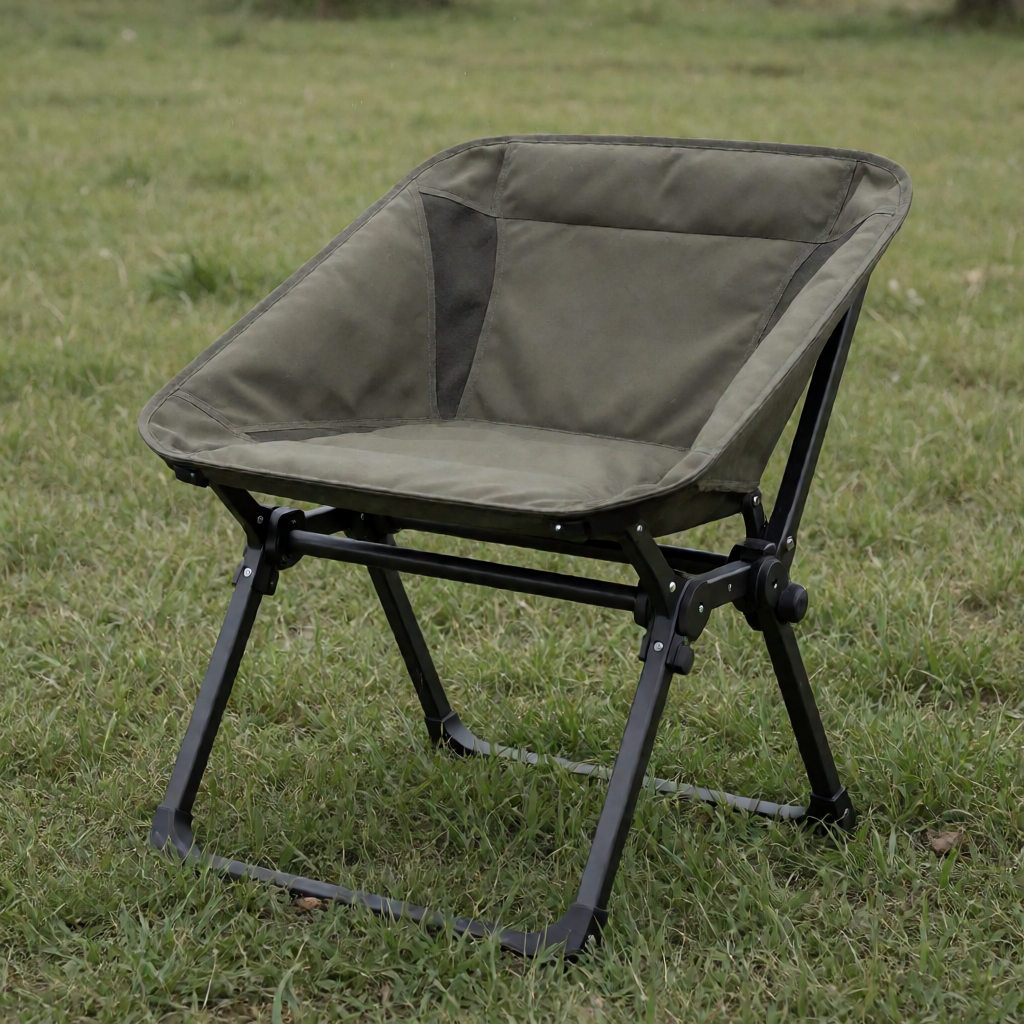
Choosing a heavy-duty folding or camping chair for a plus-size body requires looking past the advertised weight limit and evaluating the structural geometry. A high static weight rating on a label does not equate to sustained comfort or lateral stability for a larger frame. The critical factors are frame material thickness, seat dimension ratios, leg splay angles, and the security of the folding latch. Assessing these specific physical features helps prevent frame failure and supports a heavier load without flexing or tipping.
Weight Rating Labels and Actual Capacity
Manufacturers assign weight ratings based on static laboratory tests that apply downward force until the frame fails. This burst limit does not reflect dynamic real-world loads, such as shifting body weight or sitting down with momentum. To estimate the practical sustained capacity, divide the advertised weight limit by two. A chair labeled for 400 pounds functions as a reliable 200-pound seat for regular, multi-hour use. For a plus-size user weighing 300 pounds, the search should focus on chairs with advertised limits of 600 pounds or higher to maintain structural integrity and prevent gradual tube bending.
The label itself provides secondary information compared to the physical construction of the frame. Chairs claiming identical weight limits often perform differently due to variations in joint stress distribution. Examine the frame for cross-bracing underneath the seat. A single X-brace supports vertical compression, but a double X-brace or a full rectangular undercarriage with diagonal struts resists lateral twisting, which is the primary cause of failure when a larger user shifts weight to one side.
Frame Material and Tube Geometry
Steel and aluminum are the standard frame materials, and their performance depends on tube diameter and wall thickness. Steel offers higher rigidity and resists permanent bending under high compression, making it suitable for stationary heavy-duty use. Aluminum flexes more under load, which can absorb shock on uneven terrain but may lead to fatigue failure over time if the wall thickness is insufficient. For aluminum frames, the tube diameter must measure at least 1 inch, and the wall thickness must be 1.2 millimeters or greater to support a plus-size user adequately.
Joint construction dictates how stress transfers between the frame tubes. Avoid chairs with riveted joints, as rivets shear under repetitive heavy loads. Look through the frame for welded joints, which permanently fuse the metal and distribute stress across a larger surface area. For telescoping or push-button joints that allow height adjustment or folding, verify that the locking pin penetrates completely through both the outer and inner tube walls, not just a shallow detent.
Seat Width and Depth Measurements
Seat width must accommodate the widest point of the hips with clearance for armrests or clothing bulk. Measure hip width while seated on a flat surface, then add 4 inches to determine the minimum internal seat width. Internal width is the distance between the inner edges of the armrests or the frame tubes, not the fabric width. A chair with 20 inches of internal width fits a seated hip width of 16 inches. Plus-size users typically require an internal width of 22 to 26 inches to avoid feeling squeezed against the armrests.
Seat depth affects circulation and lumbar support. A deeper seat forces the user to slide forward to let their feet rest flat, which removes back support and concentrates all weight on the front edge of the frame. Measure the distance from the back of the knee to the back of the buttocks while seated. The seat depth should match this measurement minus 2 inches. Standard camping chairs often exceed 18 inches in depth, which is excessive for shorter torso lengths and causes vascular compression behind the knees. Seek chairs with a seat depth between 15 and 17 inches for adequate thigh support without cutting off circulation.
Leg Splay and Ground Surface Interaction
Leg splay is the outward angle of the legs from the seat base to the ground. A wider splay increases the footprint of the chair, lowering the center of gravity and resisting tip-overs when the user reaches sideways. Measure the distance between the front legs and the distance between the back legs at the ground contact points. A plus-size chair should have a front-leg span at least 6 inches wider than the seat width on each side. Chairs with narrow splay angles feel unstable and are prone to rocking when the user shifts weight.
Ground surface interaction determines whether the chair legs sink, causing the seat to tilt backward or sideways. Standard narrow footrest bars and small rubber tips concentrate weight on a tiny surface area, sinking rapidly into grass, gravel, or sand. On soft ground, the contact area of each foot must measure at least 4 square inches. Replace standard tips with wide plastic foot cups or attach flat metal plates to the leg ends. On hard surfaces like concrete, rubber tips with a diameter of 1.5 inches or larger prevent the metal legs from slipping outward under lateral stress.
Folding Latch Mechanisms
The folding latch is the component that locks the chair in the open position, preventing it from collapsing inward. On heavy-duty chairs, this latch usually takes the form of a metal bar or bracket that drops over a pivot joint. A secure latch must be made of steel, not plastic, and must engage fully without manual assistance. Test the latch by opening the chair and pressing down hard on the seat; the latch should snap into place under tension. If the latch rests loosely or can be dislodged by shaking the frame, it will fail under asymmetric loading.
Lateral stability relies on the rigidity of the scissor mechanism where the front and back legs cross. When the chair is open, grab the armrests and attempt to twist the chair laterally. A well-designed heavy-duty chair with a secure latch will resist this twisting force. If the frame racks easily, the latch is insufficient, or the pivot bolts are too loose. Loose pivot bolts accelerate wear on the folding latch and eventually allow the chair to collapse even when the latch appears engaged.
Pre-Purchase Inspection Points
Before purchasing or sitting in a heavy-duty folding chair, verify these physical attributes. The sustained capacity, calculated by dividing the advertised weight rating by two, must exceed the user weight by at least 50 pounds. The internal seat width between armrests must be 4 inches wider than the seated hip width. The seat depth must leave 2 inches of clearance behind the knees. The frame should exhibit welded joints and a tube diameter of at least 1 inch. The front leg span should be at least 12 inches wider than the seat width. The folding latch should be steel and lock under seat tension. For soft surfaces, wide foot cups at the ground contact points are necessary.